
1000 Type All-in-One Nylon Covered Yarn for High-Elastic Knitting and Performance Textiles
In modern elastic textiles, yarn performance determines fabric performance. A knitted garment can only stretch, recover, dye evenly, resist abrasion, and remain comfortable when the yarn system has been engineered with consistency from the core to the surface. The 1000 type all-in-one nylon covered yarn is designed for this purpose: it combines a spandex core with nylon filament covering to create an elastic yarn suitable for knit fabrics, sports tights, close-fitting apparel, and blended textile structures requiring durability, flexibility, and attractive dyeing behavior.
This yarn belongs to the broader field of covered elastic yarns and is closely related to draw textured yarn applications, especially where controlled bulk, stable stretch, and surface uniformity are required. In the product structure, spandex provides the elastic foundation, while nylon filaments wrap around the core to improve hand feel, dyeing response, abrasion resistance, appearance, and processing stability. Compared with ordinary bare spandex or loosely combined elastic yarns, nylon covered yarn gives fabric manufacturers a more balanced material: strong stretch without excessive exposure of the elastic core, better surface protection, and improved compatibility with knitting and finishing processes.
Hangzhou Jinfeng Textile Co., Ltd. operates as an integrated textile manufacturer involved in the production, processing, dyeing, finishing, and sales of blended fabrics and DTY polyester yarn. Located in Xiaoshan District, Hangzhou, the company has production facilities, post-dyeing and finishing capabilities, and an export-oriented service system. These strengths support the consistent manufacturing of elastic yarn and fabric solutions for customers seeking reliable quality, repeatable specifications, and practical performance in commercial textile production.
1000 type all-in-one nylon covered yarn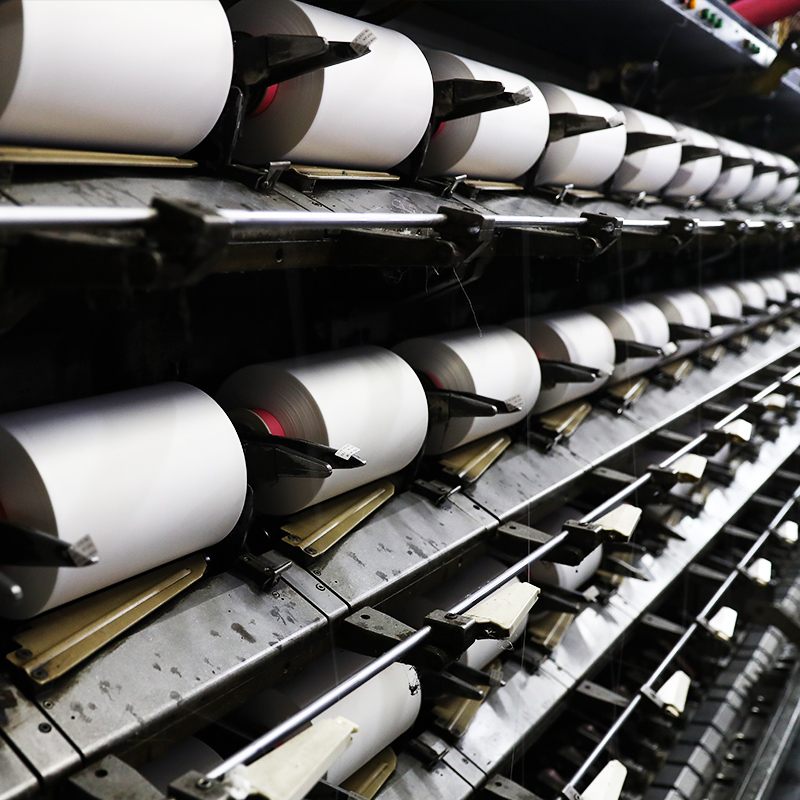
Understanding 1000 Type All-in-One Nylon Covered Yarn
The 1000 type all-in-one nylon covered yarn is an elastic composite yarn. Its essential structure consists of a spandex yarn core covered by nylon filaments. This configuration allows the yarn to stretch and recover repeatedly while maintaining a textile surface that is smoother, more dyeable, and more durable than exposed elastic fiber alone. The term “covered yarn” refers to the way the outside filament wraps around the elastic core, forming a protective and functional sheath.
In many applications, the dominant covered yarn combinations are nylon-spandex and polyester-spandex. Each has its own advantages. Polyester-spandex covered yarn is often valued for dimensional stability, cost efficiency, and compatibility with polyester fabrics. Nylon-spandex covered yarn, however, is especially appreciated where softness, strong dyeing performance, resilient hand feel, and high abrasion resistance are necessary. The product described here emphasizes nylon covering, making it particularly appropriate for knitted structures and sports-oriented fabrics.
Nylon covered yarn is generally thicker and more substantial in hand than some lighter elastic yarn alternatives. This makes it useful in items such as sports tights, leggings, compression-like knitwear, and elastic fabrics that must maintain opacity, structure, and recovery under repeated body movement. In high-stretch garments, yarns must not only elongate but also return to shape. If recovery is poor, garments bag at the knees, waist, or hips. If abrasion resistance is weak, pilling, filament breakage, or surface fuzz may appear. Nylon covered yarn helps reduce these risks by protecting the spandex core and contributing a robust surface layer.
The “all-in-one” concept reflects a manufacturing and performance approach in which multiple material functions are integrated into a single yarn: stretch from spandex, coverage from nylon, durability from filament protection, dyeability from the nylon surface, and process stability from controlled yarn engineering. For knitting mills, such integration can simplify material selection and improve the predictability of downstream production.
Why Covered Yarn Matters in Elastic Fabric Design
Elastic fabric design is not simply a matter of adding spandex. Bare spandex can provide stretch, but it is sensitive to heat, chemical exposure, abrasion, and mechanical stress. When used without adequate protection, it may be difficult to process at high speed, may show through the fabric surface, or may affect dyeing and finishing uniformity. Covered yarn solves many of these problems by placing another fiber around the elastic core.
The covering layer acts as both shield and interface. It shields the spandex from direct mechanical contact during knitting, dyeing, and wearing. It also creates an interface between the elastic core and the surrounding textile structure, allowing the yarn to behave more like a conventional filament yarn during knitting while retaining hidden elasticity. This is one of the main reasons nylon covered yarn has become important in hosiery, sportswear, intimate apparel, seamless knitting, and performance knit fabrics.
For fabric developers, covered yarn offers a practical balance between elasticity and textile aesthetics. A fabric made only with rigid yarn may look stable but lack comfort. A fabric made with exposed elastic fiber may stretch but lack durability or refinement. A well-made nylon covered yarn allows the manufacturer to create fabric that stretches comfortably, recovers cleanly, dyes attractively, and withstands repeated use.
Core Advantages Over Competing Elastic Yarn Options
The competitive value of 1000 type all-in-one nylon covered yarn lies in its combination of elasticity, protection, durability, and dyeing performance. These characteristics make it attractive compared with ordinary spandex, lower-grade covered yarn, and some less carefully processed elastic composite yarns.
Excellent Elasticity and Recovery
The spandex core provides the primary elastic function. When the yarn is stretched, the core elongates. When the tension is released, it contracts and helps the fabric return toward its original dimension. This behavior is essential in garments that move with the body, including leggings, tights, activewear, waistbands, cuffs, and stretch panels.
Compared with yarn systems that rely on mechanical crimp or fabric construction alone, spandex-based covered yarn can deliver stronger and more reliable elasticity. Mechanical stretch from textured yarn may be useful, but it often cannot match the recovery level of a spandex core. The covered structure therefore gives designers more confidence in long-term garment fit.
Improved Durability Through Nylon Coverage
Nylon is known for toughness and abrasion resistance. When used as the covering filament, it helps protect the spandex from friction during knitting and daily wear. This can reduce the likelihood of elastic fiber damage, yarn breakage, or visible defects caused by exposed spandex. In sports tights and close-fitting garments, the surface of the fabric experiences frequent stretching, rubbing, washing, and body movement. Nylon coverage supports resistance to these stresses.
Compared with uncovered spandex, nylon covered yarn is more suitable for direct processing in many knitted structures. Compared with loosely made covered yarns, a stable and evenly covered yarn provides better uniformity, fewer weak points, and a cleaner surface. These details influence fabric quality, especially when garments are produced in large quantities.
Ease of Dyeing and Attractive Color Performance
One of the important advantages of nylon covered yarn is dyeing performance. Nylon can accept dyes effectively and can produce rich shades when processed correctly. Because the nylon layer forms the visible surface of the yarn, the final fabric can achieve better color depth and uniformity than structures where dye-resistant or poorly covered elastic fibers interrupt the surface.
For textile manufacturers, dyeing consistency is a major commercial factor. Uneven dyeing can lead to shade variation, streaks, barre marks, or rejected fabric. A covered yarn with stable nylon surface coverage helps improve the predictability of dyeing and finishing. The result is better appearance, fewer defects, and improved customer satisfaction.
Suitable Thickness for Knitted and Sports Tights
Nylon covered yarn is often thicker than certain lightweight elastic alternatives. This thickness can be advantageous in knitted structures requiring coverage, elasticity, and body. Sports tights, for example, must stretch without becoming overly transparent. They must also retain shape and support the body during movement. A substantial covered yarn can contribute to fabric density, opacity, and comfort.
In comparison, very fine elastic yarns may be suitable for delicate hosiery or lightweight apparel, but they may not provide enough body for performance leggings or heavier knit fabrics. The 1000 type all-in-one nylon covered yarn is positioned for applications where a stronger elastic structure is beneficial.
Balanced Processing Stability
Knitting mills need yarns that feed smoothly, maintain consistent tension, and minimize breakage. Covered yarn can improve processing stability because the nylon layer provides a more manageable surface for machinery. A uniform covering also helps prevent the elastic core from sticking, snagging, or being damaged during high-speed operations.
Compared with inconsistent elastic yarns, a well-engineered nylon covered yarn can reduce downtime and improve production efficiency. Stable yarn feeding supports consistent loop formation in knitting, which in turn improves fabric appearance and reduces defects.
Relationship with Draw Textured Yarn and Slight Intermingled Yarn Technology
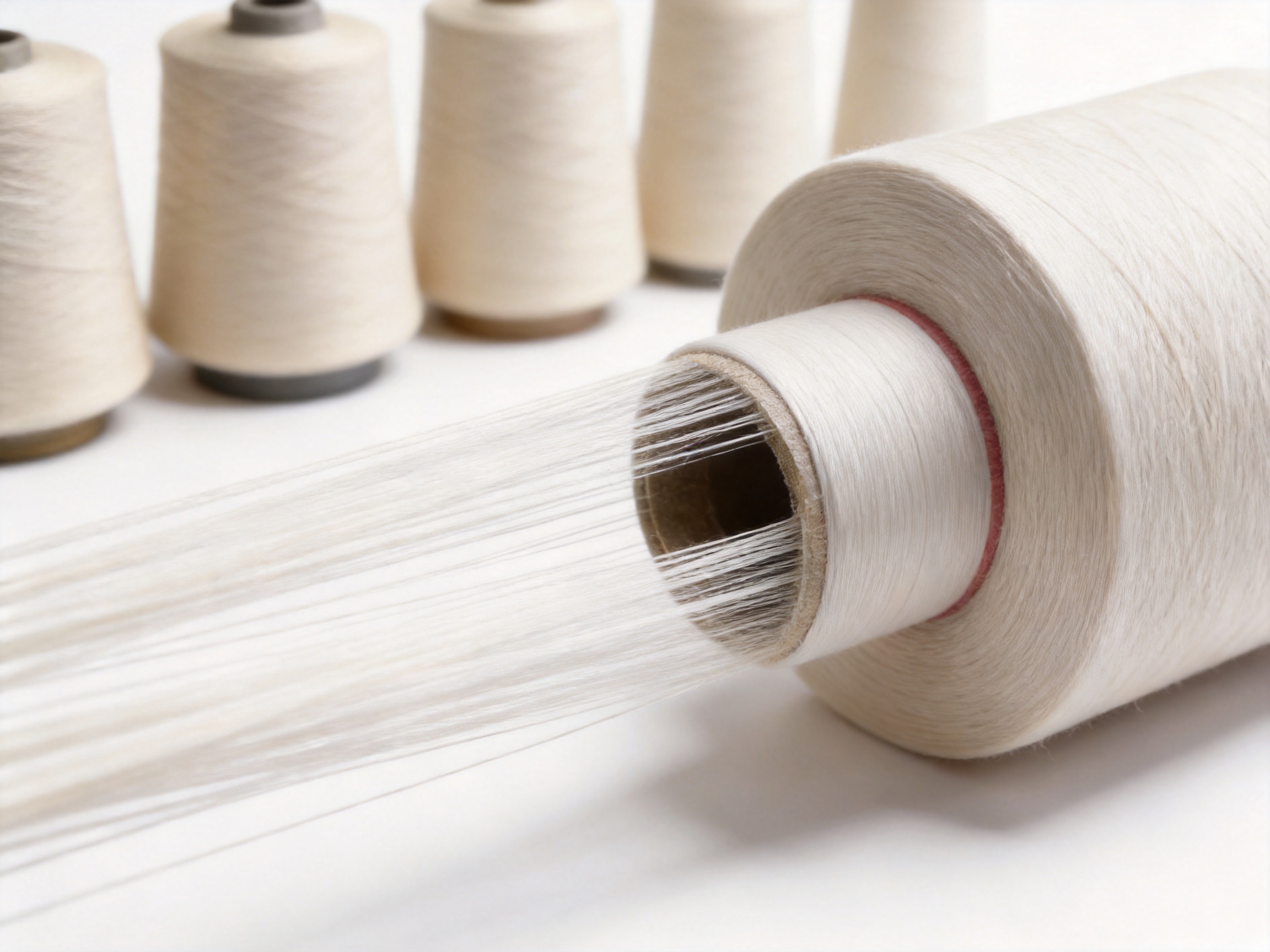
The product category information places this yarn under Slight Intermingled DRAW TEXTURED YARN. Draw textured yarn, commonly known as DTY, is created by texturing partially oriented yarn through drawing and false twisting or related processes. This gives the filament yarn crimp, bulk, elasticity, and improved hand feel. Slight intermingling refers to the controlled entanglement of filaments through air jet or similar methods, improving cohesion without making the yarn too hard or compact.
Although nylon covered yarn and DTY are not identical structures, they are connected within the broader textile manufacturing system. DTY technology focuses on creating textured filament yarn with useful bulk and stretch. Covered yarn technology focuses on wrapping an elastic core with filament. Both require precision tension control, stable filament handling, and consistent processing conditions. A manufacturer experienced in DTY production and textile processing has valuable knowledge for producing or handling covered yarns with reliable quality.
Slight intermingling can be important because filament cohesion affects downstream behavior. If filaments are too loose, yarn may open, snag, or process unevenly. If intermingling is too strong, the yarn may become rigid or less pleasant in hand. Slight intermingled yarn aims for a balanced structure: enough cohesion for smooth processing, but enough softness and flexibility for fabric comfort.
For elastic knitted fabrics, the combination of covered yarn principles and textured yarn knowledge can create strong material systems. Nylon coverage contributes abrasion resistance and dyeing response. Spandex core contributes stretch. Textured or intermingled filament knowledge supports bulk, appearance, and process reliability. This is why advanced yarn manufacturing is not just about raw materials; it is about the controlled transformation of fibers into predictable textile components.
Manufacturing Process Strengths
Producing a high-quality nylon covered yarn requires more than simply wrapping one fiber around another. The final yarn depends on raw material selection, spandex tension control, nylon filament quality, covering precision, winding quality, package formation, inspection, and compatibility with dyeing and finishing. Each stage affects the performance of the final fabric.
Raw Material Preparation
The first requirement is suitable spandex and nylon filament. The spandex core must have consistent elongation, recovery, and linear density. If spandex quality varies, the final yarn may have uneven stretch or tension irregularities. The nylon filament must be clean, uniform, and strong enough to cover the core without frequent breaks.
Material preparation also includes conditioning and package management. Yarn packages must unwind smoothly. Poor unwinding creates tension spikes, which may affect covering quality. In a controlled manufacturing environment, raw materials are checked before processing to reduce defects and maintain production consistency.
Covering and Tension Control
The covering process is central to product quality. The spandex core is stretched under controlled tension while nylon filaments are wrapped around it. The degree of stretch, covering twist, filament path, and winding speed must be coordinated. If the spandex is stretched too much, the yarn may be unstable or overly tight. If it is stretched too little, the final fabric may lack sufficient recovery. If the covering is uneven, the core may be exposed or the yarn may show irregular thickness.
Advanced manufacturing processes focus on tension uniformity. Stable tension allows the nylon layer to cover the core consistently. This improves appearance, strength, dyeing uniformity, and knitting performance. Precision in this stage is one of the main differences between high-quality covered yarn and lower-grade alternatives.
Winding and Package Formation
After covering, yarn is wound onto packages suitable for storage, transport, and downstream knitting. Package formation is often underestimated, but it has a direct effect on production efficiency. If a package is too tight, it may cause deformation or difficult unwinding. If too loose, it may collapse or tangle. Uneven package density can create tension variation during knitting.
Reliable winding supports smooth yarn delivery to knitting machines. For export customers or large-scale fabric mills, package consistency is especially important because yarn may be transported over long distances and then used in high-speed production. A well-formed package protects the yarn and preserves its processing value.
Inspection and Quality Control
Quality control should evaluate yarn appearance, count uniformity, elasticity, covering quality, breakage tendency, package quality, and dyeing behavior where applicable. Covered yarn defects can become expensive if discovered only after knitting or dyeing. For this reason, inspection at the yarn stage is essential.
A company with integrated production, dyeing, finishing, and sales capabilities can observe how yarn behaves through multiple stages. Feedback from fabric processing can be used to improve yarn specifications. This closed-loop approach is valuable because the true quality of elastic yarn is revealed not only in laboratory measurements but also in fabric performance.
Company Manufacturing Capabilities and Integrated Textile Strength
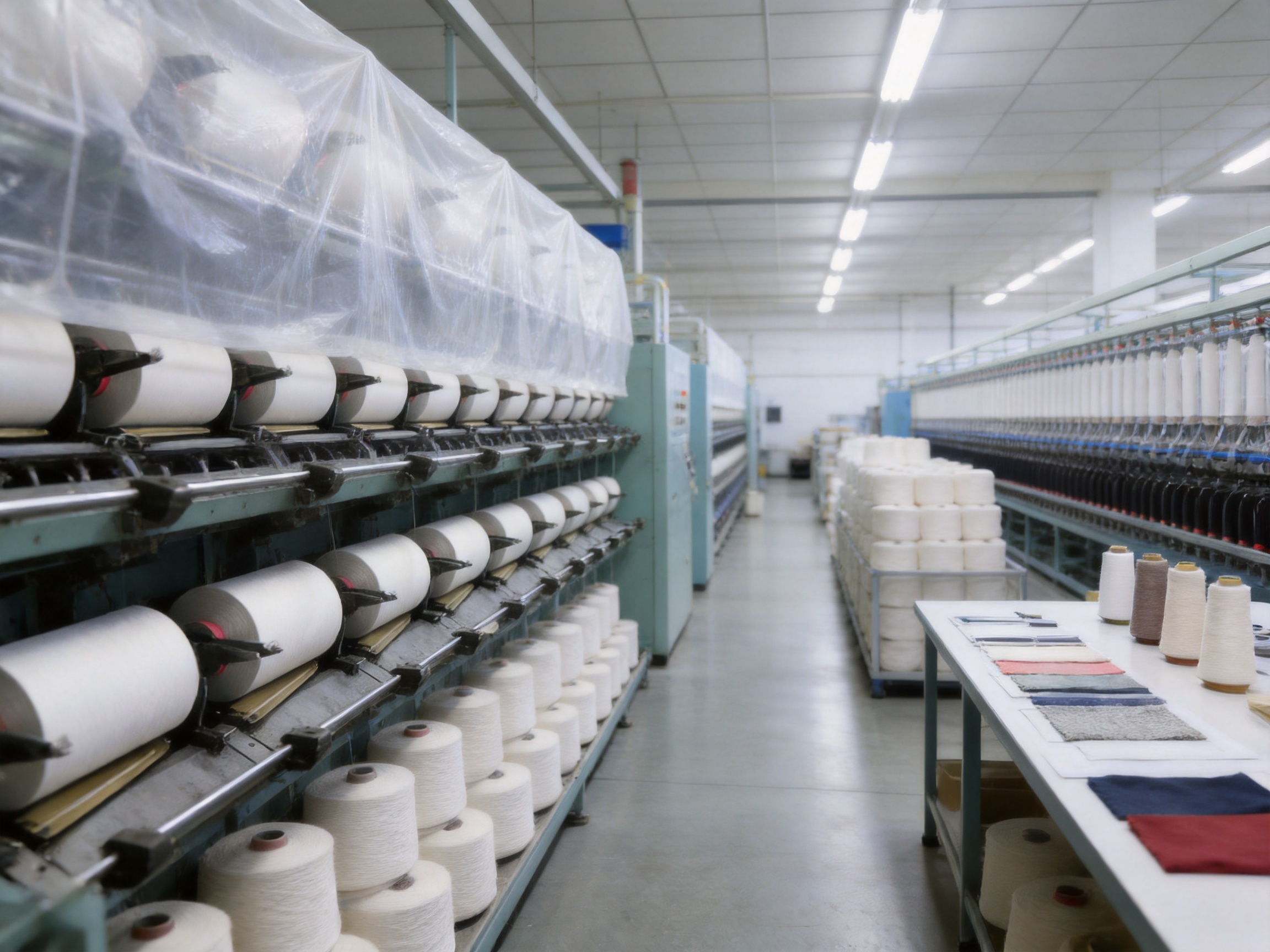
Hangzhou Jinfeng Textile Co., Ltd. is located in Jingjiang Street Industrial Park, Xiaoshan District, Hangzhou City, Zhejiang Province. The company covers an area of 32.6 acres and has a plant area of approximately 18,000 square meters. Its business includes production and processing, post-dyeing, finishing, and sales of blended fabrics such as polyester and spandex textiles, as well as DTY polyester yarn production, processing, and sales.
This integrated structure gives the company an advantage in serving textile buyers. Many suppliers specialize in only one stage of the chain. Some produce yarn but have limited knowledge of fabric finishing. Others sell fabric but have less control over yarn quality. An integrated manufacturer can better understand the relationship between yarn characteristics, knitting behavior, dyeing results, finishing hand feel, and final garment performance.
The company’s self-operated export orientation also supports international customer service. Export customers often require clear specifications, stable lead times, repeatable quality, and communication about applications. A manufacturer combining research and development, production, and sales is better positioned to respond to these needs. The business philosophy of cooperation and mutual benefit also aligns with long-term textile supply relationships, where trust and consistency are as important as price.
For the 1000 type all-in-one nylon covered yarn, these company strengths matter because elastic yarn is frequently used in demanding applications. A customer producing sports tights or elastic knitwear cannot afford unstable yarn that creates fabric defects. Manufacturing reliability, technical understanding, and process control become competitive advantages.
Application Areas
The 1000 type all-in-one nylon covered yarn is suitable for a variety of elastic textile applications. Its main strengths make it especially valuable in knitted fabrics and performance garments. The yarn can be used alone in selected fabric zones or combined with other yarns to produce blended structures with balanced appearance and function.
Sports Tights and Leggings
Sports tights require high stretch, recovery, opacity, abrasion resistance, and comfort. The fabric must move with the body during running, training, yoga, cycling, and fitness activities. Nylon covered yarn provides elastic recovery from the spandex core and surface strength from the nylon covering. Its thickness can contribute to fabric body and coverage, helping reduce transparency during stretching.
Knitted Jacquard Fabrics
Knitted jacquard fabrics often require yarns with stable tension and attractive surface appearance. Elastic yarn may be used to improve fit and comfort. A nylon covered yarn can be incorporated into jacquard structures to provide stretch without sacrificing pattern clarity. Because the nylon surface dyes well, it can support attractive color effects when properly matched with dyeing systems.
Polyester Rayon and Blended Fabrics
Blended fabrics such as polyester-rayon and polyester-spandex materials are widely used in garments requiring drape, comfort, and durability. Elastic covered yarn can be introduced to provide stretch and recovery. In such fabrics, yarn compatibility and finishing control are important. Integrated manufacturing experience in blended fabric production helps ensure that elastic components work effectively with other fibers.
Hosiery and Close-Fitting Apparel
Close-fitting apparel depends on soft stretch and shape retention. Nylon covered yarn is common in hosiery, socks, bodywear, shapewear, and similar products because it can provide both elasticity and a smooth textile surface. The covered structure helps protect the spandex and reduces the harshness that could result from exposed elastic fiber.
Waistbands, Cuffs, and Elastic Panels
Garments often require localized stretch in waistbands, cuffs, collars, and side panels. A covered elastic yarn can help these areas maintain fit through repeated use. Nylon coverage contributes durability, while the spandex core supports repeated extension and recovery.
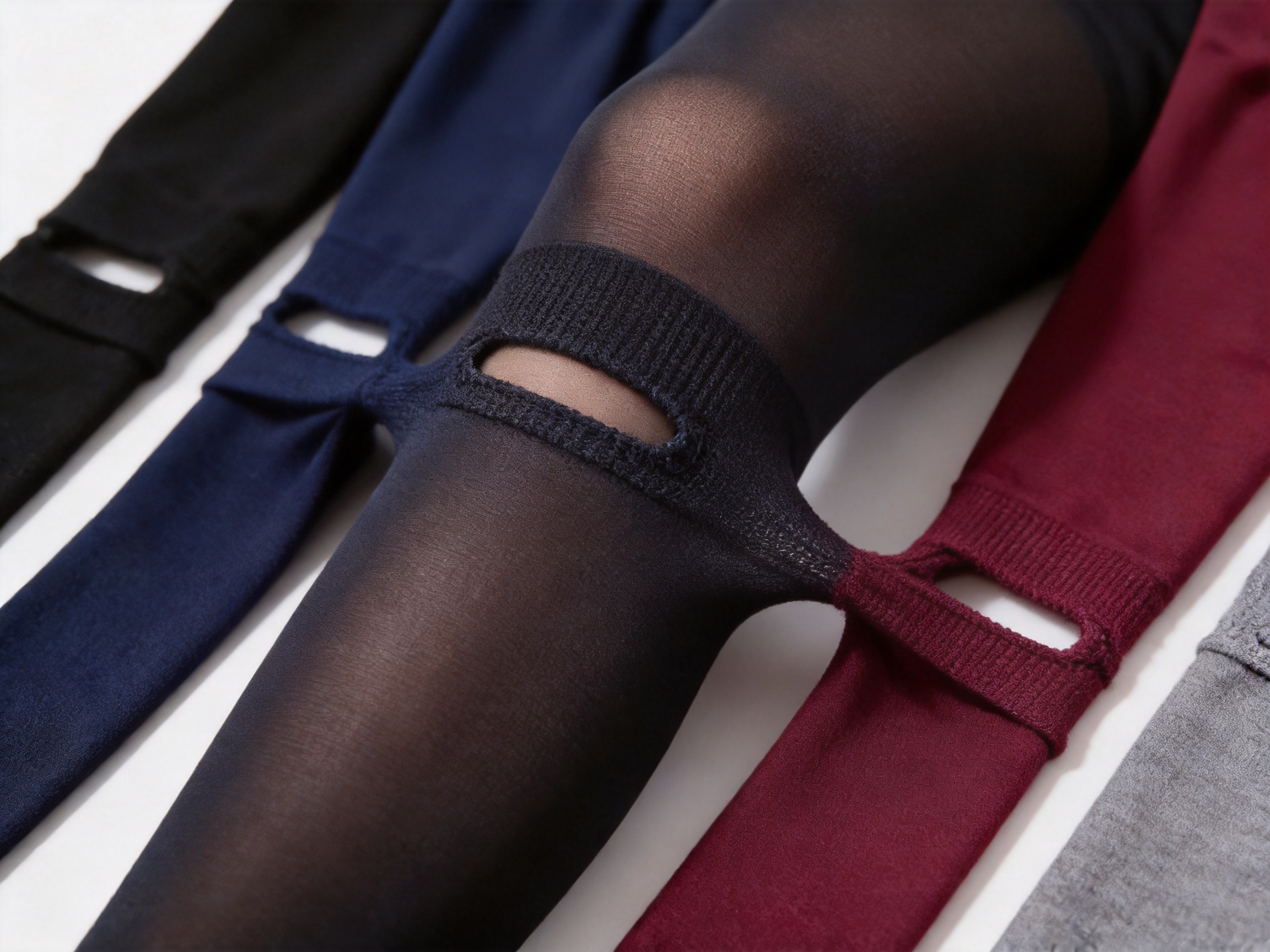
Performance Comparison Table
| Feature | 1000 Type All-in-One Nylon Covered Yarn | Bare Spandex Yarn | Ordinary Low-Grade Covered Yarn | Mechanical Stretch Textured Yarn |
|---|---|---|---|---|
| Elastic recovery | High recovery from spandex core with protected structure | High recovery but vulnerable when exposed | Variable recovery depending on covering quality | Moderate recovery based mainly on crimp |
| Surface durability | Strong nylon coverage improves abrasion resistance | Weak surface protection | May be inconsistent if coverage is uneven | Good filament surface but limited true elastic support |
| Dyeing performance | Good color response from nylon surface | Limited as visible component and may affect shade | Unstable if covering density varies | Depends on fiber type and texturing quality |
| Knitting stability | Smooth processing with controlled covering and package quality | Can be difficult due to stickiness or tension sensitivity | May cause breaks, tension variation, or exposed core | Generally stable but less elastic |
| Best applications | Sports tights, elastic knitwear, hosiery, jacquard knits, stretch panels | Specialized elastic insertion only | Low-cost applications with less demanding standards | Bulked fabrics, comfort stretch, non-compression textiles |
| Overall advantage | Balanced elasticity, durability, dyeability, and processing reliability | Strong stretch but insufficient protection | Lower cost but higher quality risk | Comfortable texture but limited recovery compared with spandex core yarn |
How Nylon Covered Yarn Improves Fabric Quality
Fabric quality is the result of many small yarn-level characteristics working together. A smooth, evenly covered elastic yarn produces more regular loops in knitting. More regular loops create a more stable fabric surface. A stable surface dyes more evenly. A dyed and finished fabric with consistent elasticity performs better in garment use. In this chain, the yarn is the foundation.
One common problem in elastic fabrics is uneven stretch. If some yarn sections are tighter than others, the fabric may show streaks or irregular shrinkage. Another problem is exposed spandex, which can appear as shiny or pale lines on the fabric surface. Exposed spandex may also be damaged during dyeing or finishing. Nylon covered yarn reduces these risks by keeping the elastic core inside a protective sheath.
Another important fabric property is hand feel. Consumers expect sportswear and close-fitting garments to be soft, smooth, and comfortable. Nylon filaments can provide a pleasant touch, while the elastic core allows movement. The result is a fabric that can feel supportive without being stiff. When combined with appropriate knitting density and finishing, the yarn can contribute to garments that remain comfortable during long wear.
Advantages in Dyeing and Finishing
Dyeing and finishing are critical steps in the value of elastic textiles. A yarn may look acceptable before dyeing, but problems can appear after heat, moisture, chemicals, and mechanical action. Nylon covered yarn offers advantages because the nylon surface can interact effectively with suitable dye systems, while the covering protects the spandex core from direct exposure.
During dyeing, even coverage helps create even color. If the covering is inconsistent, the dye may reveal defects that were not obvious in raw white yarn. Uniform nylon coverage therefore contributes to shade consistency. This is particularly important for dark colors, fashion shades, and sportswear where visible streaks are unacceptable.
Finishing processes can include washing, heat setting, softening, and mechanical treatment. Elastic yarn must survive these processes without losing recovery. The covered structure helps maintain integrity. However, proper process control is still essential. A manufacturer with experience in post-dyeing and finishing can better understand how elastic yarn behaves under finishing conditions and can provide yarns and fabrics that meet realistic production requirements.
Why Integrated Production Benefits Customers
Textile buyers often face challenges when sourcing from disconnected suppliers. A yarn supplier may not fully understand finishing requirements. A fabric supplier may not control the yarn source. A dyeing facility may discover problems only after fabric has already been produced. Integrated production reduces these gaps by connecting yarn knowledge, fabric processing, dyeing, finishing, and sales feedback.
For customers purchasing nylon covered yarn or elastic fabric solutions, integrated capability can offer several benefits. First, product specifications can be matched to real applications. Second, quality issues can be traced more efficiently. Third, sample development can be faster because the manufacturer understands multiple stages of the process. Fourth, communication can be clearer because technical and commercial teams are closer to production.
In competitive textile markets, the lowest yarn price is not always the lowest total cost. If a cheaper yarn causes knitting defects, dyeing rejection, garment returns, or delayed shipments, the final cost becomes much higher. A reliable covered yarn with stable manufacturing quality can reduce waste and improve production confidence. This is a key advantage over competitors who compete only on price without equivalent process control.
Quality Factors Customers Should Evaluate
When selecting nylon covered yarn, customers should evaluate more than the basic material description. The most important factors include yarn count, spandex content, covering type, twist or wrap level, elongation, recovery, package quality, dyeing behavior, and compatibility with the intended knitting machine. Even when two yarns appear similar on paper, their actual processing performance may differ.
Customers should also test fabric performance after knitting and finishing. Important tests may include stretch and recovery, dimensional stability, colorfastness, abrasion resistance, pilling tendency, seam behavior, and washing durability. For sports tights and close-fitting garments, opacity under stretch is also important. Nylon covered yarn can contribute positively to these properties, but final performance depends on the full fabric design.
Reliable suppliers can assist customers in selecting appropriate specifications. For example, a fabric intended for lightweight hosiery may require a different yarn specification from a fabric intended for heavy sports leggings. A waistband may require stronger recovery than a decorative jacquard panel. By aligning yarn characteristics with the application, manufacturers can achieve better fabric results.
Competitive Edge in the Elastic Yarn Market
The elastic yarn market includes many products, ranging from basic spandex to advanced covered yarns and engineered composite yarns. The 1000 type all-in-one nylon covered yarn stands out because it focuses on a practical combination of performance features. It is not merely elastic; it is protected, dyeable, durable, and suitable for demanding knitted applications.
Compared with competitors offering bare spandex, the product provides a more textile-friendly structure. Compared with suppliers of inconsistent covered yarn, it emphasizes stable coverage and process reliability. Compared with mechanical stretch yarns, it delivers stronger true elastic recovery because of the spandex core. Compared with some polyester-covered elastic yarns, nylon covered yarn can offer a softer, more abrasion-resistant, and highly dyeable surface for selected applications.
The company’s experience in DTY polyester yarn, blended fabric production, post-dyeing, and finishing further strengthens this competitive position. Customers can benefit from technical understanding across the textile chain rather than receiving only a single raw material. This broader capability is especially valuable in export markets where product requirements vary by country, garment type, and end-use standard.
Sustainability and Efficiency Considerations
Modern textile production increasingly values efficiency, waste reduction, and responsible manufacturing. While elastic yarns are performance materials, they also influence sustainability through their effect on product durability and production yield. A yarn that breaks frequently, dyes unevenly, or causes fabric rejection leads to wasted energy, water, chemicals, labor, and raw materials. A stable yarn helps reduce these losses.
Durability is also part of practical sustainability. Garments that retain shape and resist wear can remain useful longer. Nylon covered yarn contributes to abrasion resistance and elastic recovery, helping fabrics maintain performance through repeated use and washing. In sportswear and hosiery, longer service life can reduce replacement frequency and improve consumer satisfaction.
Process efficiency also matters. Smooth knitting, fewer defects, and predictable dyeing all support lower waste. Integrated manufacturing can further improve efficiency by allowing feedback from fabric production and finishing to influence yarn development. This type of continuous improvement is important for textile companies seeking both commercial competitiveness and responsible production practices.
Practical Buying Guidance
Buyers considering 1000 type all-in-one nylon covered yarn should begin by defining the end use. Is the yarn intended for sports tights, hosiery, jacquard knits, elastic panels, or blended fabrics? Each application has different requirements. Sports tights may need strong recovery, opacity, and abrasion resistance. Hosiery may need fine hand feel and smooth appearance. Jacquard fabrics may need stable tension and pattern clarity.
The next step is to confirm technical specifications. Buyers should discuss yarn count, spandex ratio, nylon filament characteristics, covering level, color requirements, package type, and knitting conditions. If dyeing is planned, shade goals and dyeing methods should be considered early. Because nylon and other fibers may respond differently to dyes, fabric composition and dyeing recipes should be coordinated.
Sample testing is recommended before bulk production. A small yarn sample can be knitted into trial fabric and processed through the intended dyeing and finishing route. This allows the customer to evaluate stretch, recovery, hand feel, color, surface appearance, and dimensional stability. Once the specification is confirmed, bulk orders can be produced with greater confidence.
Q&A Section
What is 1000 type all-in-one nylon covered yarn?
It is an elastic covered yarn made with a spandex core and nylon filament covering. The spandex provides stretch and recovery, while the nylon covering improves durability, dyeing performance, surface appearance, and knitting stability.
What are the main advantages of nylon covered yarn?
The main advantages include excellent elasticity, strong recovery, easy dyeing, good durability, abrasion resistance, smooth surface quality, and suitability for knitted fabrics such as sports tights, hosiery, and close-fitting apparel.
How is nylon covered yarn different from bare spandex?
Bare spandex provides elasticity but has limited surface protection and can be difficult to process directly. Nylon covered yarn wraps the spandex core with nylon filament, protecting the elastic fiber and making the yarn more suitable for knitting, dyeing, and finishing.
Why is this yarn suitable for sports tights?
Sports tights require stretch, recovery, opacity, comfort, and resistance to abrasion. Nylon covered yarn offers a thicker and more durable elastic structure, helping the fabric move with the body while maintaining shape and surface quality.
Can nylon covered yarn be used in jacquard knitted fabrics?
Yes. Its stable covered structure can support knitting consistency and elastic comfort in jacquard fabrics. When properly selected and processed, it can help maintain pattern clarity while adding stretch.
What role does nylon play in the yarn?
Nylon forms the covering layer around the spandex core. It improves abrasion resistance, contributes to a smooth hand feel, supports dyeing performance, and protects the elastic core during processing and use.
How does the company’s integrated manufacturing capability benefit customers?
Integrated production, yarn processing, dyeing, finishing, and sales experience help connect yarn quality with actual fabric performance. This can improve specification matching, reduce defects, support faster development, and provide more reliable bulk production.
Is nylon covered yarn better than polyester-spandex covered yarn?
Neither is universally better; each suits different applications. Nylon-spandex covered yarn is often preferred where softness, abrasion resistance, dyeing performance, and elastic comfort are important. Polyester-spandex covered yarn may be preferred where polyester compatibility and certain cost or dimensional requirements are priorities.
What should buyers test before ordering in bulk?
Buyers should test yarn feeding, knitting performance, stretch and recovery, dyeing uniformity, colorfastness, abrasion resistance, pilling behavior, dimensional stability, and final garment comfort. Testing after dyeing and finishing is especially important.
Why does covered yarn quality affect final fabric cost?
Poor yarn quality can cause knitting breaks, uneven fabric, dyeing defects, rejected rolls, delayed delivery, and garment performance problems. A stable covered yarn may cost more than a low-grade alternative, but it can reduce total production waste and improve final product value.
Conclusion
The 1000 type all-in-one nylon covered yarn is a practical and performance-oriented elastic yarn for modern knitted textiles. By combining a spandex core with nylon filament coverage, it offers the elasticity required for comfort and fit, the durability required for repeated use, and the dyeing performance required for attractive fabrics. Its thicker and protective structure makes it especially suitable for sports tights, knitted garments, hosiery, jacquard fabrics, and elastic fabric panels.
Its advantages over competitors are rooted in balance. Bare spandex may stretch, but it lacks protection. Low-grade covered yarn may reduce cost, but it can create processing and quality risks. Mechanical stretch yarn may provide comfort, but it cannot always deliver the recovery of a true spandex core. Nylon covered yarn offers a stronger combination: elastic recovery, protective coverage, smooth processing, dyeability, and abrasion resistance.
The manufacturing strengths behind the product are equally important. Controlled raw material selection, precise covering, stable tension, reliable winding, quality inspection, and knowledge of dyeing and finishing all influence the final result. Hangzhou Jinfeng Textile Co., Ltd. supports these requirements through its integrated textile production capabilities, experience in DTY polyester yarn and blended fabrics, post-dyeing and finishing operations, and export-oriented service structure.
For fabric manufacturers and garment producers seeking reliable elastic yarn, the 1000 type all-in-one nylon covered yarn represents a valuable material choice. It supports high-quality elastic textiles that are comfortable, durable, dyeable, and commercially dependable. In a textile market where performance, consistency, and efficiency determine competitiveness, a well-engineered nylon covered yarn can become the foundation for better fabrics and stronger end products.
References
1. Hearle, J. W. S., Hollick, L., and Wilson, D. K. Yarn Texturing Technology. Woodhead Publishing.
2. Lord, P. R. Handbook of Yarn Production: Technology, Science and Economics. Woodhead Publishing.
3. Saville, B. P. Physical Testing of Textiles. Woodhead Publishing.
4. McIntyre, J. E. Synthetic Fibres: Nylon, Polyester, Acrylic, Polyolefin. Woodhead Publishing.
5. Spencer, D. J. Knitting Technology: A Comprehensive Handbook and Practical Guide. Woodhead Publishing.
6. Textile Institute. Textile Terms and Definitions. The Textile Institute.