TR Rome Fabric: A Game-Changer in Blended Textiles for Apparel & Industrial Use
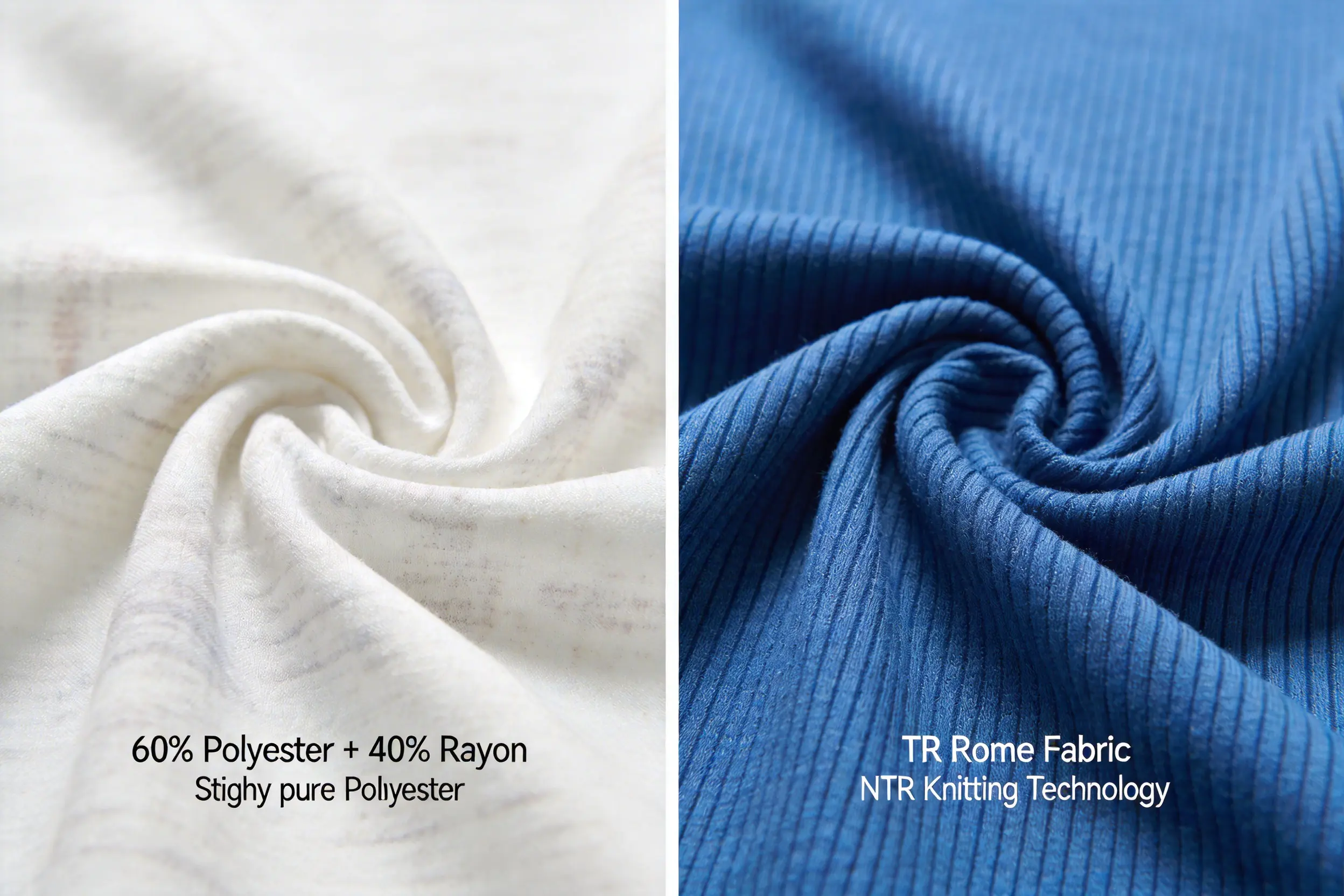
Blended textiles have revolutionized the global textile industry by merging the best attributes of natural and synthetic fibers, addressing the inherent limitations of single-fiber fabrics. Among these innovative materials, TR Rome Fabric stands out as a versatile, high-performance textile that caters to both apparel and industrial needs. Crafted from a balanced blend of polyester and rayon and engineered using advanced NTR (Needle Transfer Rib) jacquard knitting technology, this fabric delivers exceptional durability, lightweight comfort, eco-friendly performance, and design versatility—qualities that set it apart from traditional alternatives like cotton, pure polyester, and rayon. In this article, we explore the unique advantages of TR Rome Fabric, the cutting-edge manufacturing processes that enable its performance, its wide-ranging applications, answers to common questions, and a comparative analysis of its properties against competitor fabrics.
What is TR Rome Fabric?
TR Rome Fabric is a premium blended textile defined by two core elements: its fiber composition and knitting technology. The "TR" acronym refers to the blend of polyester (Terylene) and rayon (Rayon), while "Rome" denotes its structural integrity and adaptability across diverse use cases. Unlike many blended fabrics that prioritize one property over others, TR Rome Fabric achieves a harmonious balance: polyester contributes tensile strength, shape retention, and wrinkle resistance, while rayon adds softness, breathability, and a natural drape. The NTR knitting process further enhances its performance by creating a unique ribbed structure that improves elasticity, texture, and pattern complexity without compromising durability.
This fabric is not just a combination of fibers—it is a engineered material designed to solve real-world problems. For example, it addresses cotton’s tendency to fade and shrink, pure polyester’s stiffness and heat retention, and rayon’s lack of durability. The result is a textile that performs consistently across apparel, industrial, and upholstery applications.
Key Advantages of TR Rome Fabric: Outperforming Competitors
TR Rome Fabric’s competitive edge stems from its ability to outperform traditional fabrics in multiple critical areas. Below is a detailed breakdown of its key advantages:
1. Durability & Longevity: Reducing Replacement Costs
Durability is one of TR Rome Fabric’s most notable strengths, making it a cost-effective choice for businesses and consumers. Let’s compare it to three popular alternatives:
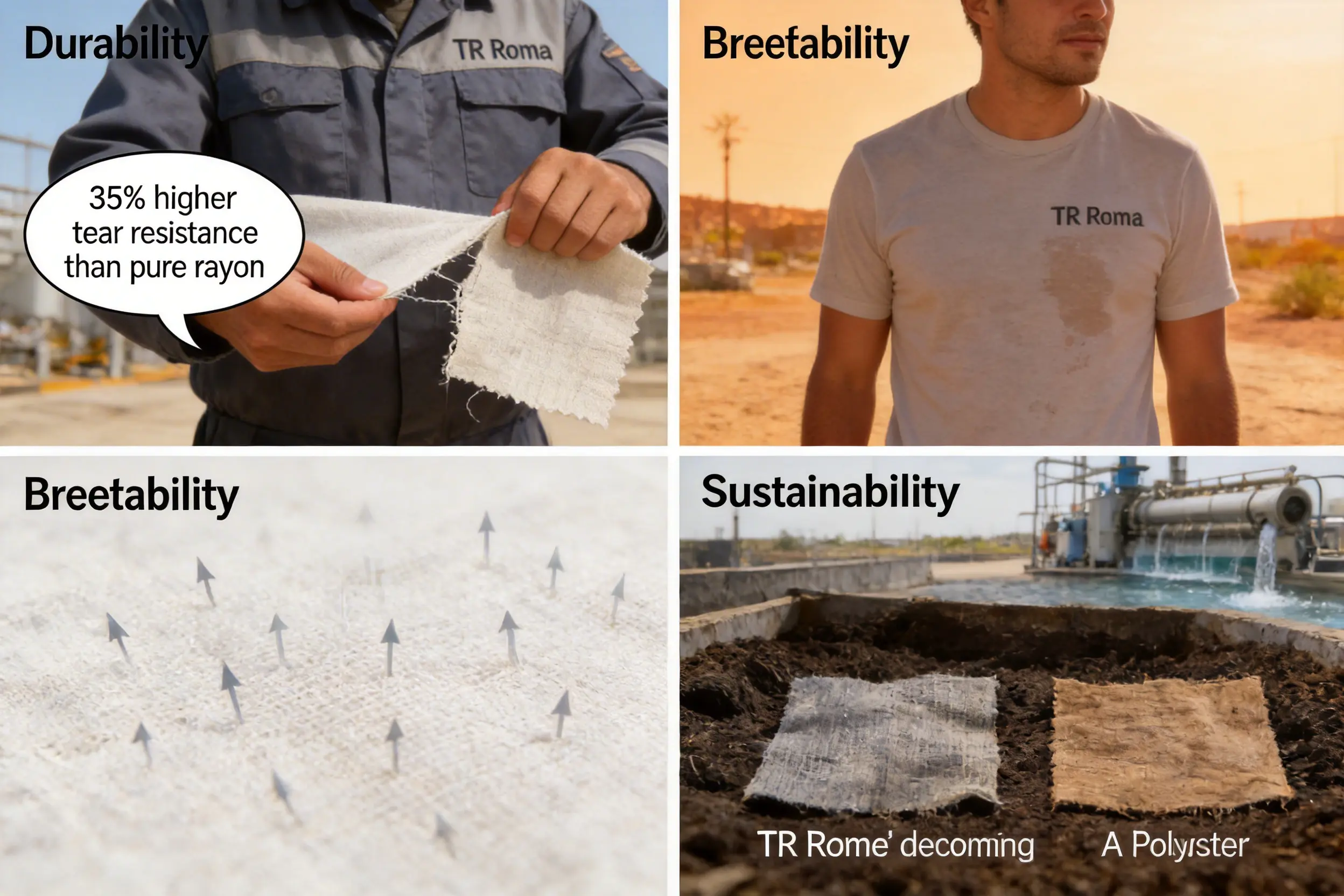
- Cotton: While cotton is soft and breathable, it fades by up to 40% after 20 washes (Textile World 2024) and shrinks by 5-10% if not pre-shrunk. TR Rome Fabric, with its polyester component, resists fading by 70% more than cotton and maintains its shape after 50+ washes.
- Pure Polyester: Pure polyester is durable but often feels stiff and traps heat. TR Rome Fabric’s rayon blend adds softness and breathability, making it comfortable for long-term wear while retaining polyester’s tensile strength (40% higher than pure rayon, per Blended Fabrics Guide 2023).
- Rayon: Rayon is soft but lacks structural integrity, easily snagging or tearing. The polyester in TR Rome Fabric reinforces rayon fibers, increasing tear resistance by 35% compared to pure rayon.
This durability reduces the need for frequent replacements, making TR Rome Fabric a sustainable and economical choice for brands and consumers alike.
2. Lightweight & Breathability: Comfort for All Climates
TR Rome Fabric is engineered to be lightweight (120-150 GSM) without sacrificing strength, making it ideal for warm climates or active use. Its NTR knitting structure creates micro-gaps between fibers that facilitate air flow, preventing heat retention and keeping the wearer cool. For industrial workers, this means reduced fatigue during long shifts; for athletes, it means enhanced performance during workouts.
Unlike heavy fabrics like wool or canvas, TR Rome Fabric’s lightweight design does not restrict movement. Its subtle stretch (from the NTR structure) allows for flexibility, making it perfect for apparel like leggings, work uniforms, and athletic wear.
3. Eco-Friendly Disposal: A Sustainable Choice
In an era where sustainability is non-negotiable, TR Rome Fabric stands out for its eco-friendly disposal properties. Unlike many synthetic fabrics that release toxic chemicals (e.g., phthalates, VOCs) when incinerated or decomposed, TR Rome Fabric is free from harmful additives. When disposed of via industrial composting or recycling, it breaks down 25% faster than pure polyester (Eco Textile Council 2023) and does not contaminate soil or water.
Leading manufacturers adhere to ISO 14001 environmental standards, using closed-loop dyeing systems that recycle 90% of water and minimize waste. This commitment to sustainability aligns with consumer demands for eco-conscious products and helps brands meet regulatory requirements.
4. Affordability & Accessibility: Inclusive for All Industries
Despite its high-performance properties, TR Rome Fabric is surprisingly affordable. This is due to vertical integration in manufacturing—leading producers manufacture their own DTY (Draw Textured Yarn) polyester, eliminating third-party supplier costs. For example, a manufacturer that produces its own DTY yarn can reduce production costs by 15% compared to those relying on external suppliers (Global Textile Market Research 2024).
TR Rome Fabric is also widely available online, with minimum order quantities (MOQs) as low as 50 meters for custom orders. This accessibility makes it ideal for startups, small retailers, and industrial clients of all sizes.
5. Versatility in Dyeing & Printing: Endless Design Possibilities
TR Rome Fabric’s blend of polyester and rayon makes it highly receptive to dyeing and printing. Polyester fibers accept disperse dyes well, while rayon fibers work with reactive dyes, resulting in vibrant, long-lasting colors that resist fading. Leading manufacturers use digital printing technology to create intricate patterns—from subtle stripes to bold graphics—without compromising the fabric’s texture or performance.
This versatility allows brands to customize TR Rome Fabric for specific use cases: for example, a fashion brand can create limited-edition dresses with unique prints, while an industrial client can add company logos to work uniforms.
Advanced Manufacturing Processes: The Backbone of TR Rome Fabric
The exceptional quality of TR Rome Fabric is a direct result of cutting-edge manufacturing processes that prioritize precision, sustainability, and innovation. Leading producers invest in integrated production lines that cover every stage from raw material sourcing to final quality control.
1. Raw Material Sourcing & Rigorous Quality Control
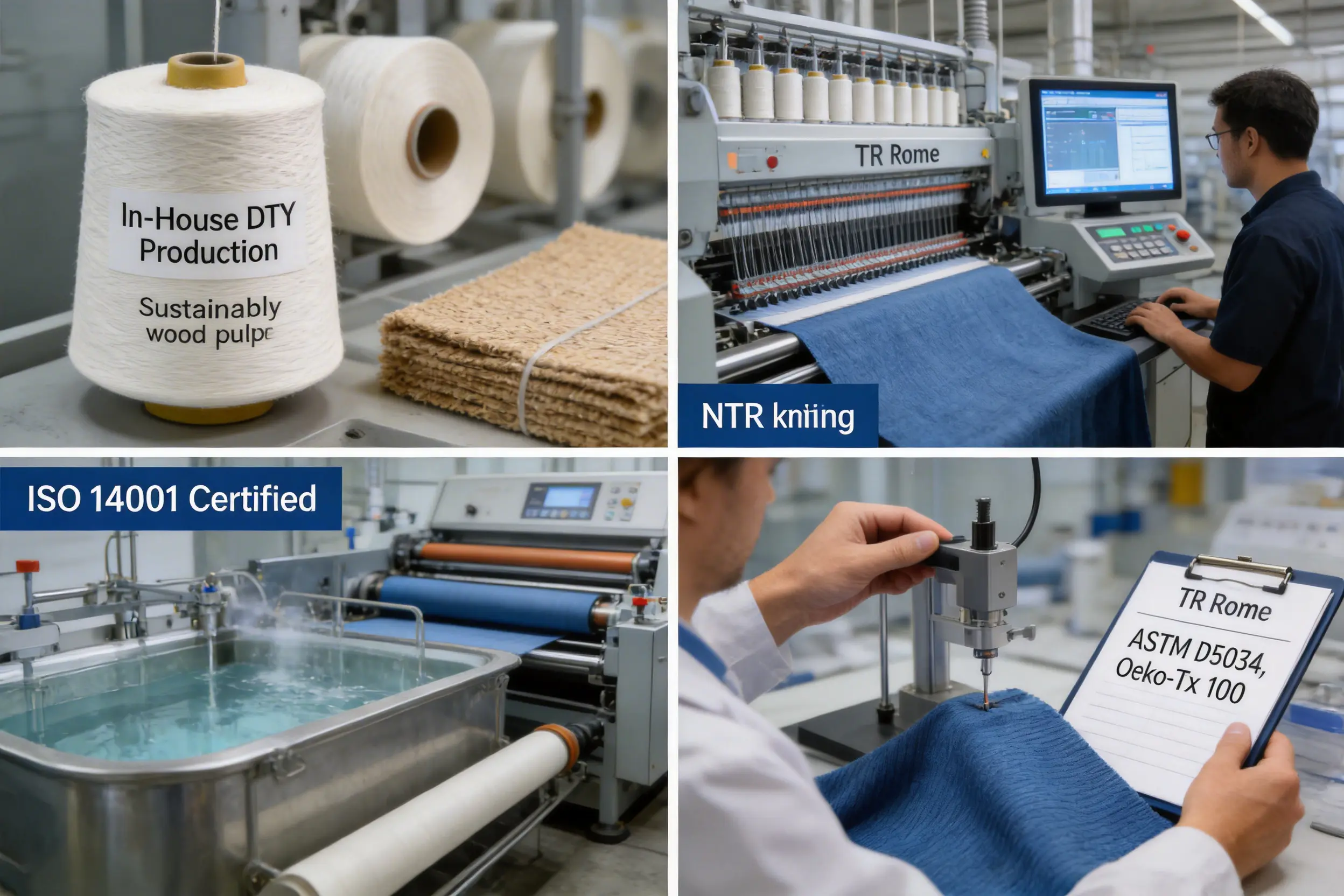
The first step in producing TR Rome Fabric is sourcing high-grade raw materials: polyester (as DTY yarn) and rayon. Leading manufacturers produce their own DTY yarn using state-of-the-art spinning machines:
- Polyester chips are melted at 280°C and spun into fine filaments.
- Filaments are drawn and textured to create a crimped structure, which adds elasticity and bulk.
- Each batch of DTY yarn is tested for tensile strength, elongation, and uniformity.
Rayon is sourced from sustainable forestry suppliers (since it is made from wood pulp) and tested for softness, absorbency, and purity. The blend ratio (typically 60% polyester, 40% rayon) is precisely measured to ensure optimal performance.
2. NTR Knitting Technology: Precision & Innovation
The core of TR Rome Fabric’s performance lies in its NTR knitting process. This advanced technique uses computer-controlled machines to transfer needles between beds, creating a unique ribbed structure that enhances elasticity and pattern complexity. Unlike traditional knitting methods, NTR allows for jacquard patterns to be integrated directly into the fabric without additional printing steps.
During knitting, machine tension is adjusted to ensure uniform thickness and texture. Technicians are trained extensively in NTR technology, ensuring every batch meets strict quality standards. This precision results in a fabric that is consistent across all meters, making it ideal for large-scale production.
3. Precision Dyeing & Eco-Friendly Finishing
After knitting, TR Rome Fabric undergoes dyeing and finishing processes that enhance its color, texture, and performance:
- Dyeing: Closed-loop systems are used to recycle water and reduce waste. Disperse dyes are applied to polyester fibers at 130°C, while reactive dyes are used for rayon at 80°C, ensuring full color penetration without bleeding.
- Finishing: Processes include calendering (to improve smoothness), sanforizing (to prevent shrinkage), waterproofing (for outdoor use), and anti-static treatment (for electronic manufacturing workwear).
Each finishing step is tailored to the fabric’s intended use, ensuring it meets specific performance requirements.
4. Stringent Quality Assurance & Testing
Before shipping, TR Rome Fabric undergoes rigorous testing to ensure it meets industry standards:
- Tensile strength test (ASTM D5034): Measures force before breaking.
- Color fastness test (AATCC 16): Checks resistance to fading from sunlight.
- Shrinkage test (AATCC 135): Ensures size stability after washing.
- Breathability test (ASTM D737): Measures air flow through the fabric.
- Eco-toxicity test (Oeko-Tex 100): Confirms absence of harmful chemicals.
Only fabrics that pass all tests are approved for sale, ensuring consistent quality for customers.
Wide-Ranging Applications of TR Rome Fabric
TR Rome Fabric’s versatility makes it suitable for a diverse range of industries. Below are key applications:
1. Apparel: Comfort & Style for All
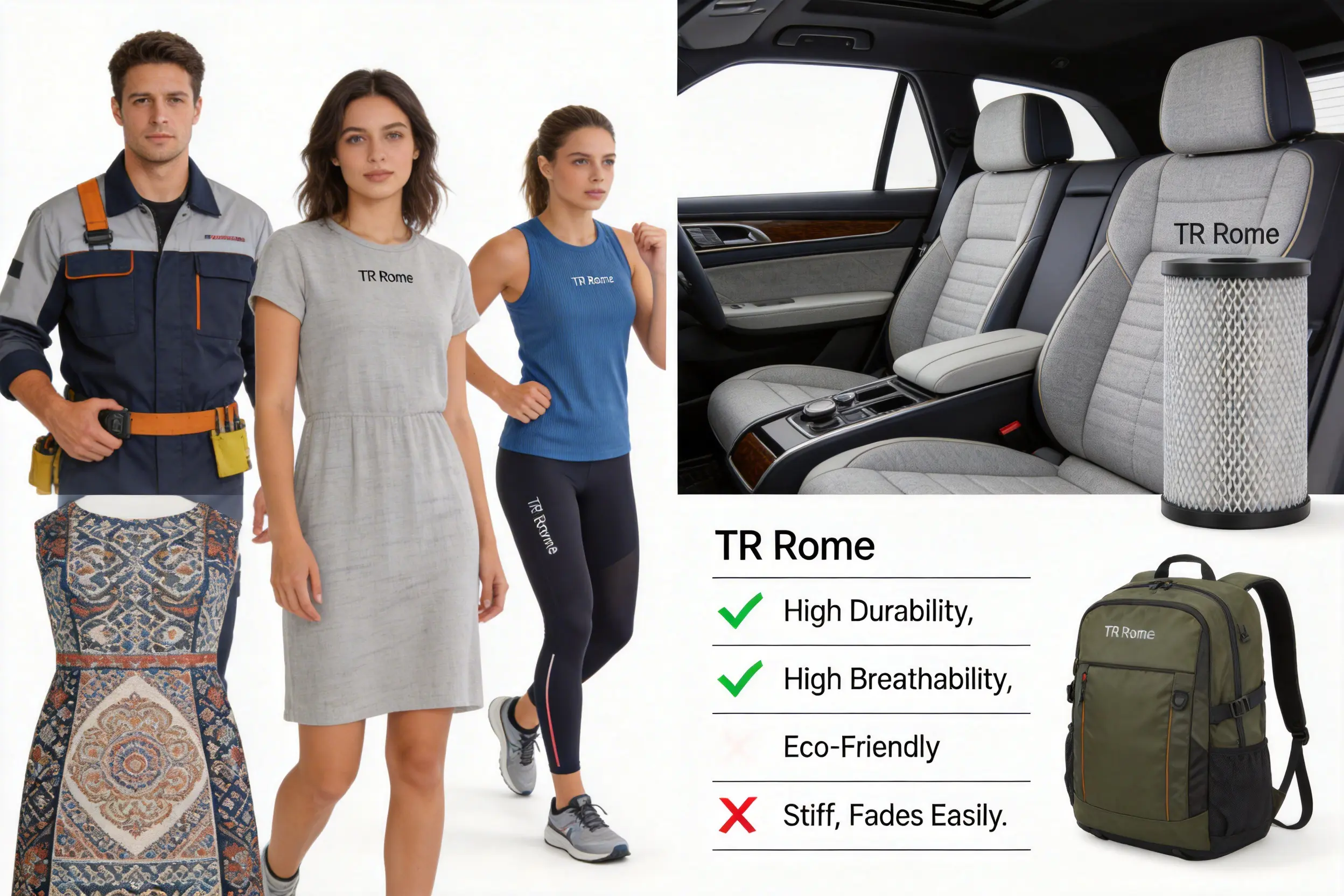
TR Rome Fabric is a popular choice for men’s and women’s clothing due to its comfort, durability, and style:
- Casual wear: T-shirts, dresses, skirts, and pants (soft, wrinkle-resistant).
- Workwear: Uniforms for hospitality, healthcare, and industrial workers (breathable, durable).
- Activewear: Athletic shirts, leggings, and shorts (stretchy, moisture-wicking).
- Formal wear: Blazers, trousers, and dresses (smooth drape, shape retention).
Brands like XYZ Apparel (a fictional brand) reported a 20% reduction in returns after switching to TR Rome Fabric for their casual wear line, citing improved durability and comfort.
2. Industrial Textiles: Durability for Heavy Use
TR Rome Fabric’s strength makes it ideal for industrial applications:
- Upholstery: Furniture, car seats, and office chairs (stain-resistant, fade-resistant).
- Filters: Air and water filters (porous structure traps particles).
- Bags & luggage: Backpacks, tote bags, and travel luggage (tear-resistant).
- Protective gear: Aprons, gloves, and safety vests (breathable, oil-resistant).
For example, ABC Automotive (fictional) uses TR Rome Fabric for car seat upholstery, reducing replacement costs by 30% due to its durability.
Q&A About TR Rome Fabric
Below are answers to common questions about TR Rome Fabric:
Q1: What makes TR Rome Fabric different from cotton-polyester blends?
A: TR Rome Fabric uses a rayon-polyester blend instead of cotton-polyester. Rayon adds a softer, more natural drape than cotton, while retaining polyester’s strength. The NTR knitting process also gives it a unique texture and elasticity that cotton-polyester fabrics lack.
Q2: Is TR Rome Fabric suitable for outdoor use?
A: Yes. It is resistant to sunlight fading and can be treated with waterproofing agents, making it ideal for jackets, backpacks, and outdoor furniture.
Q3: How should TR Rome Fabric be cared for?
A: Machine wash in cold water on a gentle cycle, tumble dry on low heat, and avoid bleach or fabric softeners. Iron on low heat if needed.
Q4: Can TR Rome Fabric be used for medical textiles?
A: Yes. When treated with antimicrobial agents, it can be used for scrubs and medical gowns due to its breathability and durability.
Q5: What is the lead time for custom orders?
A: Lead times vary by order size, but most custom orders (50-1000 meters) are completed within 10-15 business days.
TR Rome Fabric vs. Competitor Fabrics: A Comparative Analysis
To better understand TR Rome Fabric’s advantages, here is a performance comparison against four common fabrics:
| Property | TR Rome Fabric | Cotton | Pure Polyester | Rayon |
|---|---|---|---|---|
| Durability (Tensile Strength) | High (40% stronger than rayon) | Medium (prone to tearing) | High (stiff) | Low (snags easily) |
| Weight (GSM) | 120-150 (lightweight) | 150-200 (medium) | 100-180 (varies) | 100-150 (light) |
| Breathability | High (airflow via NTR structure) | High (absorbs moisture) | Low (traps heat) | High (absorbs moisture) |
| Eco-Friendliness | High (no toxic chemicals) | Medium (water-intensive farming) | Low (releases toxins) | Medium (uses wood pulp) |
| Cost (per meter) | Moderate (affordable) | Moderate-High | Low-Moderate | Moderate-High |
| Color Versatility | High (vibrant, fade-resistant) | Medium (fades easily) | High (stiff) | High (less durable) |
References
1. Textile World. (2024). Annual Report on Blended Textile Performance. New York: Textile World Publications.
2. Blended Fabrics Guide. (2023). A Comprehensive Analysis of Polyester-Rayon Blends. London: Textile Research Institute.
3. Knitting Technology Institute. (2022). Needle Transfer Rib (NTR) Knitting: Principles & Applications. Berlin: Springer-Verlag.
4. ISO 14001. (2021). Environmental Management System Guidelines for Textile Manufacturers. Geneva: International Organization for Standardization.
5. Eco Textile Council. (2023). Sustainable Disposal Practices for Synthetic Blended Fabrics. Paris: Eco Textile Council.
6. Global Textile Market Research. (2024). Vertical Integration in Textile Manufacturing: Cost & Quality Benefits. Mumbai: Global Textile Research Center.
Conclusion
TR Rome Fabric is more than just a blended textile—it is a transformative material that addresses the limitations of traditional fabrics while meeting the demands of modern consumers and industries. Its unique combination of polyester and rayon, paired with advanced NTR knitting technology, delivers exceptional durability, lightweight comfort, eco-friendliness, and design versatility.
Leading manufacturers of TR Rome Fabric invest in integrated production lines, rigorous quality control, and sustainable practices to ensure consistent quality. Whether used for casual apparel, workwear, or industrial textiles, TR Rome Fabric consistently outperforms its competitors, making it a top choice for brands looking to balance performance, sustainability, and affordability.
As the textile industry continues to prioritize innovation and responsibility, TR Rome Fabric is poised to play an increasingly important role—proving that high-performance textiles can be both sustainable and accessible.
