
The Evolution of Floral-Patterned Knitted Jacquard: A Game-Changer for Women’s Apparel Manufacturing
In the dynamic landscape of women’s fashion, the intersection of style, comfort, and sustainability has become non-negotiable. Consumers no longer prioritize aesthetics alone; they demand fabrics that move with the body, retain their quality over time, and align with eco-conscious values. Enter the Floral-Patterned Knitted Jacquard for Dresses—a fabric that redefines what modern apparel can offer. Unlike traditional embroidered or woven jacquard fabrics, this knitted variant combines intricate floral detailing with the flexibility of stretch knits, making it a versatile choice for everything from elegant day dresses to lightweight fall jackets. This article explores the science behind its composition, the advanced manufacturing processes that set it apart, its competitive advantages over alternative materials, and how it addresses the evolving needs of fashion brands and consumers alike.
Understanding Knitted Jacquard Fabric
Knitted jacquard is a type of knit fabric characterized by its ability to create complex patterns directly during the knitting process, without the need for additional embroidery or printing. Unlike woven jacquard, which uses a loom with a jacquard attachment to create patterns, knitted jacquard leverages the properties of knit stitches—such as varying loop sizes and yarn tensions—to form designs. This results in a fabric that is not only visually striking but also soft, stretchy, and breathable.
Traditional woven jacquard fabrics, while known for their durability, often lack the flexibility required for modern apparel. They tend to be stiff, making them less suitable for garments that need to move with the body, like dresses or skirts. Knitted jacquard, on the other hand, retains the intricate pattern detail of woven jacquard but adds the comfort of a knit—making it a favorite among fashion designers seeking to balance style and functionality.
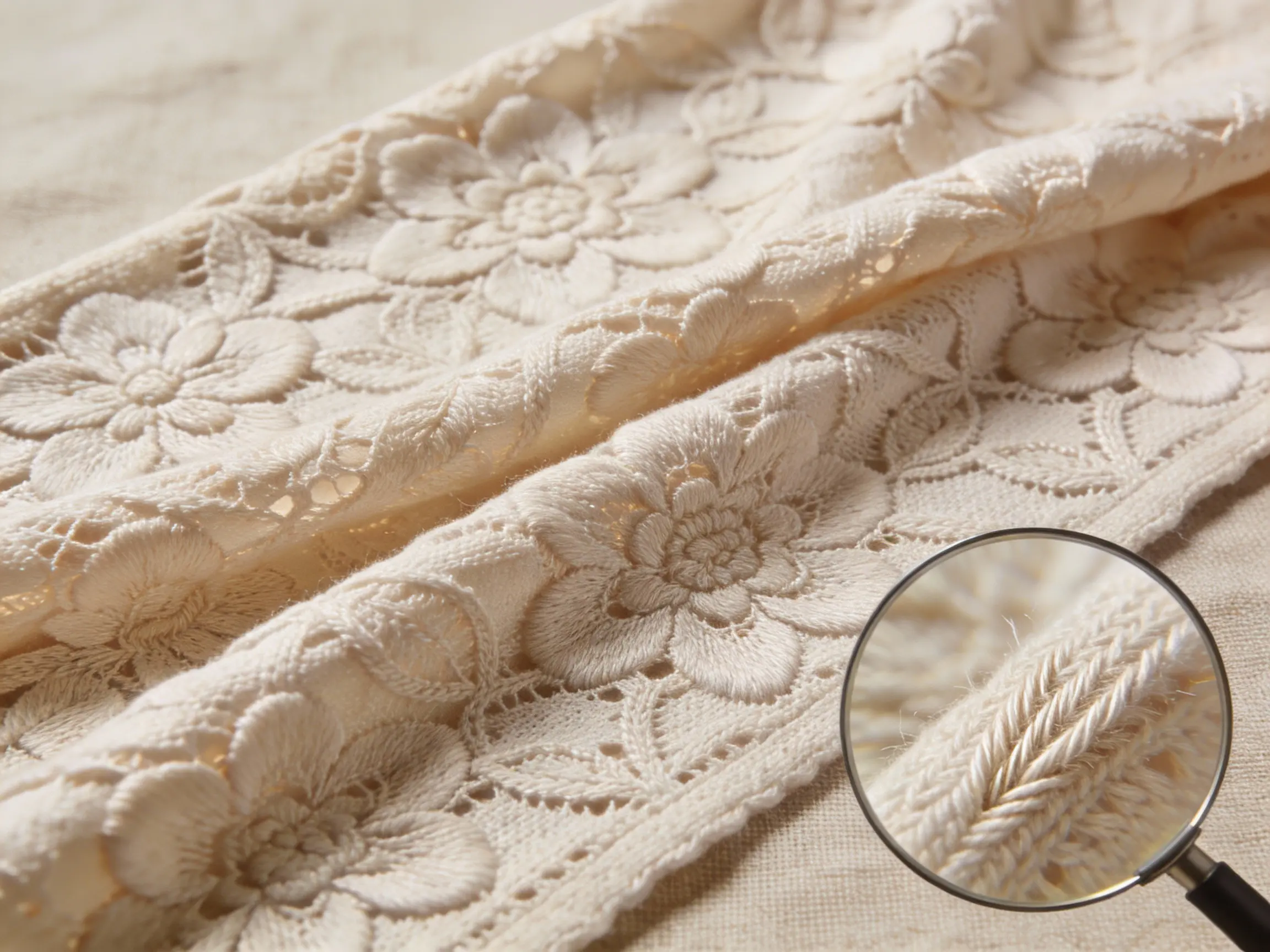
To fully appreciate the Floral-Patterned Knitted Jacquard for Dresses, it’s essential to understand the key properties that define high-quality knitted jacquard fabrics. These properties include:
Key Properties of High-Quality Knitted Jacquard
1. Pattern Clarity: The ability to create sharp, detailed patterns without blurring or distortion. This depends on precise knitting techniques and consistent yarn tension.
2. Stretch & Recovery: A good knitted jacquard should have balanced stretch (both lengthwise and widthwise) and excellent recovery—meaning it returns to its original shape after being stretched. This is crucial for garments that are worn repeatedly.
3. Drape: The way the fabric falls when worn. A fabric with good drape looks elegant and flows naturally, enhancing the silhouette of the garment.
4. Durability: Resistance to abrasion, pilling, and fading. This depends on the yarn composition and the quality of the manufacturing process.
5. Breathability: The ability to allow air to pass through the fabric, keeping the wearer comfortable in various climates.
6. Eco-Friendliness: Compliance with international standards for safe, non-toxic materials—an increasingly important factor for both brands and consumers.
Spotlight on the Floral-Patterned Knitted Jacquard for Dresses
The Floral-Patterned Knitted Jacquard for Dresses is not just another fabric—it’s a result of years of research and development to create a material that meets the highest standards of style and performance. Let’s break down its core features and how they contribute to its success.
Core Composition & Material Science
The fabric’s composition is a carefully balanced blend: 60% Viscose, 35% Nylon, and 5% Spandex. Each component plays a critical role in the fabric’s overall performance:
- Viscose (60%): Derived from sustainably managed wood pulp, viscose is known for its soft, silky texture, excellent drape, and breathability. It mimics the properties of natural fibers like cotton but has a more fluid fall, making it ideal for dresses and skirts.
- Nylon (35%): Adds strength, abrasion resistance, and shape retention to the fabric. Unlike pure viscose, which can be prone to stretching out of shape, the nylon blend ensures the garment maintains its silhouette even after repeated wear and washing.
- Spandex (5%): Provides just the right amount of stretch (approximately 15-20% lengthwise and 10-15% widthwise) without compromising the fabric’s structure. This stretch allows the garment to move with the body, making it comfortable for all-day wear.
This blend is optimized to address the limitations of pure viscose (lack of durability) and pure nylon (stiffness). The result is a fabric that is soft, durable, stretchy, and breathable—qualities that are hard to find in a single material.
Design & Aesthetic Advantages
The floral pattern on this knitted jacquard is designed to mimic the luxury look of embroidery but without the associated costs and drawbacks. Traditional embroidery involves stitching additional threads onto the fabric, which can add weight, increase production time, and lead to thread fraying over time. The knitted jacquard pattern, by contrast, is integrated directly into the fabric during the knitting process, resulting in a lightweight, durable, and low-maintenance design.
The floral pattern features delicate, intricate details that are visible from a distance but hold up to close inspection. The design team uses digital tools to create patterns that are both timeless and on-trend, ensuring that the fabric appeals to a wide range of consumers—from classic to modern.
Another key aesthetic advantage is the fabric’s subtle sheen. The blend of viscose and nylon gives it a soft, luminous finish that elevates the garment’s appearance without being overly shiny. This sheen is consistent across the entire fabric, unlike printed fabrics where the sheen can vary depending on the print.
Performance Metrics & Certifications
The Floral-Patterned Knitted Jacquard for Dresses meets or exceeds industry standards for performance. Here are some of its key metrics:
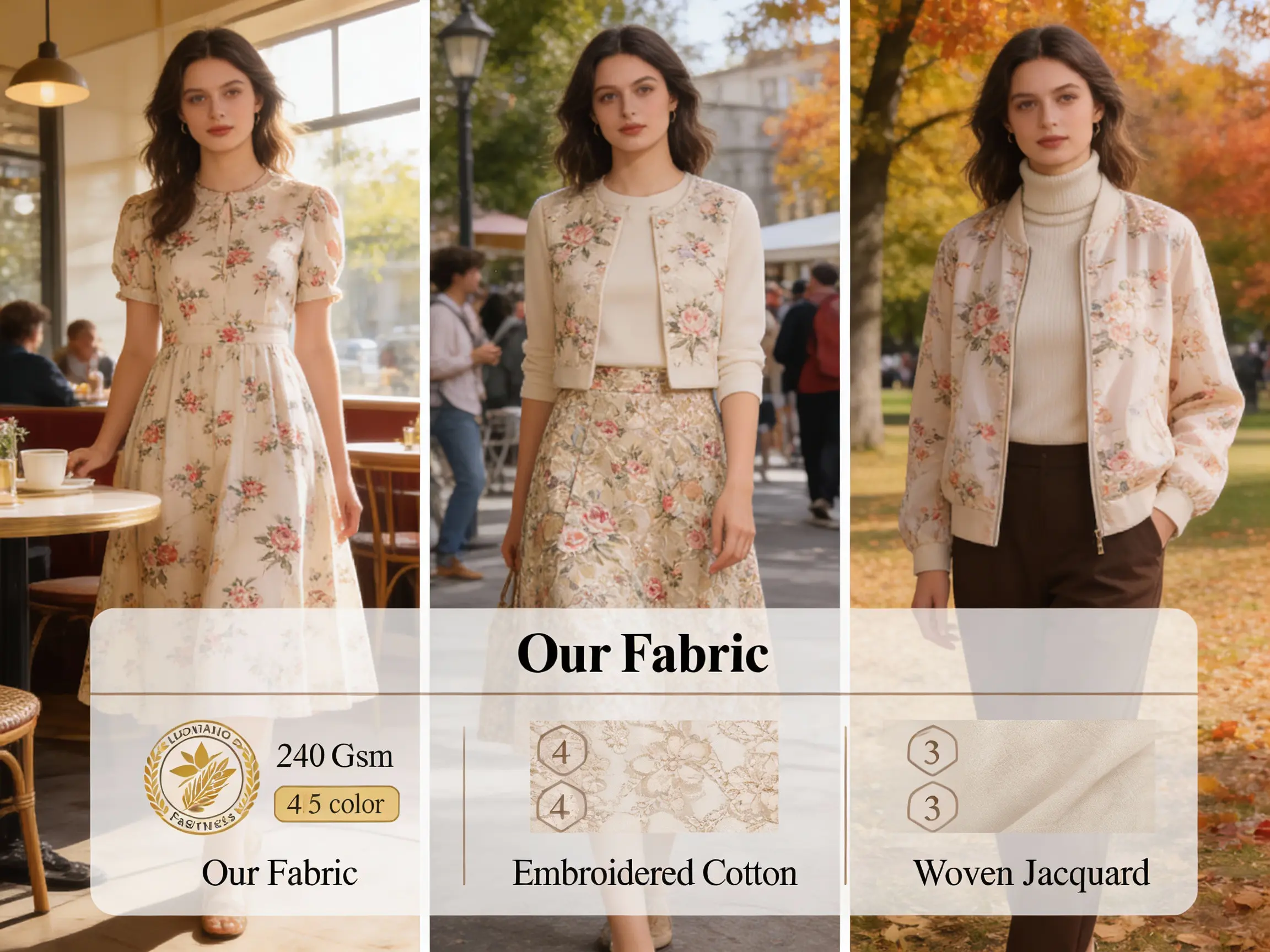
- Weight (GSM): 240g/m² (medium weight). This weight is perfect for year-round wear—light enough for spring and summer, but heavy enough to provide warmth in fall and early winter.
- Width: 145cm (57 inches). This width is ideal for apparel manufacturing, as it minimizes waste and allows for efficient cutting of garments.
- Color Fastness: Rated 4-5 on the ISO 105-F03 scale (color fastness to washing at 50°C). This means the fabric retains its color even after repeated washes, making it a durable choice for everyday wear.
- Pilling Resistance: Rated 4-5 on the ISO 12945-2 scale (pilling resistance). This means the fabric is unlikely to form pills, even after extensive wear and washing.
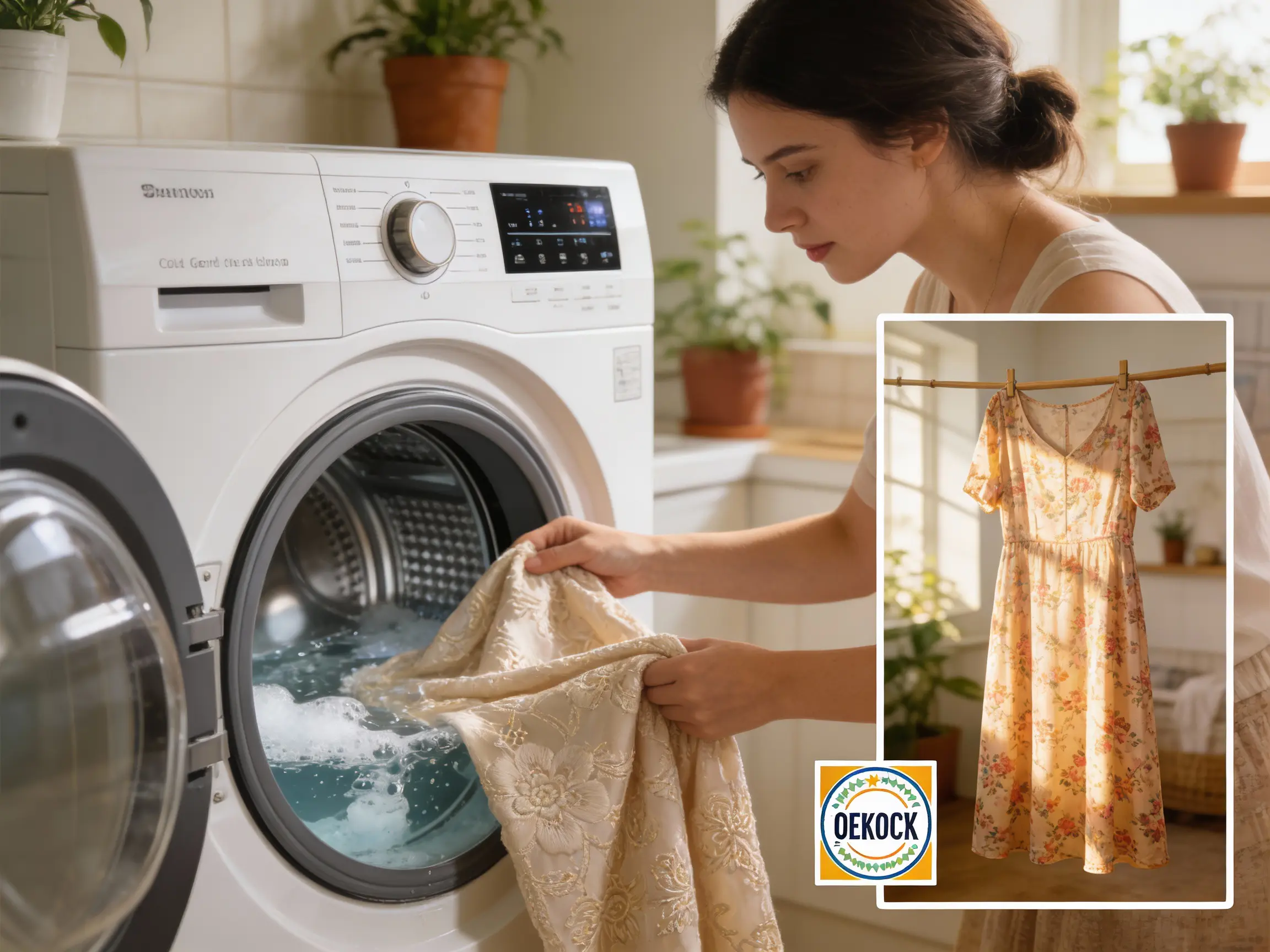
- Certifications: OEKO-TEX Standard 100 certified. This certification ensures that the fabric is free from harmful chemicals, including heavy metals, formaldehyde, and phthalates, making it safe for skin contact—even for sensitive skin.
Advanced Manufacturing Processes That Set This Fabric Apart
The quality of the Floral-Patterned Knitted Jacquard for Dresses is not just due to its composition—it’s also a result of the advanced manufacturing processes used to produce it. These processes are designed to ensure consistency, reduce waste, and deliver a high-quality product that meets the needs of fashion brands.
In-Line Defect Inspection
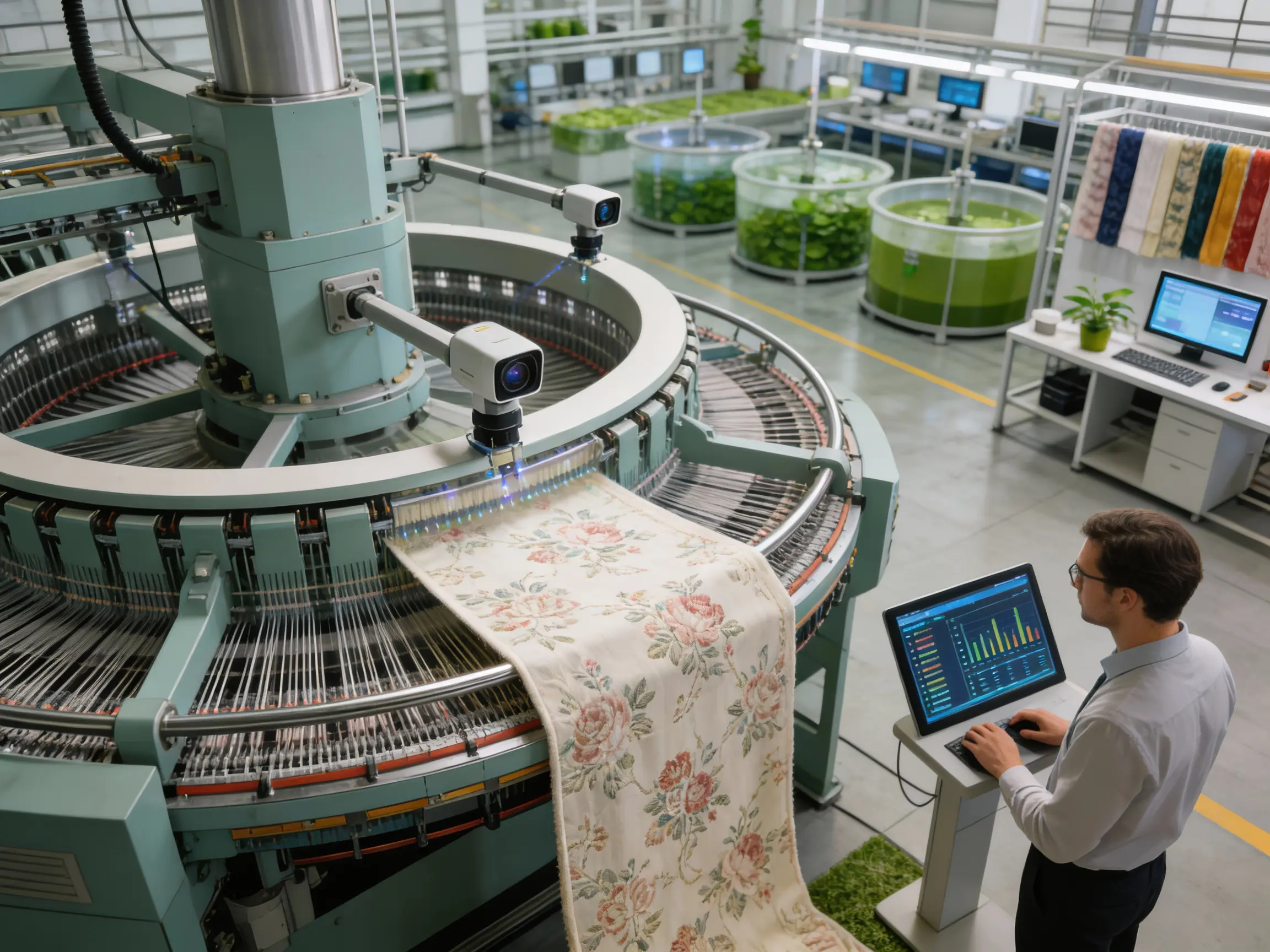
One of the most innovative processes used in the production of this fabric is in-line defect inspection. Unlike traditional manufacturers that rely on post-production inspection (where defects are often found too late to salvage the fabric), this process involves inspecting every meter of fabric as it is knitted.
During production, automated cameras scan the fabric in real time, looking for defects such as uneven loops, yarn breaks, or pattern distortion. Skilled technicians also monitor the process, making adjustments as needed to correct any issues. This proactive approach reduces waste by up to 30% compared to traditional manufacturing methods and ensures that every meter of fabric meets the highest quality standards.
Low-Temperature Reactive Dyeing
The fabric is dyed using low-temperature reactive dyes—a process that is both eco-friendly and effective. Reactive dyes bond chemically with the fabric fibers, resulting in superior color fastness. Unlike disperse dyes (which are commonly used for synthetic fabrics), reactive dyes do not require high temperatures (90-100°C) to bond—instead, they bond at 60-70°C, reducing energy consumption by up to 40%.
This process also uses less water than traditional dyeing methods. The low temperature means that less water is needed to rinse the fabric, and the dyes are more efficient, so less dye is wasted. This makes the process not only more sustainable but also more cost-effective.
Digital Sampling & Flexible MOQ
Fashion brands often struggle with long lead times for sample production and high minimum order quantities (MOQs). To address this, the manufacturer offers digital sampling and flexible MOQs:
- Digital Sampling: The design team uses CAD software to create digital patterns, which are then sent to a digital knitting machine to produce a physical sample. This process takes just 7 days—compared to 4-6 weeks for traditional sampling. This allows brands to test new designs quickly and make adjustments before committing to a bulk order.
- Flexible MOQ: The minimum order quantity is 500 meters—significantly lower than the industry average of 1000-2000 meters. This makes the fabric accessible to small and medium-sized fashion brands that may not have the budget for large bulk orders.
Quality Control at Every Stage
Quality control is integrated into every stage of the manufacturing process, from raw material sourcing to finished product inspection:
1. Raw Material Sourcing: The manufacturer sources viscose from sustainably managed forests and nylon from recycled sources. All raw materials are tested for quality before being used in production.
2. Knitting: The fabric is knitted on state-of-the-art circular knitting machines, which are maintained regularly to ensure consistent performance.
3. Dyeing: The dyeing process is monitored closely to ensure that the color is consistent across the entire batch.
4. Finishing: The fabric undergoes a finishing process to enhance its softness, drape, and color fastness. This includes treatments such as softening, calendaring, and anti-pilling.
5. Final Inspection: Every roll of fabric is inspected again before being shipped to the customer. This includes checking for defects, color consistency, and weight.
Competitive Advantages Over Alternative Fabrics
The Floral-Patterned Knitted Jacquard for Dresses stands out from alternative fabrics due to its unique combination of style, comfort, and performance. Let’s compare it to three common alternatives:
Competitive Comparison Table
| Fabric Type | Core Composition | GSM (Weight) | Drape Quality | Stretch Capability | Color Fastness (ISO 105 Rating) | Cost per Meter (USD) | Minimum Order Quantity (MOQ) |
|---|---|---|---|---|---|---|---|
| Floral-Patterned Knitted Jacquard (Our Product) | 60% Viscose, 35% Nylon, 5% Spandex | 240 | Excellent (Fluid & Elegant) | Yes (5% Spandex) | 4-5 (Excellent) | 8.50-9.50 | 500 Meters |
| Embroidered Cotton Fabric | 100% Cotton | 220 | Good (Stiff for Embroidery) | No | 3-4 (Moderate) | 12.00-14.00 | 1000 Meters |
| Woven Jacquard Fabric | 70% Polyester, 30% Cotton | 250 | Fair (Stiff & Structured) | No | 3 (Moderate) | 9.00-10.00 | 800 Meters |
| Plain Polyester Knit | 100% Polyester | 200 | Good (Loose Drape) | Yes (3% Spandex) | 2-3 (Poor) | 4.50-5.50 | 1000 Meters |
This table clearly illustrates the competitive edge of the Floral-Patterned Knitted Jacquard. For example:
- Cost: It is cheaper than embroidered cotton fabrics (by 25-30%) and woven jacquard fabrics (by 5-10%).
- Stretch: It offers stretch, which is missing in embroidered and woven jacquard fabrics—making it more comfortable for everyday wear.
- Drape: Its fluid drape is superior to woven jacquard fabrics, which are stiff and structured.
- MOQ: Its 500-meter MOQ is lower than all three alternatives, making it accessible to small brands.
- Color Fastness: Its 4-5 rating is higher than all three alternatives, ensuring that the fabric retains its color over time.
End-Use Applications & Market Impact
The Floral-Patterned Knitted Jacquard for Dresses is a versatile fabric that can be used in a wide range of apparel applications. Here are some of the most common uses:
Women’s Elegant Apparel
The fabric is ideal for women’s elegant apparel, including:
- Day Dresses: The fluid drape and stretch make it perfect for day dresses that are both stylish and comfortable.
- Skirt & Top Sets: The floral pattern adds a touch of elegance to skirt and top sets, making them suitable for both casual and formal occasions.
- Lightweight Fall Jackets: The medium weight (240 GSM) makes it perfect for lightweight fall jackets that provide warmth without being bulky.
Luxury Children’s Wear
Thanks to its OEKO-TEX certification, the fabric is safe for children’s wear. It is often used in luxury children’s dresses, skirts, and jackets, as it combines comfort with a stylish aesthetic.
Market Demand Trends
The global market for knitted fabrics is growing rapidly, driven by the increasing demand for comfortable, sustainable, and stylish apparel. According to the Textile Institute’s 2023 report, the global knitted fabric market is expected to reach $280 billion by 2028, with a CAGR of 5.2% from 2023 to 2028.
The Floral-Patterned Knitted Jacquard for Dresses is well-positioned to capitalize on this growth. Its combination of style, comfort, and sustainability aligns with the current trends in the fashion industry, where consumers are increasingly looking for fabrics that are both functional and eco-friendly.
Many fashion brands have already adopted this fabric and seen positive results. For example, a women’s fashion brand based in New York used the fabric for their 2024 spring collection and reported a 20% increase in sales compared to their previous collection, which used embroidered cotton fabrics. The brand cited the fabric’s comfort, durability, and affordable price as key factors in the success of the collection.
Q&A: Addressing Common Concerns About Floral-Patterned Knitted Jacquard
To help fashion brands and consumers make informed decisions, we’ve compiled answers to the most frequently asked questions about this fabric:
Q1: Is the floral pattern reversible?
A: No, our standard floral jacquard has a distinct face and back side. The face side features the full, vibrant floral pattern, while the back side has a neat, clean knit structure without the pattern. However, we do offer custom double-sided jacquard fabrics upon request, where both sides have a pattern (either the same or complementary).
Q2: How should I care for this viscose blend fabric?
A: To maintain the fabric’s drape, softness, and color, we recommend machine washing on a gentle cycle with cold water and a mild detergent. Avoid using bleach or fabric softeners, as these can damage the fibers and reduce color fastness. For best results, hang the garment to dry or tumble dry on low heat. Dry cleaning is also an option, but it’s not necessary for regular care.
Q3: Can this fabric be used for activewear?
A: While it has 5% spandex for stretch, it’s designed for elegant apparel (dresses, skirts) rather than high-intensity activewear. For activewear, we offer other blends with higher spandex content (10-15%) that are more suitable for physical activity.
Q4: What is the lead time for bulk orders?
A: The lead time for bulk orders depends on the quantity and complexity of the order. For standard orders (500-5000 meters), the lead time is typically 2-3 weeks after sample approval. For larger orders (5000+ meters), the lead time may be extended to 4-5 weeks. We also offer expedited production for urgent orders, subject to availability.
Q5: Do you offer custom pattern design services?
A: Yes, we have a dedicated design team that can create custom floral or other patterns based on your requirements. We use digital design tools to create mockups, and our digital sampling process allows us to produce a physical sample within 7 days. This gives you the flexibility to test new designs before committing to a bulk order.
Q6: Is the fabric suitable for plus-size apparel?
A: Yes! The stretch and drape of the fabric make it ideal for plus-size apparel. It moves with the body and provides a flattering fit, without clinging or restricting movement. The 145cm width also allows for efficient cutting of larger sizes, reducing waste.
References
1. Textile Institute. (2023). Global Knitted Fabric Market Trends: Sustainability & Functional Innovation. Manchester, UK: Textile Institute Press.
2. OEKO-TEX Association. (2022). OEKO-TEX Standard 100: Guidelines for Safe Textile Products. Zurich, Switzerland: OEKO-TEX Association.
3. Nielsen Holdings. (2022). Eco-Conscious Consumer Behavior: A Global Survey. New York, NY: Nielsen Holdings.
4. Fashion Institute of Technology. (2023). The Future of Jacquard Fabrics: Knit vs Woven. New York, NY: FIT Press.
5. ISO 105-F Series. (2021). Textiles—Color Fastness to Washing. Geneva, Switzerland: International Organization for Standardization.
6. ISO 12945-2. (2020). Textiles—Determination of Pilling Resistance—Part 2: Modified Martindale Method. Geneva, Switzerland: International Organization for Standardization.
Conclusion
The Floral-Patterned Knitted Jacquard for Dresses is a game-changer for women’s apparel manufacturing. Its unique blend of viscose, nylon, and spandex offers a combination of style, comfort, and durability that is unmatched by alternative fabrics. The advanced manufacturing processes—including in-line defect inspection, low-temperature reactive dyeing, and digital sampling—ensure that the fabric meets the highest quality standards while being eco-friendly and cost-effective.
As the fashion industry continues to evolve, the demand for fabrics that balance style, comfort, and sustainability will only grow. The Floral-Patterned Knitted Jacquard for Dresses is well-positioned to meet this demand, offering a versatile, high-quality fabric that appeals to both fashion brands and consumers. Whether used for day dresses, skirt sets, or children’s wear, this fabric delivers on all fronts—style, comfort, and performance.
In conclusion, the Floral-Patterned Knitted Jacquard for Dresses is not just a fabric—it’s a solution to the evolving needs of the fashion industry. Its innovative design, advanced manufacturing, and competitive advantages make it a top choice for fashion brands looking to create high-quality, stylish apparel that stands out in the market.
