RT Mesh Fabric for Breathable Performance and Versatile Textile Applications
RT Mesh Fabric is a practical knitted textile designed for airflow, comfort, lightweight structure, and adaptable performance across apparel, sportswear, lining, footwear, bags, accessories, and industrial textile applications. As part of the NR knitted fabric category, it combines the openness of mesh construction with the production flexibility of modern knitting, yarn texturing, dyeing, and finishing. The result is a fabric that can help regulate body heat, reduce cling, improve ventilation, and support a clean appearance in finished products.
In a market where buyers compare materials by breathability, cost, strength, hand feel, color consistency, and supply reliability, RT Mesh Fabric stands out because it is not merely a basic perforated textile. Its value comes from a coordinated manufacturing system: yarn selection, draw textured yarn processing, knitting control, post-dyeing, finishing, inspection, and customer-oriented customization. When these stages are well managed, mesh fabric can deliver the cooling effect and lightness users expect while reducing common problems such as excessive snagging, unstable dimensions, uneven dyeing, and weak tear resistance.
Hangzhou Jinfeng Textile Co., Ltd. supplies textile solutions including polyester rayon fabric, knitted jacquard fabric, NTR knitted fabric, NR knitted fabric, and slightly intermingled draw textured yarn. With experience in DTY polyester yarn production, blended fabric processing, post-dyeing, finishing, and sales, the company supports RT Mesh Fabric with a broad textile production foundation. Its integrated approach allows closer control over yarn quality, fabric structure, color processing, and final inspection, giving customers a dependable material for both regular programs and customized development.

Understanding RT Mesh Fabric
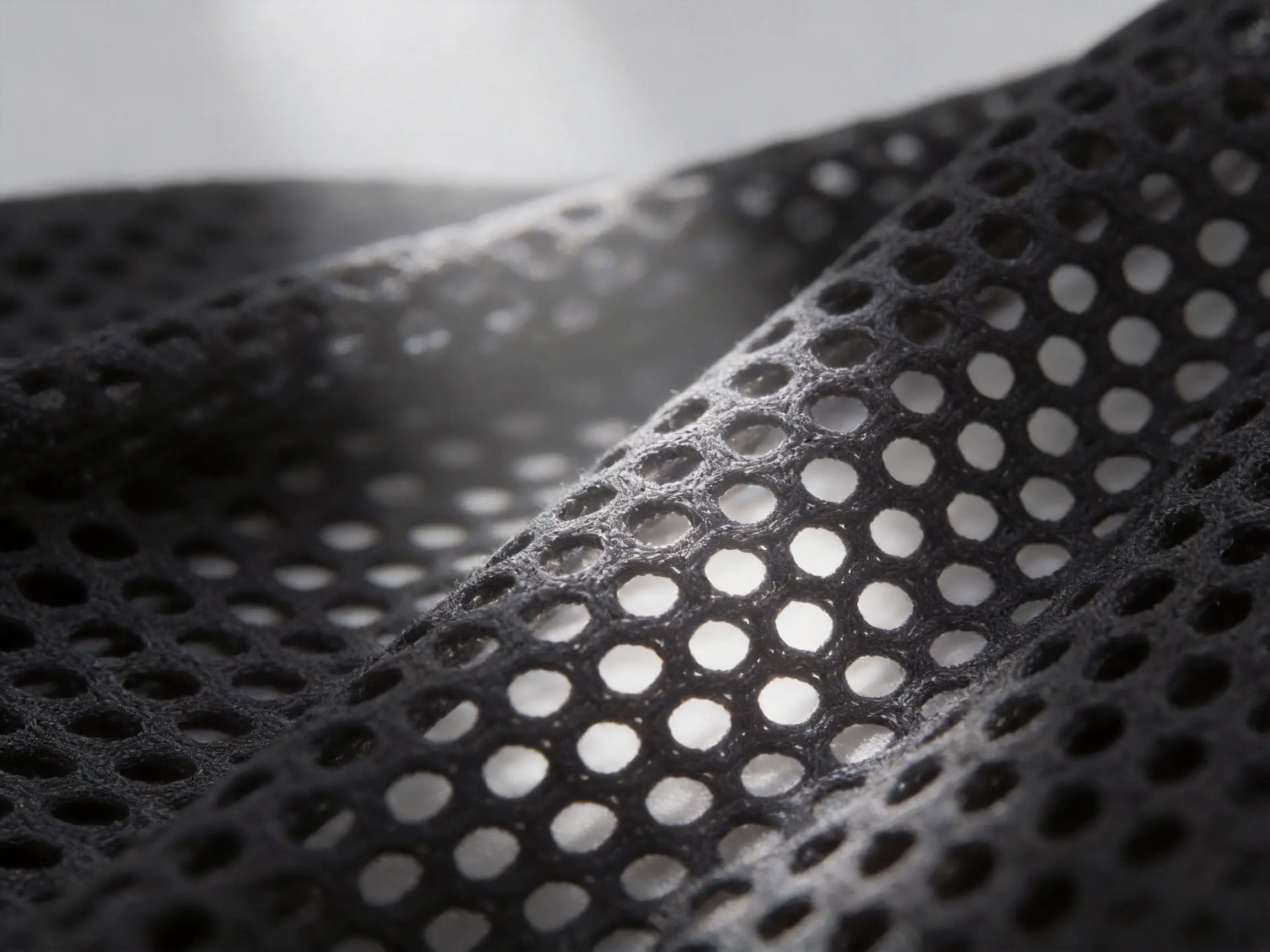
RT Mesh Fabric is a knitted mesh material characterized by an open-hole structure. Unlike compact jersey or dense woven cloth, mesh fabric contains regularly formed spaces that allow air and moisture vapor to pass through more easily. This open construction is the primary reason mesh is widely chosen for warm-weather apparel, athletic garments, ventilation panels, inner linings, and products that require a combination of coverage and breathability.
The “mesh” effect is created during knitting by controlling loops, yarn placement, needle selection, and fabric tension. Depending on the design, the holes can be small and subtle, medium and balanced, or larger and more technical in appearance. RT Mesh Fabric can be developed to meet various requirements such as soft touch, moderate elasticity, lightweight drape, quick drying, decorative texture, or functional ventilation.
As an NR knitted fabric, RT Mesh Fabric belongs to a category that benefits from the flexibility of knit production. Knitted fabrics are generally more elastic and form-fitting than woven fabrics because their structure is based on interlooped yarns. In mesh form, this looped construction becomes even more useful: it supports movement, reduces weight, and enables a more breathable surface. This makes RT Mesh Fabric suitable for products that must remain comfortable during wear, transport, storage, or repeated use.
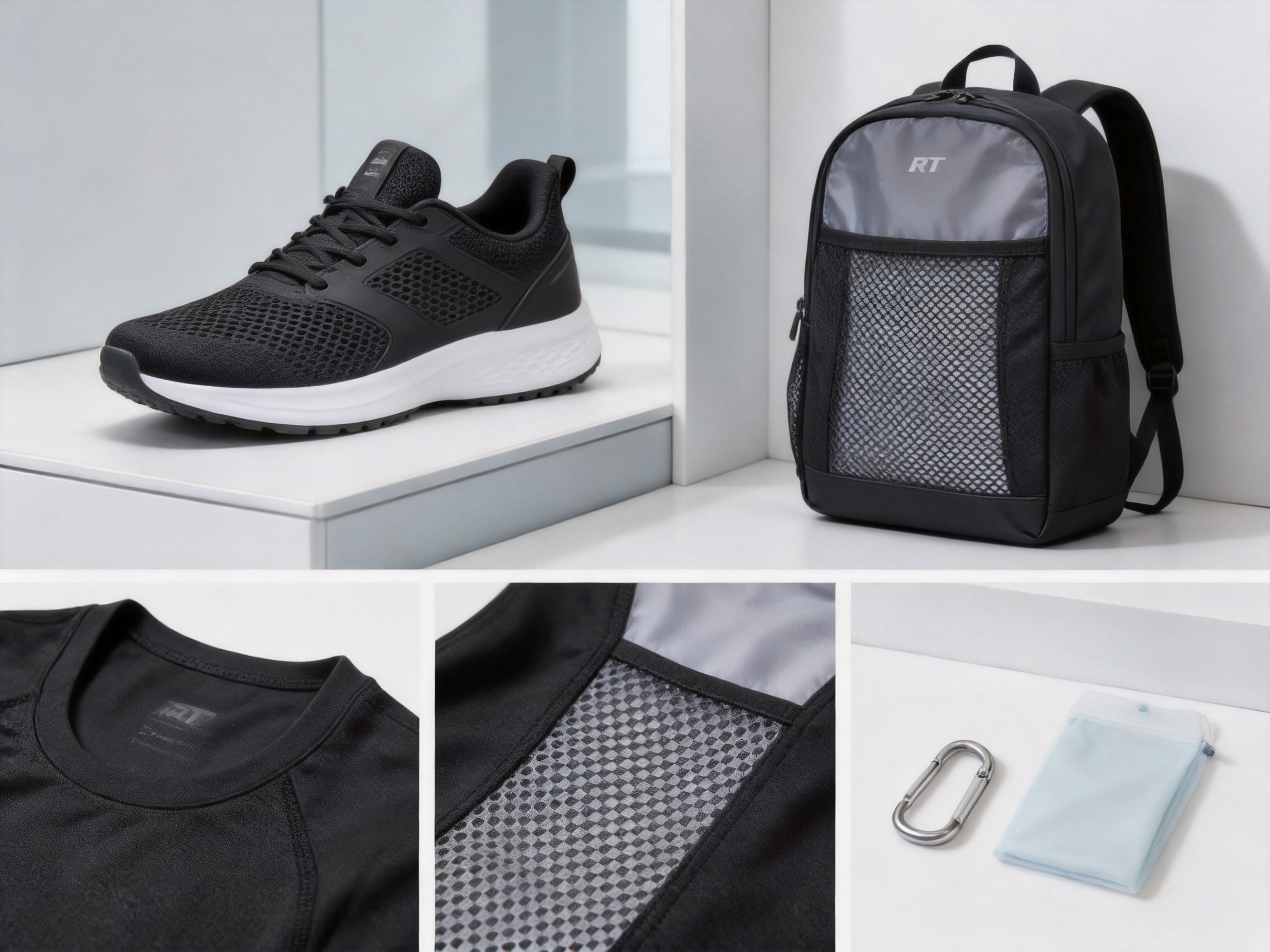
RT Mesh Fabric may be used alone or combined with other textiles. In sportswear, it can be positioned in ventilation zones under arms, across the back, or inside garment panels. In footwear, it can be used for upper linings or breathable overlays. In bags, it can serve as a lightweight pocketing or visible decorative component. In protective and industrial items, it can improve airflow while maintaining structure. This versatility is one of the central strengths of mesh fabric when compared with dense textile alternatives.
Why Breathability Matters in Modern Textiles
Comfort is one of the strongest purchase drivers in the textile industry. Whether a buyer is producing sports clothing, casual wear, outdoor accessories, footwear, or interior textile components, end users increasingly expect fabrics that help manage heat and moisture. RT Mesh Fabric answers this demand by creating physical channels for air circulation.
When the human body generates heat, trapped warm air can make a garment feel heavy, damp, or uncomfortable. Dense fabrics may restrict airflow, especially if they are thick, tightly woven, or coated. RT Mesh Fabric reduces this effect by allowing heat to escape more freely. This is especially useful in high-movement products such as training apparel, cycling garments, gym wear, running accessories, and workwear linings.
Breathability also supports faster drying. Because mesh has less continuous surface area and more open space, moisture can evaporate more efficiently than it would from many dense fabrics. This does not mean every mesh fabric is automatically a high-performance moisture-management textile, but it does provide a strong structural advantage. When combined with suitable synthetic yarns and proper finishing, RT Mesh Fabric can support quick-dry performance and improved wearing comfort.
Another benefit is weight reduction. A fabric with an open-hole construction typically uses less material per unit area than a compact fabric of similar yarn size. Lower weight can improve garment comfort, reduce shipping load, and make finished products feel more agile. For manufacturers producing activewear or lightweight accessories, these characteristics can offer clear commercial advantages.
Advantages Over Common Competing Fabrics
RT Mesh Fabric competes with many textile options, including solid polyester knit, plain jersey, woven lining, nonwoven material, tricot, spacer fabric, and ordinary low-grade mesh. Its advantages are best understood by comparing performance attributes that matter in real production and consumer use.
Compared with dense polyester knit, RT Mesh Fabric offers greater airflow and a lighter feel. Dense knits may provide smooth coverage but can trap heat against the skin. RT Mesh Fabric reduces this problem through its open structure. It can help the wearer feel cooler and more comfortable, especially when used in targeted ventilation zones.
Compared with plain woven lining, RT Mesh Fabric usually provides better flexibility. Woven linings can be stable but may feel restrictive in sportswear, footwear, or curved product areas. Knitted mesh adapts more easily to movement and shape. This makes it valuable in products where comfort and flexibility must be balanced with durability.
Compared with nonwoven materials, RT Mesh Fabric generally delivers better textile aesthetics, more comfortable hand feel, and greater suitability for higher-quality finished products. Nonwovens may be economical, but they often lack the softness, stretch, and long-term wear characteristics needed for apparel or premium accessories. RT Mesh Fabric provides a more refined appearance and tactile experience.
Compared with ordinary low-quality mesh, RT Mesh Fabric gains advantage from controlled yarn selection, knitting consistency, dyeing quality, and finishing. Low-grade mesh can suffer from uneven holes, loose loops, poor color fastness, excessive deformation, or rough handle. A professionally produced RT Mesh Fabric can be engineered for more consistent appearance, improved dimensional stability, and better process reliability.
| Comparison Item | RT Mesh Fabric | Common Dense Knit | Basic Low-Grade Mesh |
|---|---|---|---|
| Airflow | High breathability due to open knitted structure | Lower airflow because of compact surface | Variable airflow but often inconsistent |
| Comfort | Lightweight, flexible, and suitable for ventilation panels | Can feel warmer during activity | May feel rough or unstable |
| Appearance | Regular mesh effect with controlled production | Smooth but less technical | May show uneven holes or poor surface quality |
| Processing Potential | Suitable for dyeing, finishing, and customization | Suitable but less ventilated | Limited by unstable quality |
| Application Range | Apparel, footwear, bags, lining, accessories, and technical uses | General garments and linings | Low-cost or temporary products |
Balanced Performance: Strengths and Practical Considerations
Mesh fabric is valued for breathability, but every open-structure textile also has practical limitations. The many holes that create airflow can make mesh more vulnerable to snagging, tearing, or abrasion if the fabric is poorly designed or used in unsuitable conditions. Buttons, zipper pulls, hooks, sharp edges, or rough surfaces can catch the mesh loops. Excessive heat can also affect synthetic materials if processing or end use exceeds the fiber’s tolerance.
The advantage of RT Mesh Fabric is that these issues can be addressed through professional engineering. Yarn type, yarn count, filament structure, loop density, knitting pattern, heat setting, and finishing all influence final durability. A mesh made from suitable DTY polyester yarn can provide a good balance between softness, resilience, and strength. Slight intermingling in draw textured yarn can improve yarn cohesion, which may help maintain fabric stability during knitting and downstream handling.
For customers, the key is not to treat all mesh fabrics as identical. A low-cost mesh may look acceptable at first glance, but it may deform, snag, or show inconsistent dyeing during garment production. A controlled RT Mesh Fabric offers a more reliable option because it is produced within a wider textile manufacturing system that understands yarn behavior, knitting tension, dye absorption, finishing temperature, and inspection standards.
Proper product design also improves performance. If RT Mesh Fabric is used in a high-friction area, the customer may choose a tighter mesh, reinforced construction, or lamination with another fabric. If the application is a lightweight sports panel, a softer and more open mesh may be preferred. If the product requires bright colors, dyeing and finishing parameters must be selected accordingly. This ability to adjust the fabric to the application gives RT Mesh Fabric an advantage over generic materials.
Manufacturing Foundation: From Yarn to Finished Fabric
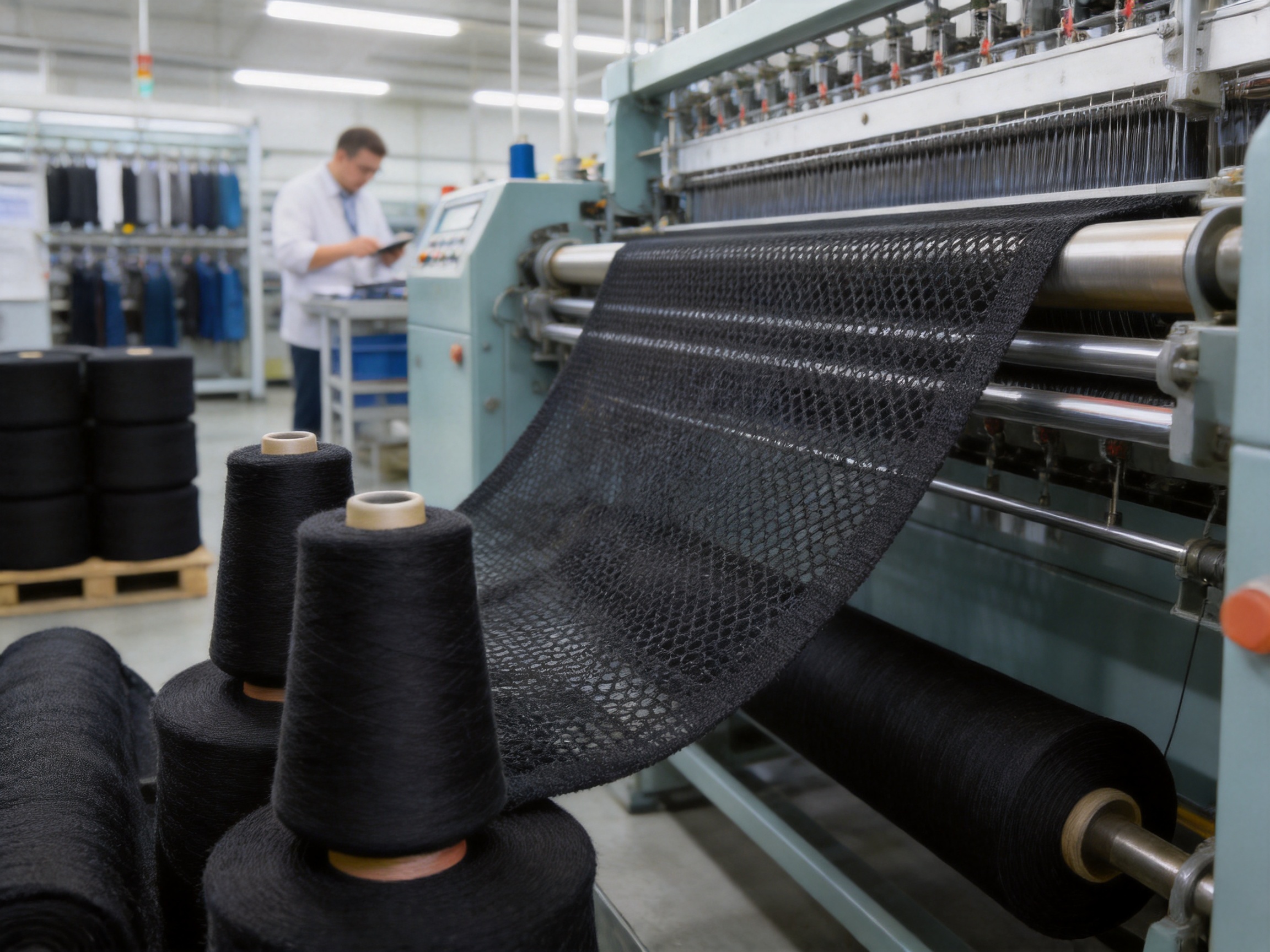
The quality of RT Mesh Fabric begins before knitting. Yarn preparation is one of the most important factors influencing fabric appearance, strength, elasticity, dyeing consistency, and hand feel. Hangzhou Jinfeng Textile Co., Ltd. has manufacturing capabilities related to DTY polyester yarn, blended fabrics, processing, dyeing, and finishing. This creates a strong foundation for producing mesh fabric with consistent characteristics.
Draw textured yarn, often called DTY, is widely used in knitted fabrics because it offers bulk, elasticity, softness, and improved covering performance compared with flat filament yarn. In mesh fabric, DTY can provide a pleasant touch and balanced resilience while maintaining light weight. Slightly intermingled DTY can also support smoother processing by improving filament cohesion. This can reduce yarn separation and help maintain more even knitting.
During knitting, the machine settings must be controlled carefully. Mesh holes are not accidental gaps; they are engineered openings created through loop formation. Needle selection, yarn feeding, take-down tension, stitch length, machine gauge, and production speed must be coordinated. If tension is too loose, the fabric may be unstable or distorted. If tension is too tight, the mesh may lose softness and stretch. Professional knitting control helps create a uniform structure and reduces defects.
After knitting, the fabric typically undergoes dyeing and finishing. Dyeing gives the fabric its required color, while finishing adjusts hand feel, dimensional stability, appearance, and performance. Finishing may include heat setting, softening, width control, shrinkage control, and surface improvement. For synthetic mesh fabrics, temperature control is particularly important because excessive heat can affect fabric structure, elasticity, or touch. A capable finishing process helps reduce the risk of fabric deformation and improves consistency from batch to batch.
Advanced Process Control and Quality Stability
Quality stability is a major concern for buyers. A garment factory or accessory manufacturer needs fabric that behaves predictably during cutting, sewing, printing, bonding, packing, and use. RT Mesh Fabric must therefore be evaluated not only by its sample appearance but also by its repeatability in bulk production.
An advanced manufacturing approach includes inspection at multiple stages. Yarn should be checked for count, evenness, strength, and appearance. Greige fabric should be inspected for holes, dropped stitches, oil stains, uneven tension, and pattern consistency. Dyed fabric should be checked for shade accuracy, color fastness, width, weight, shrinkage, and hand feel. Finished fabric should meet customer requirements before delivery.
Hangzhou Jinfeng Textile Co., Ltd. benefits from an integrated production and processing background. The company is located in Jingjiang Street Industrial Park, Xiaoshan District, Hangzhou City, Zhejiang Province, with a plant area of about 18,000 square meters. Its business covers production, processing, post-dyeing, finishing, and sales of blended fabrics such as polyester and spandex, as well as DTY polyester yarn production and processing. This broad capability helps the company coordinate material development from yarn to final textile.
For RT Mesh Fabric, integration means faster communication between departments and better control over the product chain. If a customer requires a softer touch, the finishing process can be adjusted. If stronger dimensional stability is needed, heat setting and structure selection can be reviewed. If a specific weight or hole size is required, knitting parameters can be modified. This responsiveness is important in today’s textile market, where buyers often need customized performance rather than standard stock fabric.
Material Engineering: Breathability, Hand Feel, and Durability
The most recognizable feature of RT Mesh Fabric is breathability, but its commercial value depends on a broader set of performance qualities. A successful mesh fabric should be breathable without feeling weak, lightweight without feeling cheap, open without being unstable, and flexible without losing shape too quickly.
Hand feel is particularly important in apparel and footwear. A mesh fabric worn close to the skin must not feel harsh or irritating. DTY polyester yarn can help create a softer, fuller touch. Finishing agents and mechanical treatment can further improve smoothness. The goal is to create a fabric that feels comfortable during contact while preserving the crispness and openness expected from mesh.
Durability is influenced by both yarn strength and fabric structure. Larger holes increase airflow but may reduce snag resistance. Smaller holes may improve surface stability but reduce ventilation. RT Mesh Fabric can be engineered to fit the target use by selecting the correct balance. For example, sportswear ventilation panels may emphasize lightness and cooling, while bag pocket mesh may require higher resistance to tearing and deformation.
Elastic recovery is another consideration. Knitted mesh can stretch naturally because of its looped construction. If spandex or elastic components are introduced in related fabric developments, stretch and recovery can be enhanced. However, even without high elastic content, the geometry of knitted mesh can provide useful flexibility for curved seams, garment movement, and accessory shaping.
Visual Appeal and Design Flexibility
Modern textile buyers want performance, but they also want visual differentiation. RT Mesh Fabric offers a technical, sporty, and contemporary appearance. Its open structure can make a product look lighter and more breathable even before the user touches it. This visual message is powerful in activewear, outdoor gear, footwear, and lifestyle accessories.
The mesh pattern can be subtle or bold. A fine mesh may create a refined texture suitable for linings or soft apparel panels. A more pronounced mesh can create a technical look for sports garments or bags. Color also plays a major role. Black, white, gray, navy, and neutral tones are common for versatile applications, while bright and fluorescent colors can be used for athletic or promotional products.
Because the company works with dyeing and finishing, customers may request colors based on product collections or seasonal requirements. Shade matching, batch consistency, and fastness testing are important for brand programs. A color that looks attractive in sample form must remain stable in bulk production and after garment processing. Professional dyeing management helps reduce risks such as uneven shade, color migration, or poor rubbing fastness.
RT Mesh Fabric can also be combined with printed panels, jacquard fabrics, polyester rayon fabrics, or other knitted materials. This allows designers to create contrast between transparent and opaque zones, smooth and textured surfaces, or decorative and functional areas. In this way, RT Mesh Fabric becomes both a functional material and a design tool.
Application Areas for RT Mesh Fabric
RT Mesh Fabric has a broad application range because it solves a common textile problem: how to provide coverage and structure while allowing air circulation. The following application areas illustrate its versatility.
Sportswear and Activewear
Sportswear requires movement, breathability, and comfort. RT Mesh Fabric can be used in T-shirts, training tops, running garments, gym apparel, cycling clothing, and sports uniforms. It may be placed in high-heat zones, used as a full garment fabric for lightweight designs, or combined with solid knits for performance mapping. Its breathable structure helps reduce the feeling of trapped body heat and supports comfort during activity.
Casual Apparel
In casual fashion, mesh fabric can provide both function and style. It can be used for panels, overlays, decorative sleeves, lining, trims, or layered garments. The fabric’s technical look can add a modern appearance while its light weight helps maintain comfort.
Footwear
Breathability is highly valued in shoes. RT Mesh Fabric can be applied to shoe linings, upper panels, tongue fabrics, and decorative overlays. It can help improve air movement inside footwear and reduce the feeling of heaviness. Depending on shoe type, the mesh may be combined with foam, backing fabric, synthetic leather, or reinforcement materials.
Bags and Accessories
Mesh pockets are widely used in backpacks, travel bags, sports bags, laundry bags, and organizers. RT Mesh Fabric offers visibility, ventilation, and low weight. It can be used for exterior pockets, interior compartments, or decorative functional panels. For bag use, buyers may select a stronger mesh structure to improve resistance to tearing and stretching.
Lining and Inner Components
Many products need inner layers that are breathable and lightweight. RT Mesh Fabric can serve as a lining in garments, helmets, pads, protectors, gloves, and accessories. It helps create separation between the user and outer materials while supporting airflow.
Industrial and Functional Products
Some industrial products require materials that are light, ventilated, and flexible. Mesh fabric can be used in filter support layers, protective covers, storage products, and other functional textile components. For such applications, specifications may focus on strength, hole size, dimensional stability, and heat resistance within appropriate limits.
Customization Options for Buyers
One of the important advantages of RT Mesh Fabric is its adaptability. Different customers may need different fabric weights, widths, colors, hole sizes, elasticity, softness, and finishing effects. A supplier with knitting and finishing knowledge can help translate these requirements into practical specifications.
Fabric weight can be adjusted by yarn selection and knitting density. Lighter weights are suitable for breathable apparel and linings, while heavier weights may be preferred for bags, footwear, or more durable panels. Hole size can be adjusted through knitting design. Smaller mesh openings improve coverage and may reduce snagging, while larger openings maximize airflow and create a stronger visual effect.
Width can be selected according to cutting efficiency and product layout. Color can be developed through dyeing according to buyer requirements. Finishing can be used to adjust softness, stiffness, shrinkage, and surface smoothness. If the fabric is intended for lamination, printing, bonding, or sewing with other materials, these downstream processes should be discussed in advance so the mesh can be developed accordingly.
Customization is especially valuable for brands that want differentiation. Instead of choosing a generic mesh available to many competitors, they can work with the manufacturer to develop a fabric that supports their product identity. This may include a specific touch, more stable structure, particular color range, or application-specific performance.
Company Strengths Behind the Product
Hangzhou Jinfeng Textile Co., Ltd. brings several strengths to the production and supply of RT Mesh Fabric. First, the company has a comprehensive textile background covering yarn, fabric, processing, dyeing, finishing, and sales. This reduces dependence on disconnected production links and supports better quality coordination.
Second, the company operates from an established manufacturing base in Xiaoshan District, Hangzhou, an area with a strong textile industry environment. Its facility area and production experience support stable manufacturing and customer service. The company’s plant area of about 18,000 square meters provides a foundation for organized production and processing.
Third, the company’s product range is not limited to one fabric type. It supplies polyester rayon fabric, knitted jacquard fabric, NTR knitted fabric, NR knitted fabric, and slightly intermingled draw textured yarn. This broad portfolio reflects textile development capability and allows customers to source related materials for coordinated product programs.
Fourth, the company follows a business philosophy based on cooperation and win-win service. In textile sourcing, communication is as important as production. Buyers need clear discussion of specifications, lead times, color requirements, packing methods, quality expectations, and after-sales support. A cooperative supplier can help reduce misunderstandings and improve project efficiency.
Finally, the company is a self-operated export enterprise integrating research and development, production, and sales. This means it can support international customers with product development, production planning, and export-oriented service. For customers seeking DTY polyester yarn, blended fabric, and knitted mesh fabric, this integrated capability offers convenience and reliability.
How RT Mesh Fabric Supports Sustainable and Efficient Product Design
Sustainability in textiles is not only about fiber origin; it is also about efficient design, long service life, reduced waste, and responsible production control. RT Mesh Fabric can contribute to more efficient product design in several ways.
Because mesh fabric is lightweight, it can reduce material usage in certain applications compared with heavier dense fabrics. When used as a ventilation panel instead of a full heavy layer, it can improve comfort without adding unnecessary weight. This may help manufacturers design products that require less material while maintaining function.
Durability also matters. A fabric that fails quickly creates waste. By improving yarn selection, knitting stability, and finishing control, RT Mesh Fabric can provide reliable performance for intended uses. Matching the correct mesh specification to the application helps extend product life and reduce returns or defects.
Efficient dyeing and finishing control can also reduce quality loss. If color is uneven or shrinkage is uncontrolled, fabric may be rejected or require reprocessing. Professional process management reduces waste by improving first-time production accuracy. Integrated manufacturing also supports better communication and faster correction when specifications must be adjusted.
For brands working on responsible sourcing strategies, supplier transparency and process capability are important. A manufacturer with clear production stages, inspection procedures, and export service experience can be a valuable partner in building more stable and efficient supply chains.
Quality Evaluation Criteria for RT Mesh Fabric
When selecting RT Mesh Fabric, buyers should evaluate more than appearance. The following criteria help determine whether the fabric is suitable for production and end use.
First, check fabric weight. Weight affects breathability, drape, durability, and cost. A fabric that is too light may lack strength, while a fabric that is too heavy may reduce ventilation and comfort.
Second, examine mesh uniformity. Hole size should be consistent across the fabric. Uneven mesh may cause visual defects and cutting problems. Uniform structure reflects stable knitting control.
Third, test hand feel. The fabric should match the application. Apparel requires softness and skin comfort, while bags or footwear may require more body and firmness.
Fourth, evaluate color quality. The color should match the approved standard and remain consistent throughout the batch. Rubbing fastness, washing fastness, and light fastness may be required depending on the product.
Fifth, assess dimensional stability. Mesh fabric should not shrink, twist, or distort excessively during washing, heat setting, cutting, or sewing. Stability is especially important for garment panels and shaped components.
Sixth, consider snag resistance. Because mesh has open holes, snagging risk should be evaluated according to end use. Tighter structures or reinforced designs may be selected for high-friction applications.
Seventh, review sewing performance. The fabric should feed smoothly through sewing machines and maintain seam integrity. Needle size, thread type, and seam construction should be matched to mesh structure.
By examining these criteria, buyers can select RT Mesh Fabric that supports efficient manufacturing and customer satisfaction.
Practical Recommendations for Cutting, Sewing, and Care
RT Mesh Fabric performs best when handled according to its structure. Because it contains open spaces, cutting tables, sewing lines, and packing methods should be selected carefully. Sharp cutting tools help avoid frayed or distorted edges. Accurate spreading prevents tension differences that can cause size variation.
During sewing, operators should avoid excessive pulling. Stretching the mesh while sewing can lead to wavy seams or uneven garment dimensions. Suitable needle size and thread tension should be used to avoid loop damage. In some applications, binding, reinforcement tape, or lining can be used at stress points to improve durability.
For garment panels, designers should consider the direction of stretch and the placement of mesh zones. Areas exposed to high abrasion or frequent contact with zippers, hooks, or rough surfaces may require reinforcement or alternative material. Areas intended for ventilation should be positioned where airflow is most beneficial.
Care instructions depend on fiber content, dyeing, finishing, and product construction. In general, synthetic mesh fabrics should be protected from excessive heat. High-temperature ironing, harsh drying, or contact with hot surfaces may damage the structure. Washing conditions should be tested according to the final product. For commercial programs, care labels should be based on laboratory testing rather than assumptions.
RT Mesh Fabric in the Context of Modern Textile Trends
Several market trends support the demand for RT Mesh Fabric. The first is the growth of athleisure and active lifestyles. Consumers wear sports-inspired clothing not only for exercise but also for daily comfort. Mesh fabric fits this trend because it communicates performance and provides practical breathability.
The second trend is lightweight product design. From travel bags to summer garments, users prefer materials that reduce weight without sacrificing function. RT Mesh Fabric supports lightweight construction through its open structure and efficient material usage.
The third trend is hybrid textile design. Many modern products combine multiple fabrics in one item. A garment may include solid knit for coverage, mesh for ventilation, rib for fit, and jacquard for decoration. RT Mesh Fabric works well in this environment because it can be paired with other textiles to create targeted function and visual contrast.
The fourth trend is customization. Buyers increasingly want fabrics tailored to specific product lines. Rather than accepting standard materials, they seek customized weight, hand feel, color, and performance. A manufacturer with yarn, knitting, dyeing, and finishing capability can support this trend effectively.
The fifth trend is supply chain reliability. In a competitive market, buyers need suppliers that can deliver consistent quality, communicate clearly, and support repeat production. Hangzhou Jinfeng Textile Co., Ltd.’s integrated production and export-oriented operation help position RT Mesh Fabric as a practical choice for professional sourcing.
Why Choose RT Mesh Fabric from an Integrated Textile Manufacturer
The value of RT Mesh Fabric depends heavily on how it is made. A simple mesh structure may appear easy to produce, but consistent quality requires experience. An integrated textile manufacturer can provide advantages at every stage.
At the yarn stage, the manufacturer can select suitable DTY polyester yarn or related yarn types for the desired fabric performance. At the knitting stage, machine settings can be controlled to create regular holes and stable texture. At the dyeing stage, shade and fastness can be managed. At the finishing stage, softness, width, shrinkage, and hand feel can be adjusted. At the inspection stage, defects can be identified before shipment.
This complete process reduces the risk that a problem in one stage will remain unresolved. For example, if the finished fabric feels too stiff, the finishing process can be reviewed. If the mesh holes are too large or too loose, knitting parameters can be adjusted. If dyeing results vary, yarn and dyeing conditions can be analyzed together. This problem-solving capability is more difficult when production is divided among unrelated suppliers.
RT Mesh Fabric also benefits from the company’s experience with blended fabrics and knitted fabric categories. Knowledge gained from polyester rayon fabric, jacquard fabric, NTR knitted fabric, NR knitted fabric, and DTY yarn can support fabric development and customer communication. For buyers, this means access to a supplier that understands both basic production and practical end-use requirements.
Frequently Asked Questions
What is RT Mesh Fabric?
RT Mesh Fabric is a knitted mesh fabric with an open-hole structure designed to provide airflow, lightweight comfort, and flexible performance. It belongs to the NR knitted fabric category and can be used in apparel, footwear, bags, linings, accessories, and functional textile products.
What are the main advantages of RT Mesh Fabric?
The main advantages include breathability, reduced heat retention, light weight, flexibility, quick-drying potential, modern appearance, and application versatility. When produced with controlled yarn, knitting, dyeing, and finishing processes, it can also offer stable quality and reliable bulk production performance.
How does RT Mesh Fabric compare with ordinary mesh?
Ordinary low-grade mesh may have uneven holes, poor color consistency, rough hand feel, and weak dimensional stability. RT Mesh Fabric is supported by controlled manufacturing, yarn selection, knitting management, and finishing processes, helping it achieve more consistent appearance and better suitability for professional textile applications.
Can RT Mesh Fabric be customized?
Yes. Fabric weight, width, mesh hole size, color, hand feel, elasticity, and finishing effect can be adjusted according to customer requirements. Customization depends on target application, performance requirements, and production feasibility.
Is RT Mesh Fabric suitable for sportswear?
Yes. RT Mesh Fabric is well suited for sportswear because it helps release body heat and improve ventilation. It can be used as a main fabric for lightweight garments or as a ventilation panel in high-heat zones.
Can RT Mesh Fabric be used in footwear?
Yes. It can be used for shoe linings, upper panels, tongues, and decorative overlays. Its breathable structure helps improve air movement and reduce the feeling of heaviness in footwear.
Does mesh fabric tear easily?
Mesh fabric can be more vulnerable to snagging or tearing than dense fabrics because of its open structure. However, proper yarn selection, mesh design, knitting density, and finishing can improve durability. The correct specification should be chosen according to the end use.
Is RT Mesh Fabric heat resistant?
Synthetic mesh fabrics have heat limitations. Excessive heat can damage structure, touch, or stability. Proper finishing control during manufacturing and suitable care instructions during use help protect the fabric.
Why is DTY polyester yarn important for mesh fabric?
DTY polyester yarn provides bulk, softness, resilience, and good processing characteristics. It can help RT Mesh Fabric achieve comfortable hand feel, stable knitting performance, and practical durability.
What makes Hangzhou Jinfeng Textile Co., Ltd. a strong supplier for RT Mesh Fabric?
The company integrates research and development, production, processing, post-dyeing, finishing, and sales. It has experience with DTY polyester yarn, blended fabrics, knitted jacquard fabric, NTR knitted fabric, NR knitted fabric, and related textile products. This integrated capability supports consistent quality, customization, and export-oriented service.
Conclusion
RT Mesh Fabric is a versatile knitted textile that meets the growing demand for breathable, lightweight, and comfortable materials. Its open structure allows air circulation, reduces trapped body heat, and supports quick-drying potential. These advantages make it valuable for sportswear, casual apparel, footwear, bags, linings, accessories, and functional textile applications.
Compared with dense knits, woven linings, nonwoven materials, and low-grade mesh, RT Mesh Fabric offers a strong balance of comfort, visual appeal, flexibility, and process adaptability. Its performance can be further improved through suitable yarn selection, controlled knitting, professional dyeing, and finishing. Although mesh fabrics require careful handling because of their open structure, professional manufacturing and correct application design can reduce risks such as snagging, distortion, and heat damage.
Hangzhou Jinfeng Textile Co., Ltd. supports RT Mesh Fabric with an integrated textile manufacturing system that includes DTY polyester yarn production, blended fabric processing, dyeing, finishing, and sales. Its experience, production base, and cooperative business philosophy provide customers with a dependable partner for both standard fabric supply and customized development.
For buyers seeking a breathable NR knitted fabric with practical performance, modern appearance, and reliable manufacturing support, RT Mesh Fabric offers a competitive solution. It is not only a fabric with holes; it is a carefully engineered textile that combines airflow, comfort, processing flexibility, and market-ready value.
References
1. Kadolph, S. J. Textiles. Pearson Education.
2. Spencer, D. J. Knitting Technology: A Comprehensive Handbook and Practical Guide. Woodhead Publishing.
3. Horrocks, A. R., and Anand, S. C. Handbook of Technical Textiles. Woodhead Publishing.
4. Sinclair, R. Textiles and Fashion: Materials, Design and Technology. Woodhead Publishing.
5. Saville, B. P. Physical Testing of Textiles. Woodhead Publishing.
6. Cook, J. G. Handbook of Textile Fibres: Man-Made Fibres. Woodhead Publishing.
