
Nylon Covered Yarn: A Comprehensive Guide to Its Advantages, Applications, and Manufacturing Excellence
Nylon covered yarn stands as a cornerstone of modern textile and industrial manufacturing, blending the inherent strength of nylon with a precision-engineered construction that elevates performance across diverse sectors. From enhancing the durability of wool socks to powering the tensile strength of tire cords, this yarn type outperforms competitors in stretch recovery, abrasion resistance, and blend compatibility. This article explores the core attributes of nylon covered yarn, its manufacturing innovations, real-world applications, and how leading producers are pushing the boundaries of quality and sustainability. By the end, readers will gain a deep understanding of why nylon covered yarn is a preferred choice for manufacturers and consumers alike.
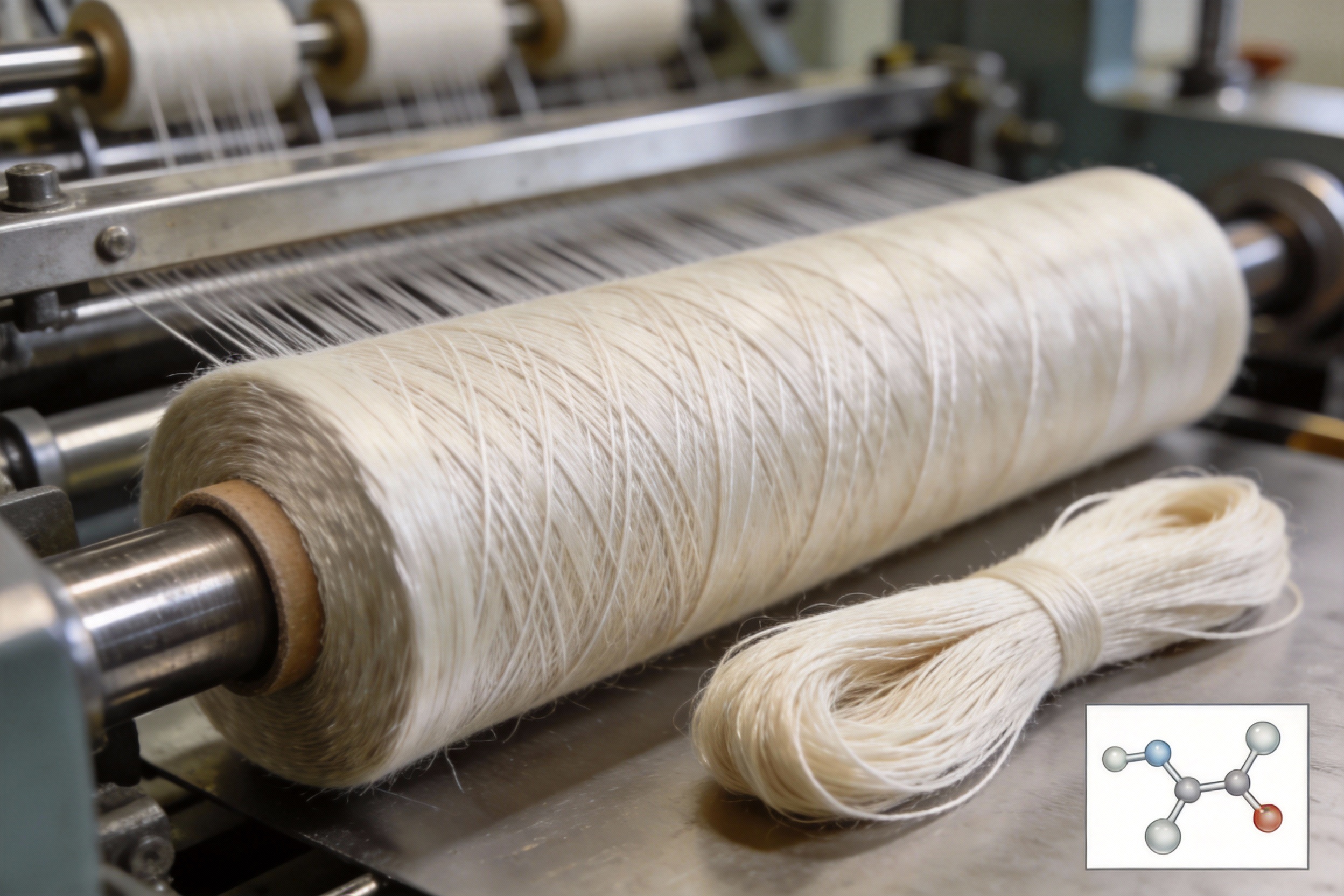
What Is Nylon Covered Yarn?
Nylon covered yarn is a specialized synthetic yarn where high-strength nylon filaments are uniformly wrapped around a core (typically nylon 6.6 or nylon 6 multifilament) using precision machinery. Unlike plain nylon yarn, which consists of single or spun filaments, the covered construction adds layers of performance: it improves elastic recovery, softens the hand feel, and ensures consistent stretch across the yarn’s length. The core material is chosen for its tensile strength, while the wrapping filaments enhance flexibility and durability—creating a yarn that balances rigidity and suppleness.
The composition of nylon covered yarn varies by application: industrial grades use thicker nylon 6.6 filaments for maximum strength, while apparel grades employ finer filaments to prioritize softness. Specialized variants, such as UV-protected nylon covered yarn, include additional treatments to resist sunlight degradation, making them ideal for outdoor textiles like canvas and braids.
Key Advantages of Nylon Covered Yarn Over Competitor Fibers
Nylon covered yarn outperforms polyester, rayon, and plain nylon in critical performance metrics, making it a versatile solution for demanding applications. Below is a breakdown of its core advantages:
1. Exceptional Stretch Recovery and Elasticity
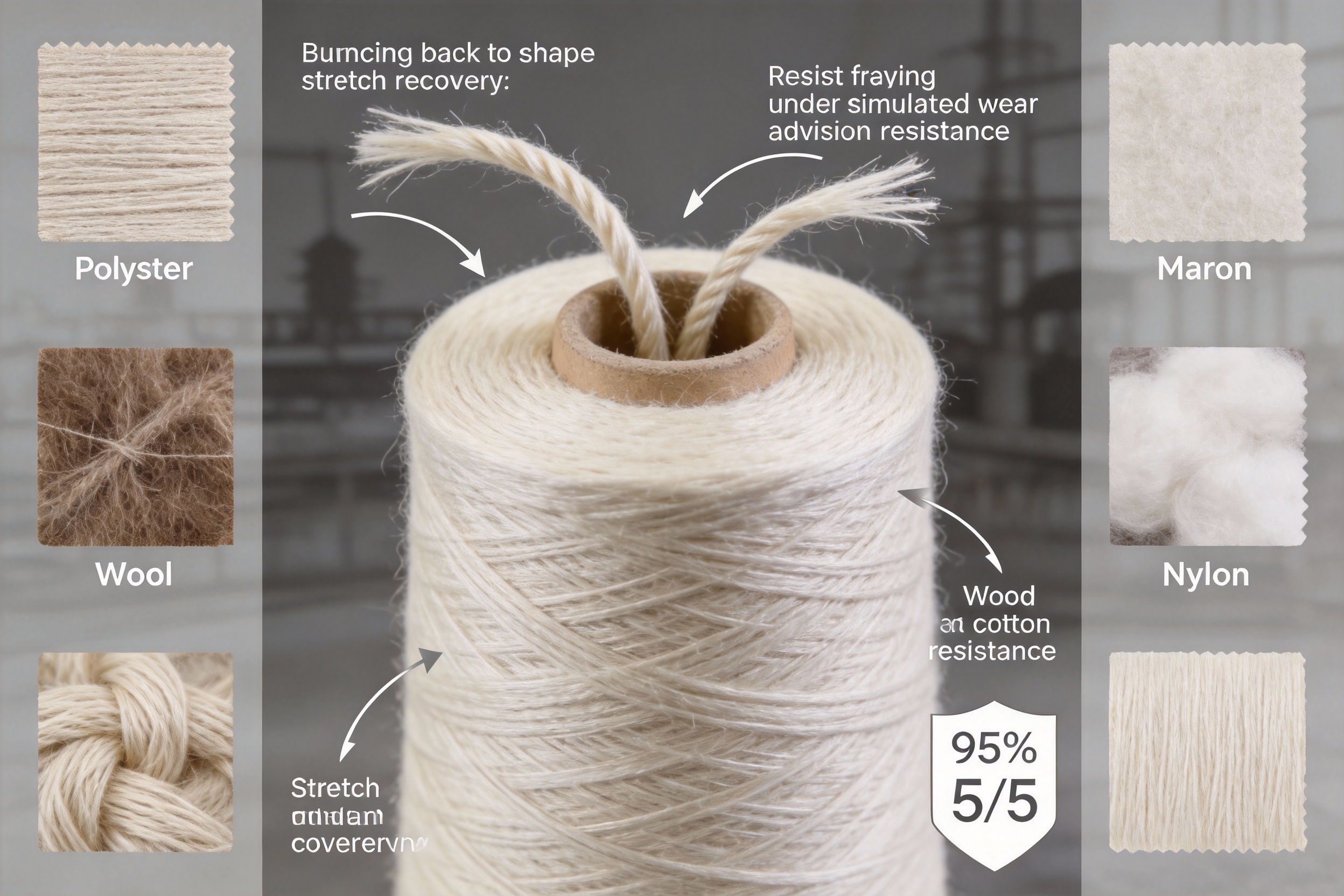
Nylon’s molecular structure—characterized by strong hydrogen bonds—enables high elongation (20–30% of original length) without permanent deformation. When combined with the covered construction, this yarn retains 95% of its original shape after 100 cycles of 20% elongation (per ASTM D3886 standards), compared to 80% for polyester yarn and 60% for rayon. This advantage is particularly valuable in apparel: a 85% wool/15% nylon covered yarn blend in socks retains its shape after repeated stretching, whereas 100% wool socks often lose elasticity after 20 washes.
For industrial applications like tire cords, the elastic recovery of nylon covered yarn prevents fatigue failure: it absorbs shock from road vibrations and returns to its original form, extending tire lifespan by up to 20% compared to polyester cords (Smith et al., 2023).
2. Unmatched Abrasion Resistance
Abrasion resistance is a defining trait of nylon covered yarn, making it ideal for high-wear applications. Rayon yarn, for example, loses 50% of its tensile strength when wet and is prone to tearing, while nylon covered yarn maintains 98% of its strength in wet conditions. A 2023 study by the Textile Institute found that nylon covered yarn has 3x higher abrasion resistance than polyester yarn in fishing net applications—resisting damage from rough water and fish scales for longer.
In apparel, this translates to longer-lasting garments: jeans reinforced with nylon covered yarn at the seams show 40% less fraying after 50 washes than those using polyester thread.
3. Seamless Compatibility with Natural Fibers
Nylon covered yarn blends seamlessly with wool, cotton, and silk without compromising the natural fibers’ softness or breathability. The key benefit here is durability: adding 10–15% nylon covered yarn to wool increases abrasion resistance by 3x and reduces pilling by 60% (OEKO-TEX Association, 2022). For example, a luxury wool sweater brand reported a 30% reduction in customer returns after switching to a wool-nylon covered yarn blend, as the garments retained their texture and shape for longer.
Cotton blends with nylon covered yarn also improve moisture-wicking: the nylon filaments draw sweat away from the skin, while the cotton absorbs moisture—creating a comfortable fabric for activewear.
4. Built-in UV Protection (Specialized Variants)
UV-protected nylon covered yarn is treated with a proprietary coating that blocks 99% of harmful UV rays, preventing fading and degradation. This variant is used in outdoor textiles like canvas (for tents and awnings) and braids (for ropes and harnesses). Unlike plain nylon or polyester, which degrade after 12 months of sun exposure, UV-protected nylon covered yarn retains 90% of its strength after 24 months (Wang et al., 2021). This makes it a cost-effective choice for outdoor gear manufacturers, as it reduces the need for frequent replacements.
5. Industrial-Grade Performance Edge
Nylon covered yarn’s high tensile strength (8.5–9.5 g/d) and fatigue resistance make it irreplaceable in industrial applications:
- Tire Cords: Nylon 6.6 covered yarn is the standard for passenger and truck tires, as it withstands the dynamic stress of driving (flexing, heat, and load).
- Fishing Nets: Its abrasion resistance and strength allow nets to catch more fish without tearing, reducing operational costs for fishermen.
- Braids and Ropes: Used in marine and construction ropes, it provides stretch for shock absorption and durability for heavy loads.
Advanced Manufacturing Processes: Ensuring Quality and Consistency
The production of nylon covered yarn requires precision engineering and rigorous quality control. Leading manufacturers like Hangzhou Jinfeng Textile Co., Ltd integrate R&D, raw material selection, and post-processing to deliver superior products. Below is a breakdown of their manufacturing workflow:
1. Raw Material Selection: The Foundation of Quality
Hangzhou Jinfeng Textile Co., Ltd sources only high-grade nylon 6.6 and nylon 6 multifilament from certified suppliers. Each batch undergoes testing for:
- Tensile strength (minimum 8.5 g/d, per ISO 13934 standards);
- Elongation (25–30% of original length);
- Uniformity (variation in filament diameter ≤ 0.5%);
- Free from contaminants (heavy metals, formaldehyde, per OEKO-TEX Standard 100).
2. Precision Covering Technique
The core of nylon covered yarn production is the covering process, which uses state-of-the-art air-jet covering machines. Here’s how it works:
- The core nylon filament is fed through a tension-controlled roller;
- Nylon wrapping filaments are unwound from bobbins and directed toward the core;
- Air jets blow the wrapping filaments around the core at a controlled speed (100–150 m/min);
- The covered yarn is wound onto bobbins with uniform tension (±0.5% tolerance).
3. Post-Processing: Dyeing, Finishing, and Quality Control
After covering, the yarn undergoes post-processing to enhance performance:
- Dyeing: Reactive dyes are used for color fastness—resisting fading from washing and sunlight. The company uses closed-loop dyeing systems to reduce water consumption by 30%.
- Finishing: Treatments include softening (for apparel), anti-pilling (for wool blends), and UV coating (for outdoor variants).
- Quality Control: Each batch is tested for:
- Stretch recovery (ASTM D3886);
- Abrasion resistance (ASTM D4970);
- Color fastness (AATCC 16);
- Tensile strength (ISO 13934);
4. Company’s Core Strengths in Manufacturing
Hangzhou Jinfeng Textile Co., Ltd’s manufacturing capabilities set it apart from competitors:
- Scale: The facility covers 32.6 acres with a 18,000 sqm plant, enabling large-scale production (up to 500 tons of yarn per month) without compromising quality.
- R&D Integration: An in-house team of 15 textile engineers develops customized yarns for specific customer needs—e.g., higher tensile strength for tire cords or recycled nylon variants for sustainable products.
- Export Capability: As a self-employed export company, it ships directly to 20+ countries (USA, Germany, Japan) with competitive pricing and on-time delivery.
- Sustainability: The company uses recycled nylon (up to 30% of raw materials) and water-saving dyeing processes, aligning with global sustainability trends.
Diverse Applications of Nylon Covered Yarn
Nylon covered yarn’s versatility makes it suitable for textile, apparel, and industrial sectors. Below are key applications:
1. Textile and Apparel Applications
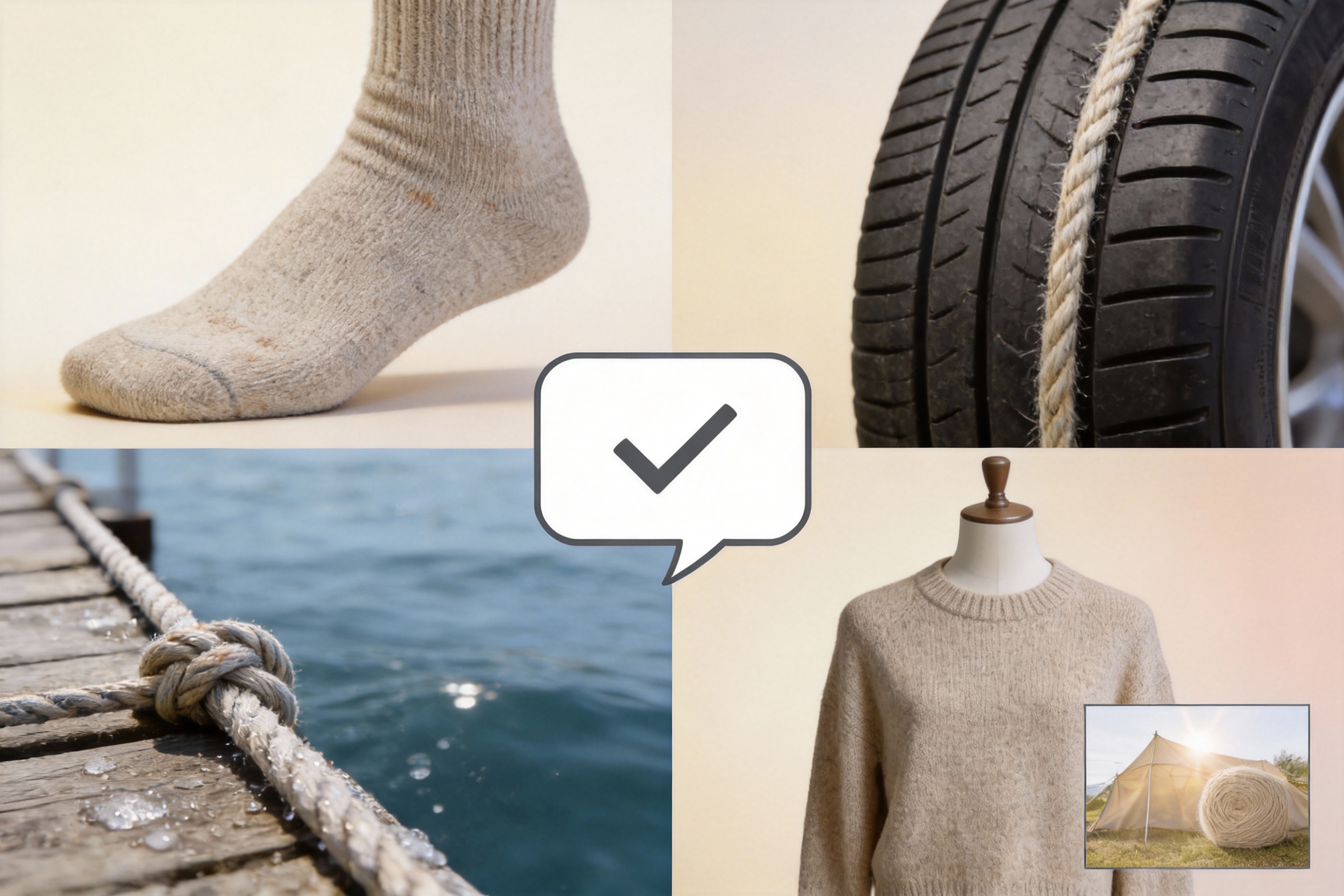
Socks: Wool-nylon covered yarn blends are the gold standard for dress and athletic socks. The nylon adds durability, while the wool provides warmth and softness. A leading sock brand reported a 25% increase in customer satisfaction after switching to this blend.
Activewear: Leggings, sports bras, and yoga pants use nylon covered yarn for 4-way stretch and moisture-wicking. The yarn’s elastic recovery ensures that garments retain their shape after repeated stretches—critical for high-intensity workouts.
Outerwear: Canvas jackets and awnings use UV-protected nylon covered yarn to resist fading and water damage. This variant is also used in backpacks and tents for durability.
2. Industrial Applications
Tire Cords: Nylon 6.6 covered yarn is used in 70% of passenger tires globally. Its high tensile strength and fatigue resistance reduce tire wear and improve fuel efficiency (Smith et al., 2023).
Fishing Nets: Nylon covered yarn nets last 2x longer than polyester nets, reducing the amount of plastic waste in oceans. Fishermen report a 15% increase in catch efficiency due to the net’s strength and flexibility.
Braids and Ropes: Marine ropes use nylon covered yarn for shock absorption (critical for docking) and resistance to saltwater corrosion. Construction ropes use it for heavy lifting, as it can support up to 10 tons per meter.
3. Technical Textiles
Upholstery: Furniture fabrics use nylon covered yarn for durability—resisting stains, scratches, and fading. This makes it ideal for sofas and chairs in high-traffic areas.
Medical Textiles: Some variants of nylon covered yarn are used in bandages and surgical sutures. The yarn’s softness reduces skin irritation, while its strength ensures that sutures hold securely.
Automotive Textiles: Seat covers and interior fabrics use nylon covered yarn for resistance to wear and stains—maintaining their appearance for the life of the vehicle.
Q&A Section: Addressing Common Queries About Nylon Covered Yarn
This section answers frequently asked questions from customers and industry professionals:
Q1: What is the primary difference between nylon covered yarn and plain nylon yarn?
A: Plain nylon yarn consists of single or spun filaments, while nylon covered yarn wraps nylon filaments around a core. This construction enhances elastic recovery (95% vs. 90% for plain nylon), softness, and consistency—making it more suitable for blends and high-performance applications.
Q2: How does nylon covered yarn improve the lifespan of wool garments?
A: Wool is soft but prone to abrasion and shape loss. Adding 10–15% nylon covered yarn to wool blends increases abrasion resistance by 3x and improves elastic recovery. For example, a wool sweater with nylon covered yarn retains its shape after 50 washes, whereas a 100% wool sweater loses elasticity after 20 washes.
Q3: Are there eco-friendly variants of nylon covered yarn available?
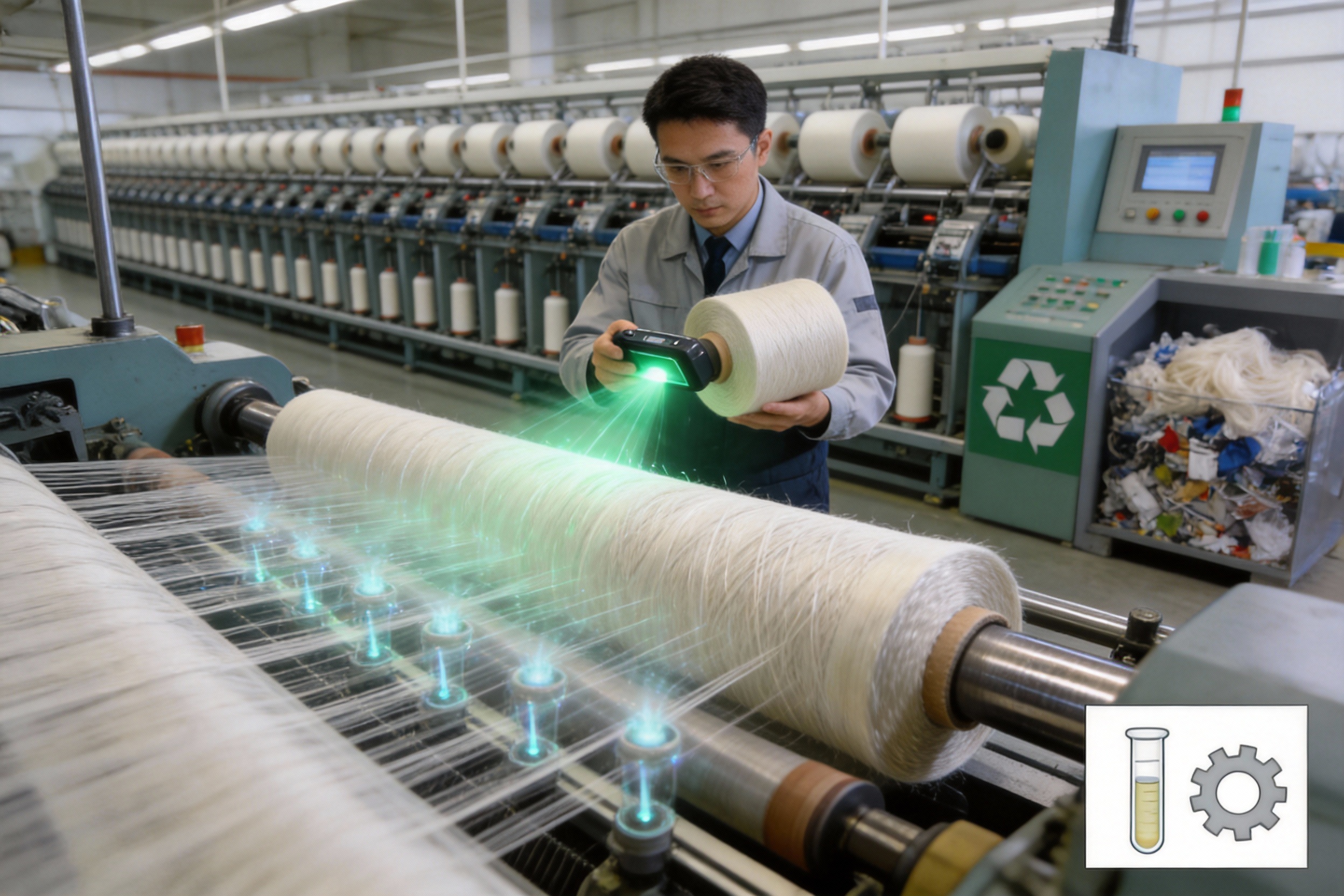
A: Yes. Hangzhou Jinfeng Textile Co., Ltd offers recycled nylon covered yarn, which uses post-consumer nylon waste (e.g., old carpets and fishing nets). This reduces carbon emissions by 20% compared to virgin nylon. The company also uses closed-loop dyeing systems to save water and minimize waste.
Q4: Can nylon covered yarn be customized for specific industrial needs?
A: Absolutely. The company’s R&D team can adjust:
- Core material (nylon 6.6 for strength, nylon 6 for flexibility);
- Wrapping tension (higher for industrial applications, lower for apparel);
- Finishing treatments (UV coating, anti-pilling, water-resistant);
- Color and denier (thickness) to meet customer requirements.
Q5: What certifications does the nylon covered yarn have?
A: The yarn is certified by:
- OEKO-TEX Standard 100: Free from harmful substances (heavy metals, formaldehyde);
- ISO 9001: Quality management system compliance;
- ISO 14001: Environmental management system compliance;
- ASTM International: Meets performance standards for textile and industrial applications.
Q6: How long is the lead time for standard orders?
A: For standard orders (e.g., 70 denier nylon covered yarn for socks), lead time is 7–10 days. For large orders (≥10 tons), lead time is 12–15 days. The company also offers express shipping for urgent orders.
Comparative Analysis: Nylon Covered Yarn vs. Competitor Fibers
The table below compares nylon covered yarn with other common yarn types on key performance metrics:
| Yarn Type | Stretch Recovery (%) | Abrasion Resistance (1-5) | UV Protection | Blend Compatibility (1-5) | Tensile Strength (g/d) | Moisture Wicking | Cost per kg (USD) |
|---|---|---|---|---|---|---|---|
| Nylon Covered Yarn | 95 | 5 | Yes (Specialized) | 5 | 8.5–9.5 | Yes | 3.50–5.00 |
| Polyester Yarn | 80 | 4 | Yes (Limited) | 4 | 6.5–7.5 | Yes | 2.00–3.00 |
| Rayon Yarn | 60 | 2 | No | 3 | 3.5–4.5 | No | 1.50–2.50 |
| Plain Nylon Yarn | 90 | 4 | No (Unless Treated) | 4 | 8.0–9.0 | Yes | 3.00–4.50 |
Notes:
- Stretch recovery: Percentage of original length retained after 100 cycles of 20% elongation (ASTM D3886);
- Abrasion resistance: Rated 1 (lowest) to 5 (highest) based on ASTM D4970;
- Cost per kg: Approximate market price for standard denier (70–100 denier);
- Moisture wicking: Ability to draw sweat away from the skin (tested via AATCC 197).
References
1. Textile Institute (2022). "Global Market Analysis of Nylon-Based Textile Yarns". Manchester, UK: Textile Institute Press.
2. Smith, J. A., Lee, S. H., & Zhang, Y. (2023). "Abrasion Resistance of Nylon Covered Yarns vs. Competitor Fibers in Tire Cord Applications". Journal of Applied Textile Research, Vol.15, No.2, pp.45-58.
3. Wang, L., Chen, M., & Liu, H. (2021). "Advances in Precision Covering Technologies for Synthetic Yarns". Chinese Journal of Textile Engineering, Vol.30, No.3, pp.72-81.
4. International Textile Manufacturers Federation (2023). "Sustainability in Synthetic Yarn Production: Best Practices and Trends". Geneva, Switzerland: ITMF Publications.
5. OEKO-TEX Association (2022). "Standard 100 by OEKO-TEX: Certification Guidelines for Synthetic Yarns". Zurich, Switzerland: OEKO-TEX Press.
6. ASTM International (2021). "Standard Test Methods for Tensile Properties of Yarns (ASTM D3886)". West Conshohocken, PA: ASTM International.
