
NR Strip Roman Fabric: Performance, Comfort, and Reliable Textile Manufacturing

NR Strip Roman Fabric is a structured knitted textile developed for manufacturers and apparel brands that need a practical balance of comfort, stretch, recovery, visual refinement, and sewing convenience. The fabric belongs to the NR knitted fabric category and is associated with nylon-rayon or related rayon-blended constructions. Depending on the selected specification, the fabric may also incorporate cotton, viscose, elastane, or other compatible fibers to achieve a particular hand feel, weight, drape, and performance profile.
Unlike a simple single-knit fabric, Roman-style construction is valued for its compact appearance and comparatively stable surface. The addition of a strip or rib-like visual effect gives the textile a subtle linear character without making it excessively decorative. This makes NR Strip Roman Fabric suitable for modern dresses, skirts, blouses, cardigans, lightweight jackets, tops, coordinated sets, and other garments that require more body than ordinary jersey.
The product is manufactured and supplied by Hangzhou Jinfeng Textile Co., Ltd., a textile enterprise located in Xiaoshan District, Hangzhou, Zhejiang Province. The company specializes in blended fabric production, post-dyeing, finishing, DTY polyester yarn production, processing, and sales. Its integrated approach enables customers to discuss yarn, fabric construction, dyeing, finishing, and final quality requirements with one professional supplier.
This article explains the characteristics of NR Strip Roman Fabric, its advantages over competing knitted materials, the manufacturing considerations that affect quality, and the reasons it can be a dependable option for apparel production. It also outlines how buyers can select the appropriate specification, evaluate fabric performance, and cooperate with a capable textile manufacturer.
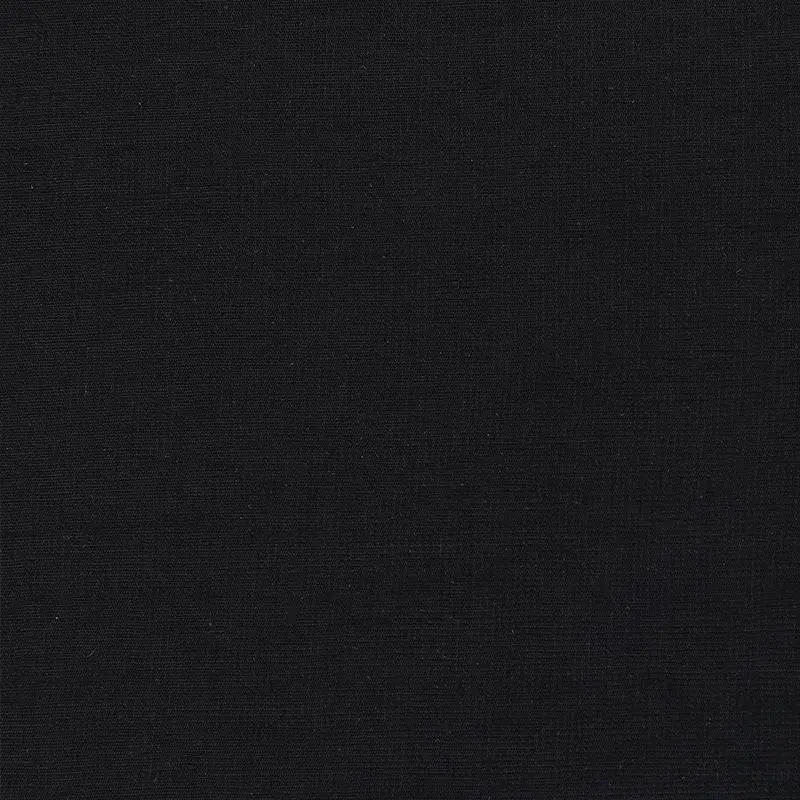
NR Strip Roman Fabric
Understanding NR Strip Roman Fabric
NR Strip Roman Fabric is a knitted fabric with a compact, stable construction and a distinctive strip-like surface appearance. The “NR” designation commonly refers to a nylon-rayon blend or a related nylon and rayon-based composition. However, textile specifications can vary between production programs. Some versions may use cotton and viscose blends, while others may include elastane or polyester to modify stretch, recovery, strength, or dimensional stability.
The Roman construction generally provides more firmness than lightweight plain jersey. It can hold a garment shape effectively while still retaining the flexibility expected from knitted fabric. This combination is important in clothing design because a fabric that is too soft may cling or lose its silhouette, while a fabric that is too rigid may restrict movement and feel uncomfortable during wear.
The strip effect can be created through the arrangement of knitted loops, yarn selection, color contrast, surface finishing, or a combination of these techniques. It may appear as a narrow vertical line, a subtle ribbed impression, or a more visible engineered stripe. The final visual result depends on the yarn count, knitting gauge, stitch structure, dyeing method, finishing process, and fabric width selected by the buyer.
A major advantage of this product category is its versatility. It can be developed for plain color programs, two-tone effects, muted fashion shades, or seasonal color collections. The same basic construction can be adjusted for different weights and levels of drape, making it useful for both lightweight transitional garments and more substantial autumn or winter apparel.
Typical Material Characteristics
Nylon contributes strength, abrasion resistance, and a smooth technical quality to many NR constructions. Rayon contributes softness, fluidity, and a comfortable touch that is often associated with premium apparel fabrics. When the blend is balanced carefully, the resulting textile can offer a useful combination of durability and elegance.
Cotton or viscose may be selected when the intended garment requires a more natural hand feel, improved moisture comfort, or a softer surface. Elastane may be added when designers need increased stretch and recovery. Polyester can be incorporated when manufacturers require additional dimensional stability, color performance, or cost control. The exact fiber content should always be confirmed through the technical specification and laboratory testing for the individual production lot.
Because the product is knitted, it can accommodate body movement more comfortably than many woven alternatives. The degree of stretch depends on the knitting structure and fiber composition rather than on the product name alone. Buyers should therefore request measurements for widthwise stretch, lengthwise stretch, recovery, fabric weight, and shrinkage before approving bulk production.
Appearance and Hand Feel
NR Strip Roman Fabric is usually selected for its neat, refined appearance. The compact face can create a clean foundation for simple silhouettes, while the strip detail adds enough texture to prevent the garment from looking flat. The fabric may have a matte, soft sheen, or lightly polished appearance depending on the yarn and finishing treatment.
The hand feel can range from smooth and cool to soft, full, and slightly brushed. Rayon-rich versions often provide a fluid drape and pleasant touch, while nylon-containing versions can feel more resilient and sleek. Finishing treatments can further influence softness, surface smoothness, pilling behavior, and dimensional stability.
For brands developing a cohesive collection, this adaptability is valuable. A single construction can support multiple garment categories while maintaining a related visual identity. Designers can use the strip detail as a quiet surface accent rather than relying on complicated prints or additional trims.
Advantages Over Conventional Knitted Fabrics
NR Strip Roman Fabric competes with ordinary jersey, rib knit, interlock, ponte-style fabrics, woven rayon blends, and other structured knits. Its advantages are most apparent when the end product requires both comfort and shape control. Instead of choosing between a soft fabric with limited structure and a firm fabric with restricted movement, buyers can use Roman-style knitting to obtain a more balanced performance profile.
Improved Shape Retention
One of the most important advantages of a compact Roman construction is improved shape retention compared with many lightweight single-jersey fabrics. A dense knitted structure can help the garment remain visually stable during wear and after routine handling. This is useful for fitted dresses, pencil skirts, structured tops, and cardigans where excessive distortion would affect the appearance of the finished garment.
Shape retention does not mean that every version will have the same recovery performance. Fiber composition, elastane content, knitting tension, finishing, and laundering conditions all affect the result. Nevertheless, the construction offers a strong foundation for producing garments with a polished outline and dependable body.
Comfortable Stretch and Movement
Compared with many woven fabrics, NR Strip Roman Fabric can offer more natural ease of movement. The knitted loop structure allows controlled flexibility, particularly across the width. If elastane is included, stretch and recovery can be increased further. This makes the fabric suitable for garments that must accommodate sitting, walking, reaching, and everyday movement without feeling excessively restrictive.
The fabric can also support close-fitting designs without requiring a completely elastic sportswear construction. It is therefore appropriate for fashion garments that need comfort but still need to maintain an elegant appearance. Designers can use the material for body-skimming silhouettes, softly tailored dresses, and coordinated separates.
Refined Surface Texture
Plain jersey may appear too basic for certain fashion programs, while heavily textured fabrics can be difficult to style or sew. The strip effect of NR Roman Fabric occupies a useful middle ground. It gives the surface a recognizable identity but remains sufficiently restrained for commercial clothing collections.
The vertical or directional impression of a strip structure may also support visual elongation in garment design. It can be used strategically on dresses, skirts, and long cardigans to create a clean, streamlined appearance. The effect is especially useful when a brand wants texture without adding a large print, embroidery, or elaborate surface treatment.
Good Drape with Useful Body
Rayon-based fibers are known for their ability to contribute fluid drape and softness. When combined with the stability of a compact knit and the resilience of nylon or another supporting fiber, the fabric can drape without appearing limp. This balance is particularly useful for garments that need to follow the body while retaining a controlled silhouette.
Compared with a very lightweight rayon jersey, Roman Fabric can provide more substance and coverage. Compared with a very firm ponte or heavy interlock, it may offer a softer and more flexible hand. The result is a material that can transition between relaxed and refined clothing categories.
Versatility Across Garment Categories
NR Strip Roman Fabric can be used for dresses, blouses, skirts, cardigans, fashion tops, lightweight jackets, tunics, and coordinated apparel sets. It can also be considered for selected baby and children’s clothing when the composition, dyeing, safety testing, and softness meet the applicable requirements.
Its versatility helps apparel manufacturers simplify material planning. A brand can create several related styles using one base construction in different colors and weights. This may reduce the number of unrelated fabrics that need to be sourced, tested, stored, and managed during a seasonal collection.
More Forgiving During Garment Development
Knitted fabrics can be easier to adapt to different body shapes because their flexibility allows some design tolerance. NR Strip Roman Fabric may therefore be useful for patterns that require gentle ease, curved seams, or close-fitting panels. Its body can also help conceal minor variations in the garment underneath, although pattern engineering and cutting accuracy remain essential.
The fabric is generally suitable for standard industrial sewing equipment when the correct needle, thread, stitch, and feed settings are selected. Test sewing is still necessary because different compositions and weights may react differently to pressure, heat, and tension.
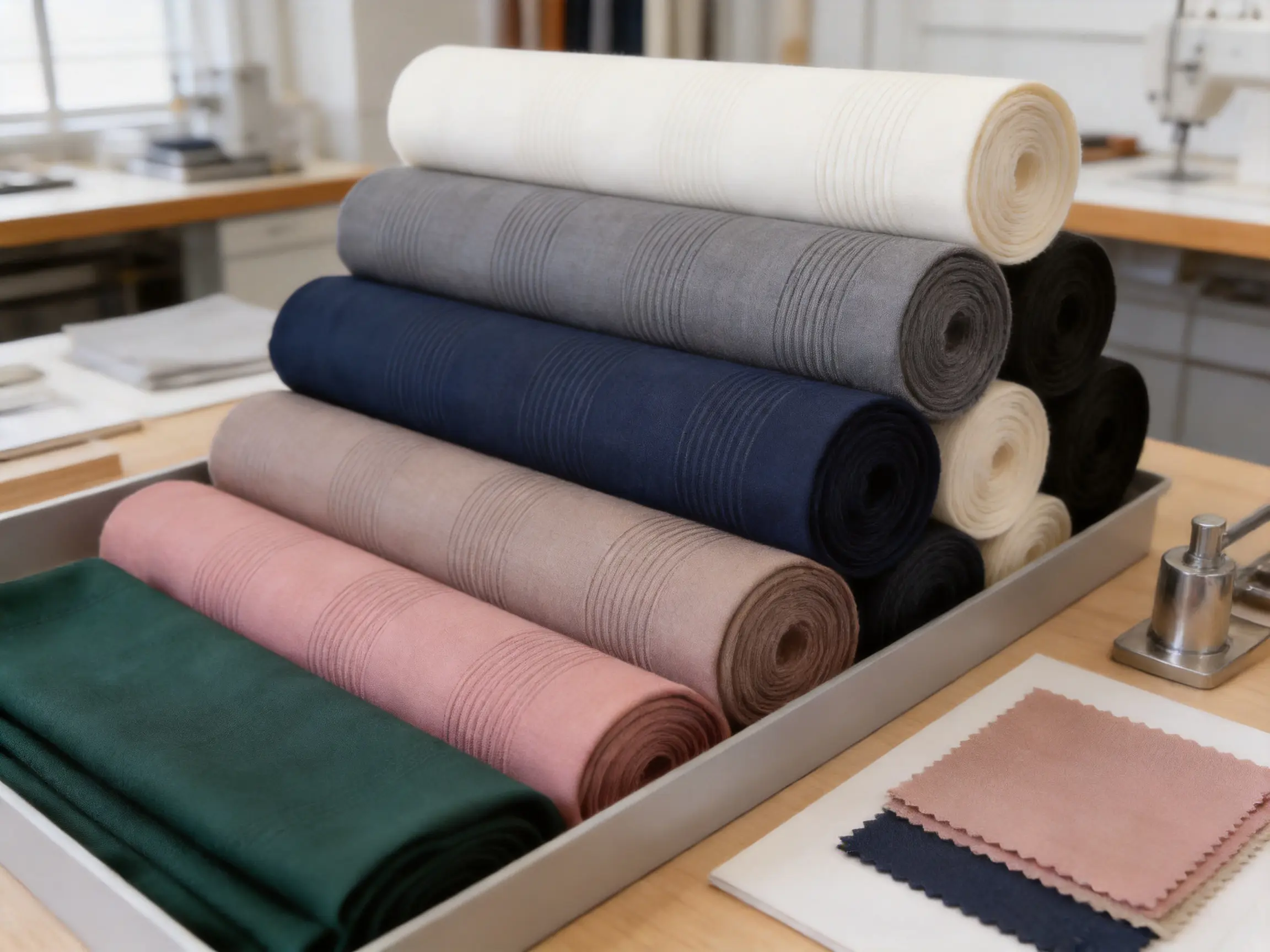
Manufacturing Process and Quality Control
The performance of NR Strip Roman Fabric depends on more than the basic fiber name. Quality is created through a sequence of controlled decisions, beginning with yarn preparation and continuing through knitting, dyeing, finishing, inspection, and packing. A manufacturer with experience in blended fabrics can coordinate these stages more effectively and reduce inconsistencies between production batches.
Yarn Selection and Preparation
The first stage is the selection of suitable yarns. The supplier must consider fiber type, yarn count, twist, strength, evenness, color requirements, and compatibility with the intended knitting structure. Nylon, rayon, cotton, viscose, polyester, elastane, and other fibers each behave differently during knitting and wet processing.
Yarn preparation may include winding, clearing, conditioning, and inspection. Consistent yarn tension is important because irregular tension can create visible bars, uneven loops, or differences in fabric density. For blended constructions, the compatibility of the individual yarns must be considered carefully so that the finished fabric develops a uniform surface and balanced mechanical performance.
Hangzhou Jinfeng Textile Co., Ltd. also produces and processes DTY polyester yarn. This capability is relevant because yarn knowledge contributes to fabric development. Drawn textured yarn can provide bulk, resilience, flexibility, and a distinctive surface effect in appropriate constructions. Although the exact yarn program for NR Strip Roman Fabric depends on the customer’s specification, in-house experience with DTY and blended textile materials supports more informed production planning.
Knitting Structure Development
The knitting stage determines the fabric’s basic geometry, weight, width, stretch, and surface appearance. Machine gauge, stitch density, loop length, yarn tension, and feeding conditions must be controlled to obtain a stable result. Strip effects require particular attention because variations in tension or yarn behavior may make the visual lines appear uneven.
During development, the manufacturer may produce trial fabric to evaluate appearance, hand feel, weight, stretch, recovery, and sewing behavior. This stage allows adjustments before bulk production. It is more efficient to identify construction issues during sampling than after a large quantity has been knitted and dyed.
A well-developed Roman structure should provide an even face, consistent width, and a balanced relationship between firmness and flexibility. The fabric should not feel excessively board-like, nor should it collapse like an unstable lightweight knit. The correct result depends on the buyer’s intended garment and should be agreed through physical samples and measurable standards.
Dyeing and Color Development
Color is a central part of fabric value. A textile may have excellent construction but fail commercially if the shade is inconsistent, the surface is streaky, or the color changes after washing. Dye selection must be matched to the fibers in the blend because nylon, rayon, cotton, polyester, and elastane may require different dye affinities and process conditions.
Blended fabrics can present technical challenges because different fibers may absorb dyes at different rates. Skilled dyeing and careful recipe control are needed to achieve an even appearance. The process may include pretreatment, dyeing, washing, neutralization, and drying. Temperature, pH, time, liquor ratio, and chemical concentration must be controlled according to the composition.
For color approval, buyers should review laboratory dips or strike-offs under appropriate lighting. They should also consider whether the final garment will be matched with trims, linings, sewing threads, or other fabrics. A shade that appears acceptable in isolation may require adjustment when placed beside another material.
Finishing and Surface Improvement
Finishing has a major effect on the final character of NR Strip Roman Fabric. Processes may be used to improve softness, smoothness, width stability, recovery, surface cleanliness, and overall appearance. Depending on the product specification, finishing may include compacting, softening, heat setting, brushing, calendaring, or other controlled treatments.
The finishing route must be selected carefully. Excessive heat may affect elastane or alter the hand feel of rayon-containing fabric. Excessive mechanical tension can influence width and recovery. Inadequate relaxation may result in additional shrinkage after garment production or consumer laundering.
A capable supplier does not treat finishing as a simple final step. It should be considered during product development because the same knitted structure can feel and perform very differently after different finishing programs. Samples should be evaluated before and after washing so that the buyer can understand the realistic behavior of the finished material.
Inspection and Packing
Finished fabric should be inspected for shade variation, holes, dropped stitches, oil marks, bars, slubs, uneven strip effects, width inconsistency, and other visible defects. Depending on the customer’s quality system, inspection may be carried out using a point-based method, a four-point system, or another agreed standard.
Physical tests may include fabric weight, width, stretch, recovery, shrinkage, colorfastness, pilling resistance, bursting strength, and seam performance. Not every test is required for every order, but the testing plan should reflect the intended end use. Dresses, children’s clothing, uniforms, and close-fitting garments may each require different priorities.
Proper packing protects the fabric during storage and transportation. Rolls should be packed to reduce crushing, moisture exposure, contamination, and unnecessary creasing. Labels should identify the style, color, roll number, quantity, composition, and other traceability information requested by the customer.
Manufacturing Strengths of the Supplier
Hangzhou Jinfeng Textile Co., Ltd. operates from Jingjiang Street Industrial Park in Xiaoshan District, Hangzhou City, Zhejiang Province. The company covers approximately 32.6 acres and has a plant area of about 18,000 square meters. Its production base supports fabric manufacturing, post-dyeing, finishing, and sales, along with DTY polyester yarn production, processing, and sales.
This combination of facilities and capabilities gives the supplier a practical foundation for serving buyers who need more than a standard stock fabric. The company can participate in product development, material selection, color coordination, production planning, and quality communication. An integrated supplier relationship can shorten communication paths and make it easier to solve problems that cross from yarn to finished fabric.
Experience in Blended Fabrics
Blended fabrics require an understanding of how different fibers interact during knitting, dyeing, drying, and finishing. A company that regularly works with polyester, rayon, nylon, cotton, spandex, and other combinations is better positioned to identify potential process conflicts at an early stage.
For NR Strip Roman Fabric, this experience can help with balancing softness, strength, stretch, shade, and stability. The objective is not simply to add several fibers together. The objective is to select a construction in which each component supports the intended performance of the finished garment.
Integration of Production and Sales
Jinfeng Textile is described as an export-oriented enterprise integrating research and development, production, and sales. This structure can be valuable for international buyers because technical questions and commercial questions can be handled within one coordinated organization.
Clear communication is particularly important when a product has multiple possible compositions or when the buyer needs a customized stripe effect. The supplier should be able to clarify what is technically achievable, what requires sampling, what affects cost, and what standards will be used for approval.
Research and Development Orientation
Product development is essential in the contemporary textile market. Apparel brands frequently need new colors, revised weights, improved hand feels, better recovery, or alternative fiber combinations. A manufacturer with a research and development orientation can help customers move from a general concept to a repeatable technical specification.
For NR Strip Roman Fabric, development may involve adjusting the strip scale, fabric weight, width, color arrangement, stretch level, surface finish, or softness. These changes should be assessed through samples and tests rather than decided only by visual inspection.
Export and Customer Service Capability
As an export company, Jinfeng Textile serves customers in domestic and international markets. Export-oriented production requires attention to documentation, packaging, delivery coordination, inspection standards, and communication across different time zones and business practices.
Customers purchasing fabric for overseas garment production generally need accurate composition information, roll data, packing details, test records, and clear commercial terms. A supplier accustomed to export business can provide a more organized process and help reduce misunderstandings during order execution.
Comparison with Competing Materials
The best fabric depends on the garment, target price, climate, care instructions, and brand positioning. NR Strip Roman Fabric should not be viewed as a universal replacement for every knit or woven textile. Its value lies in the particular balance it can offer between structure, comfort, appearance, and flexibility.
| Material | Typical Strength | Potential Limitation | Position of NR Strip Roman Fabric |
|---|---|---|---|
| Lightweight single jersey | Soft, flexible, economical, and easy to use for casual garments | May have less body, lower shape stability, and greater rolling at cut edges | Provides a more substantial and structured alternative while retaining knit comfort |
| Basic rib knit | Strong widthwise stretch and a clear rib texture | May stretch out, emphasize body contours, or offer limited design versatility | Can provide controlled texture and a more stable appearance for polished garments |
| Interlock knit | Smooth surface, reversible appearance, and good coverage | May feel heavier or less visually distinctive in some applications | Adds a strip effect and can be developed with a balance of softness and body |
| Heavy ponte-style knit | Firm hand, strong silhouette support, and good coverage | May feel warm, dense, or less fluid than required for certain garments | Can offer a lighter or softer option where fluidity and movement are important |
| Woven rayon blend | Elegant drape and a smooth fashion appearance | Usually has limited inherent stretch and may require more ease in the pattern | Combines rayon-like softness with knitted flexibility and movement comfort |
| Polyester knit | Durability, color performance, and broad cost options | May feel less natural or less fluid depending on construction and finishing | Can introduce rayon, nylon, cotton, or viscose characteristics for a softer hand |
This comparison demonstrates why product development should be based on the complete specification rather than a fiber name alone. A high-quality single jersey may be preferable for a lightweight summer T-shirt, while NR Strip Roman Fabric may be more suitable for a structured dress or fashion cardigan. The selection should be linked to the desired garment result.
Applications in Apparel Design
Dresses
NR Strip Roman Fabric is well suited to dresses that need a clean line, comfortable movement, and modest body. It can be used for straight dresses, fit-and-flare styles, wrap-inspired shapes, long-sleeved day dresses, and softly fitted occasion garments. The strip effect may be positioned vertically to support a streamlined visual impression.
For close-fitting dresses, designers should evaluate opacity, stretch recovery, seam strength, and lining requirements. A fabric with attractive stretch may still require a suitable seam construction to prevent distortion. Pattern testing is recommended before cutting production quantities.
Skirts
The fabric’s compact body makes it useful for pencil skirts, A-line skirts, pull-on styles, and midi-length designs. It can hold a clean outline while offering more comfort than a rigid woven fabric. Waistband construction, hem weight, and recovery should be reviewed carefully, especially for fitted skirts.
Blouses and Tops
For blouses and tops, the material can provide a more substantial alternative to very thin jersey. It may be used for long-sleeved tops, mock-neck designs, relaxed blouses, and fashion T-shirts. The strip texture adds surface interest without requiring a separate print or decorative panel.
Cardigans and Lightweight Jackets
Cardigans benefit from fabrics that have enough body to form a stable front edge and hem while remaining flexible. NR Strip Roman Fabric can support open-front cardigans, cropped styles, longline layers, and simple collarless jackets. Interfacing and edge finishing should be tested because a structured knit may respond differently from a woven material.
Children’s and Baby Clothing
Soft knitted fabrics are often considered for children’s clothing because they can provide comfort and freedom of movement. NR Strip Roman Fabric may be used for selected baby or children’s garments when its weight, softness, stretch, colorfastness, chemical compliance, and safety performance are appropriate.
Children’s products require special care. Buyers should confirm fiber content, restricted-substance compliance, small-part safety, wash durability, and the absence of irritating finishes. The suitability of any specific fabric must be verified through the relevant testing program rather than assumed from the product category.
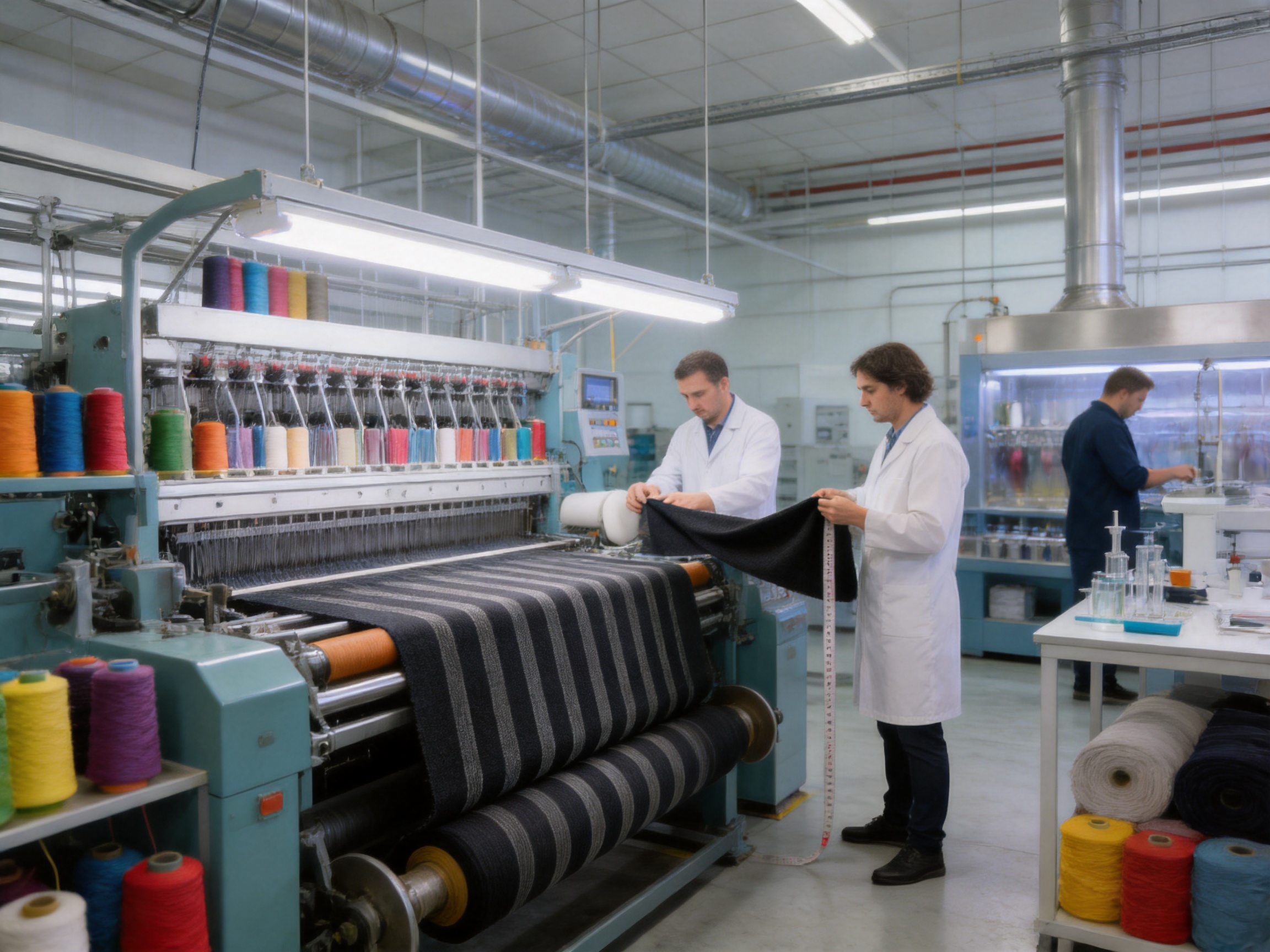
Sewing and Garment-Making Considerations
NR Strip Roman Fabric is generally considered an easy-to-sew knitted material when the machine settings and pattern are appropriate. However, “easy to sew” does not mean that no preparation is required. Stretch, thickness, surface texture, and fiber composition can all influence sewing behavior.
Needle and Thread Selection
A ballpoint or stretch needle may be suitable for many knitted constructions because its rounded tip can pass between loops rather than damaging them. The exact needle size should be selected according to fabric weight and yarn structure. Thread should provide adequate seam flexibility and strength.
Before production, the sewing team should test skipped stitches, seam puckering, thread breakage, and needle marks. If the fabric contains elastane or has high stretch, a suitable stretch stitch, overlock stitch, cover stitch, or other flexible seam may be required.
Cutting and Stripe Direction
The direction of the strip effect must be considered during marker planning. If the design requires vertical alignment, all panels should be cut consistently. Differences in relaxation, width, or tension can influence the appearance of the stripes across adjoining pieces.
Knitted fabric should be allowed to relax before cutting when recommended by the supplier. Cutting immediately after unwinding may produce inaccurate dimensions if the fabric later contracts. The relaxation period depends on the material, finishing, storage conditions, and production environment.
Pattern and Seam Planning
Pattern allowances should reflect the fabric’s stretch and recovery. Too much ease may create a loose or unstable garment, while too little ease may place excessive stress on seams. Designers should evaluate the finished garment in motion, not only on a flat table.
Seam placement can also influence the strip effect. Side seams, center fronts, panels, and necklines may create attractive directional relationships when planned carefully. The fabric’s compact body can support clean seam lines, but bulky seam intersections should be reviewed during sample making.
Pressing and Heat Control
Knitted fabrics should be pressed with controlled heat and pressure. Excessive heat can change the surface, flatten the texture, or affect synthetic and elastic fibers. A pressing test should be performed on a fabric remnant before production. Steam, cloth protection, and cooling time may all influence the final appearance.
Care, Testing, and Performance Evaluation
Care instructions should be determined from the actual fiber composition and finishing process. A rayon-containing fabric may respond differently to washing than a polyester-rich or nylon-rich construction. Buyers should not print generic care labels without confirming the recommended method through testing.
Important evaluation areas include dimensional change after washing, colorfastness to washing and rubbing, pilling, snagging, seam slippage, bursting strength, stretch recovery, and appearance retention. For garments intended for frequent use, repeated laundering tests can reveal changes that are not visible after the first wash.
Dimensional stability is particularly important for Roman-style knits because the fabric’s value includes its structured appearance. Excessive shrinkage or skewing may affect garment measurements and stripe alignment. The supplier and buyer should agree on acceptable tolerances before bulk production.
Colorfastness testing is also essential when the fabric will be used in dark shades, contrasting panels, or multi-color garments. Different fiber components may respond differently to washing and rubbing. A qualified testing laboratory can provide objective data for the intended market.
How Buyers Can Select the Right Specification
Buyers should begin by defining the final garment rather than asking only for a general fabric category. The supplier needs to know whether the material is intended for a fitted dress, relaxed top, cardigan, skirt, children’s garment, or another application. This information helps determine the appropriate weight, width, stretch, composition, and finish.
The following specification points should be discussed during development:
Fiber composition and allowable tolerances should be clearly stated. If the fabric is described as nylon rayon, cotton viscose, or another blend, the buyer should confirm the exact percentages and whether elastane or polyester is included.
Fabric weight should be expressed in a recognized unit and measured consistently. Weight affects opacity, drape, warmth, sewing behavior, shipping cost, and garment appearance.
Finished width should be confirmed after relaxation and finishing. Usable width may differ from the total edge-to-edge measurement because of selvage conditions or edge curling.
Stretch and recovery should be measured in both directions when relevant. The test method, extension percentage, holding time, and recovery time should be recorded so that results can be compared accurately.
Color should be approved against a physical standard under agreed lighting. Digital images are useful for initial communication but should not replace a physical color approval for bulk production.
Surface appearance should be reviewed for strip regularity, shade evenness, texture, softness, and visible defects. Buyers should inspect samples under both flat and garment-like conditions.
Care performance should be evaluated using the laundering method expected by the target market. This is especially important when the fabric contains rayon, viscose, elastane, or multiple fibers with different shrinkage behavior.
Why Integrated Textile Manufacturing Matters
Textile quality is influenced by many connected variables. A change in yarn may affect knitting tension. A change in dyeing may affect softness and width. A change in finishing may affect recovery and shrinkage. When these stages are handled by disconnected suppliers, communication gaps can make it difficult to identify the source of a problem.
An integrated manufacturer can approach the fabric as one complete product. The supplier can connect yarn selection with knitting requirements, coordinate dyeing with fiber composition, and adjust finishing according to the intended garment. This does not eliminate the need for testing, but it can make the development process more coordinated and responsive.
Jinfeng Textile’s combination of blended fabric production, post-dyeing, finishing, DTY polyester yarn activities, research and development, and sales provides a foundation for this type of cooperation. Customers can discuss both standard and customized requirements with a supplier that understands multiple stages of textile production.
The company’s location in Hangzhou, an important textile and manufacturing region, also supports access to industrial resources, labor, logistics, and related supply networks. Its stated business principle emphasizes cooperation, mutual benefit, and service to customers in domestic and international markets.
Sustainability and Responsible Production Considerations
Responsible textile production begins with accurate specifications and efficient use of resources. Producing the correct fabric weight, width, color, and quantity reduces the likelihood of rework, rejected goods, and unnecessary material waste. Careful sampling before bulk production can also prevent larger production errors.
Blended fabrics require thoughtful consideration because fiber mixtures can complicate recycling at the end of the garment’s life. Buyers may therefore wish to evaluate the reason for each fiber component and select a composition that delivers a clear performance benefit. Durability and longer garment use are also important aspects of resource efficiency.
Dyeing and finishing should be managed with attention to water, energy, chemicals, and wastewater controls. Buyers can request information about applicable quality systems, chemical management procedures, and compliance documentation when required by their market or brand policy.
Responsible manufacturing is not limited to one environmental claim. It includes consistent quality, transparent communication, safe working practices, legal compliance, durable products, and reliable delivery. A fabric that performs consistently can help reduce waste throughout cutting, sewing, retail, and consumer use.
Q&A About NR Strip Roman Fabric
What does NR mean in NR Strip Roman Fabric?
NR commonly refers to a nylon-rayon blend or a related nylon and rayon knitted construction. However, product naming can vary between suppliers. The exact fiber content should always be confirmed through the technical specification, sample approval, and, where necessary, laboratory testing.
Is NR Strip Roman Fabric woven or knitted?
It is a knitted fabric. Its Roman-style construction provides more body and surface stability than many lightweight jersey fabrics while maintaining the flexibility associated with knitted textiles.
What garments can be made from this fabric?
The fabric can be considered for dresses, skirts, blouses, tops, cardigans, lightweight jackets, tunics, coordinated sets, and selected children’s garments. The ideal use depends on the fabric weight, composition, stretch, opacity, and finishing.
Does it stretch?
Most knitted Roman-style fabrics provide some natural flexibility, especially across the width. The exact stretch and recovery depend on the knitting structure and fiber content. Versions containing elastane may offer greater stretch and recovery. Buyers should request measured test results rather than relying only on the fabric name.
Is it easy to sew?
It can be easy to sew when the correct needle, thread, stitch, presser-foot pressure, and feed settings are used. Test sewing is recommended because surface texture, fabric weight, and stretch can vary between specifications.
How does it compare with ordinary jersey?
NR Strip Roman Fabric generally offers more body, a more stable surface, and a more distinctive strip texture than lightweight single jersey. Ordinary jersey may be preferable when maximum softness, lightness, or lower cost is the priority.
How does it compare with ponte knit?
Ponte-style fabrics are often firmer and heavier, with strong silhouette support. NR Strip Roman Fabric may provide a softer hand, more fluid movement, or a lighter alternative, depending on its composition and finishing.
Can the fabric be customized?
Customization may be possible in fiber composition, weight, width, color, stripe appearance, stretch level, and finishing. The available options should be confirmed with the manufacturer through technical discussion and sample development.
What should be checked before placing a bulk order?
Buyers should check composition, weight, width, color, stretch, recovery, shrinkage, pilling, colorfastness, surface appearance, sewing performance, and packing details. A signed or documented sample standard should be used as the reference for production.
Is the fabric suitable for baby clothing?
It may be suitable for selected baby clothing if the exact fabric meets requirements for softness, safety, colorfastness, chemical compliance, stretch, and laundering. Baby garment suitability must be verified through appropriate testing and should not be assumed solely from the fabric category.
Where is the manufacturer located?
Hangzhou Jinfeng Textile Co., Ltd. is located at 1279 Shenda Road, Jingjiang Branch, Xiaoshan District, Hangzhou, Zhejiang Province. The company operates in Jingjiang Street Industrial Park and serves domestic and international customers.
Does the company produce yarn as well as fabric?
Yes. The company produces, processes, and sells DTY polyester yarn in addition to manufacturing and finishing blended fabrics. This yarn-related capability supports a broader understanding of textile materials and production requirements.
Conclusion
NR Strip Roman Fabric offers a useful combination of knitted comfort, structured body, refined texture, and design versatility. Its compact Roman construction can provide more shape control than ordinary lightweight jersey, while its blend options can support softness, drape, strength, stretch, and recovery. The strip effect adds visual interest without limiting the fabric to a narrow fashion category.
The material is especially valuable for dresses, skirts, blouses, cardigans, tops, lightweight jackets, and other garments that need a polished appearance with comfortable movement. Its performance depends on the complete specification, including fiber content, yarn quality, knitting structure, dyeing, finishing, and care conditions.
Hangzhou Jinfeng Textile Co., Ltd. brings together blended fabric manufacturing, post-dyeing, finishing, DTY polyester yarn production, research and development, sales, and export experience. Its production base and integrated approach can support customers seeking stable supply, technical communication, customized development, and dependable quality control.
For buyers, the most effective path is to define the target garment, request a complete technical specification, review physical samples, conduct relevant tests, and establish clear production standards before bulk ordering. When these steps are followed, NR Strip Roman Fabric can become a reliable material for creating comfortable, durable, and commercially attractive apparel collections.
References
1. Textile Institute, Textile Terms and Definitions, reference material on knitted fabrics, yarns, and textile processing.
2. American Society for Testing and Materials, Standard Test Methods for Textile Fiber Content, Fabric Weight, Colorfastness, Stretch, and Dimensional Change.
3. International Organization for Standardization, Textile Testing Standards for Colorfastness, Pilling, Shrinkage, and Fabric Performance.
4. Technical information supplied for NR Strip Roman Fabric and related NR knitted fabric classifications.
5. Company information supplied by Hangzhou Jinfeng Textile Co., Ltd. concerning blended fabric production, DTY polyester yarn, finishing, facilities, and export operations.
6. Apparel manufacturing practice references concerning knitted fabric cutting, sewing, pressing, garment testing, and quality inspection.
7. General textile engineering references on rayon, nylon, cotton, viscose, polyester, elastane, yarn preparation, knitting, dyeing, and finishing.
