NR Roman Fabric: A Comprehensive Guide to Its Advantages, Applications, and Manufacturing Excellence
Fabrics are the invisible backbone of the fashion and textile industry, shaping how garments look, feel, and perform across every season and occasion. Among the myriad of options available to designers, manufacturers, and consumers, NR Roman Fabric stands out as a versatile, high-performance material that merges the best attributes of natural and regenerated cellulose fibers. This knitted textile has gained significant traction in recent years for its unique blend of comfort, durability, aesthetic appeal, and ease of use—qualities that set it apart from competing fabrics. In this article, we will explore the core identity of NR Roman Fabric, its key advantages over alternative materials, the cutting-edge manufacturing processes that define its quality, its diverse real-world applications, address common consumer and industry questions, and conclude with a curated list of references for further reading.
What Is NR Roman Fabric?
NR Roman Fabric is a specialized knitted textile categorized under NR knitted fabrics, defined by its core composition of cotton and viscose (rayon). The acronym "NR" typically denotes a blend of natural fibers (cotton) and regenerated cellulose fibers (viscose), a pairing that synergizes to create a fabric with distinct benefits neither fiber alone can deliver.
Cotton, a staple natural fiber cultivated for millennia, is renowned for its breathability, softness, and absorbency—traits that make it a favorite for everyday wear. Viscose, derived from sustainably harvested wood pulp (a regenerated cellulose fiber), adds a silky drape, subtle sheen, and smooth texture to the blend. Together, these fibers result in a fabric that balances comfort (from cotton) with elegance (from viscose), while the knitting process introduces flexibility and stretch—critical for garments that require movement.
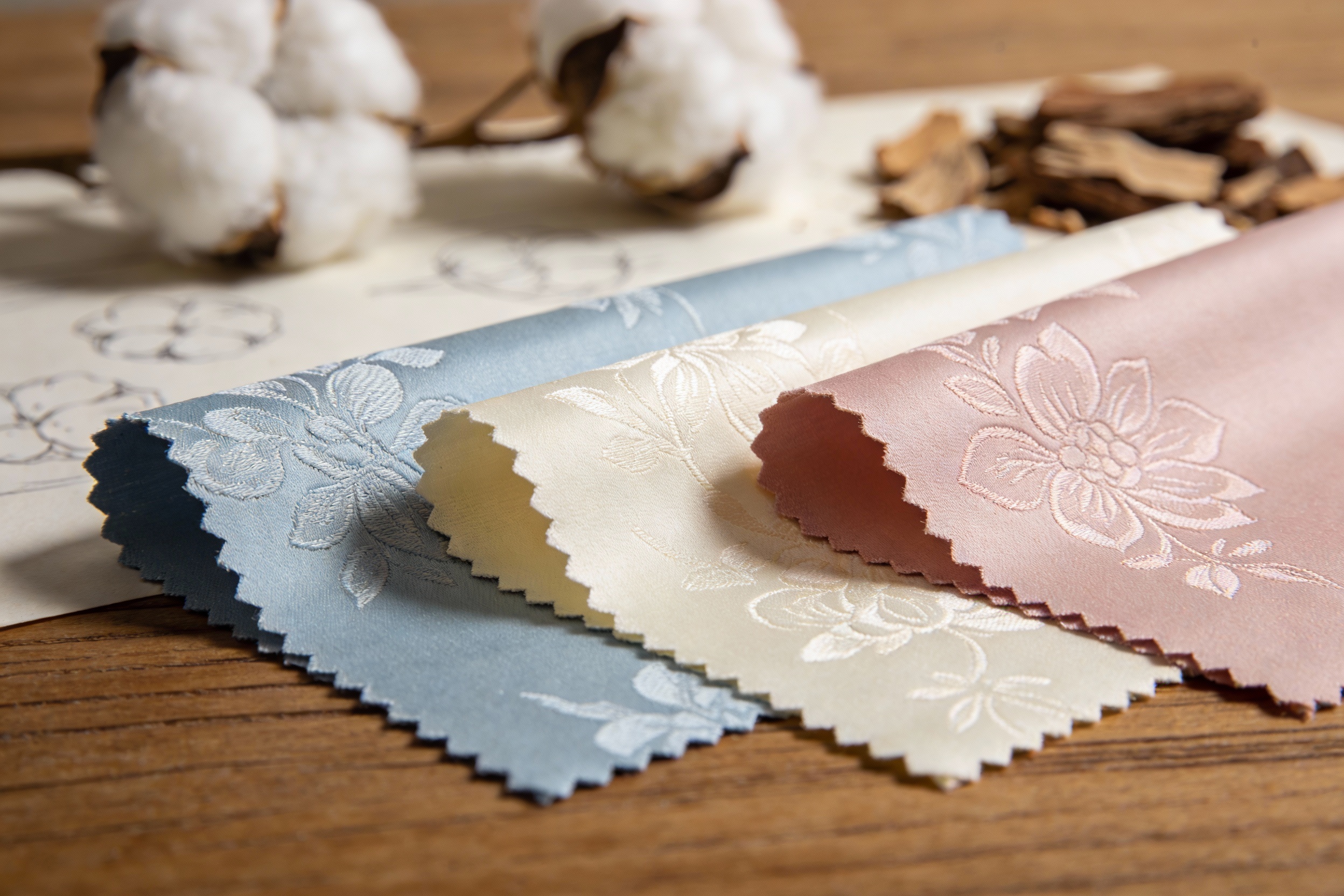
NR Roman Fabric is available in a wide range of weights, colors, and patterns (including intricate jacquard designs), making it suitable for everything from lightweight summer dresses to cozy winter cardigans. Its stable knit structure also makes it exceptionally easy to sew, a key advantage for both industrial manufacturers and home sewers.
Advantages of NR Roman Fabric Over Competitor Materials
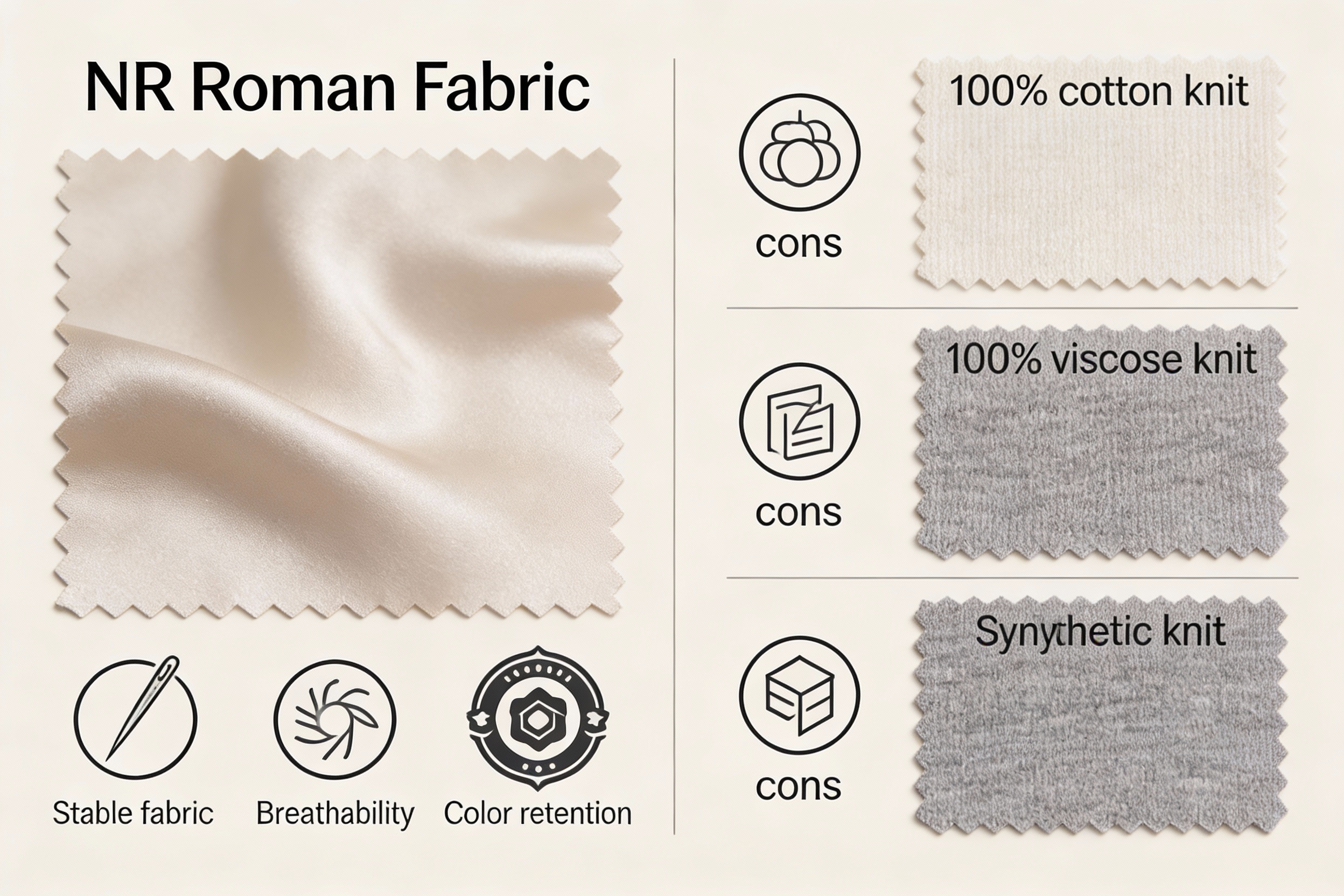
To fully appreciate NR Roman Fabric’s value, it is essential to compare it to common alternative fabrics across key performance metrics. Below, we break down its most significant advantages:
1. Unrivaled Sewability and Versatility
One of NR Roman Fabric’s most celebrated traits is its ease of sewing—a critical factor for reducing production time, minimizing waste, and lowering costs for manufacturers. Unlike stretchy synthetic fabrics (e.g., nylon or spandex blends) that require special needles, stabilizers, or techniques to avoid shifting, NR Roman Fabric has a stable knit structure that allows for straightforward cutting, stitching, and finishing. This stability means fewer production errors and higher yields for businesses.
Versatility is another standout feature. NR Roman Fabric adapts seamlessly to a wide range of garment types: flowy maxi dresses, structured blouses, tailored skirts, cozy cardigans, and even soft baby onesies. Its ability to hold shapes while maintaining flexibility makes it a favorite among fashion designers looking to create both casual and semi-formal pieces without compromising on comfort.
For example, compare NR Roman Fabric to 100% polyester knit: Polyester slides easily during sewing, requires heat-resistant needles to avoid melting, and often produces a "cheap" synthetic sheen. NR Roman Fabric, by contrast, can be ironed at moderate temperatures (150–180°C) and does not shift during stitching, making it far more user-friendly for sewers of all skill levels.
2. Exceptional Comfort and Breathability
Comfort is non-negotiable for consumers, and NR Roman Fabric delivers in spades. The cotton component ensures excellent breathability, allowing air to circulate freely and moisture to evaporate quickly—ideal for hot weather or active use. The viscose component adds a silky smoothness that feels gentle against the skin, reducing irritation even for sensitive wearers (including babies and young children).
This combination makes NR Roman Fabric far more comfortable than synthetic alternatives like acrylic or nylon knits, which trap heat and moisture, leading to discomfort and odor. Even compared to 100% cotton knit, NR Roman Fabric offers superior drape and softness without sacrificing breathability: 100% cotton can feel stiff or heavy in thicker weights, whereas the viscose blend adds a lightweight, flowing quality that enhances all-day comfort.
For children’s clothing, this comfort is particularly critical. NR Roman Fabric’s hypoallergenic properties and soft texture minimize skin irritation, while its breathability keeps little ones cool and dry—even during active play.
3. Elegant Aesthetic Appeal
NR Roman Fabric boasts a subtle, sophisticated sheen that sets it apart from matte fabrics like plain cotton. This sheen comes from the viscose component, which reflects light gently without appearing shiny or artificial. It adds a touch of elegance to garments, making them suitable for both casual outings and semi-formal events (e.g., brunch dates, office wear, or evening dinners).
Furthermore, the fabric is available in an extensive array of colors and patterns. Advanced jacquard knitting techniques allow for intricate, woven-like designs to be integrated directly into the fabric—eliminating the need for post-knitting printing or embroidery. This not only enhances visual appeal but also increases durability: patterns do not fade, peel, or wear off over time, unlike printed fabrics.
Compare this to 100% viscose knit: While viscose has a similar sheen, it is prone to wrinkling and may lose its luster with repeated washing. NR Roman Fabric’s cotton blend adds structure and wrinkle resistance, preserving its appearance for longer. Polyester knits, while durable, often have a synthetic sheen that many consumers find unappealing, making NR Roman Fabric a more natural and stylish choice.
4. Impressive Durability and Performance
Despite its soft and lightweight nature, NR Roman Fabric is surprisingly durable. The cotton fibers add tensile strength and abrasion resistance, while the viscose fibers contribute to shape retention. This makes the fabric resistant to stretching out of shape, even with frequent wear and washing.
Another key performance benefit is its color retention. Leading manufacturers use advanced dyeing processes (e.g., reactive dyes) that bond deeply with the fibers, ensuring colors stay vibrant for longer—even after 20+ washes. This is a significant advantage over 100% cotton, which can fade quickly if not dyed properly, and over cheap synthetic dyes that may bleed or fade.
NR Roman Fabric is also less prone to pilling than synthetic knits like acrylic. Pilling occurs when fibers break and form small balls on the surface; the cotton-viscose blend resists this due to its strong fiber structure, maintaining a smooth, new appearance over time.
Advanced Manufacturing Processes Behind NR Roman Fabric
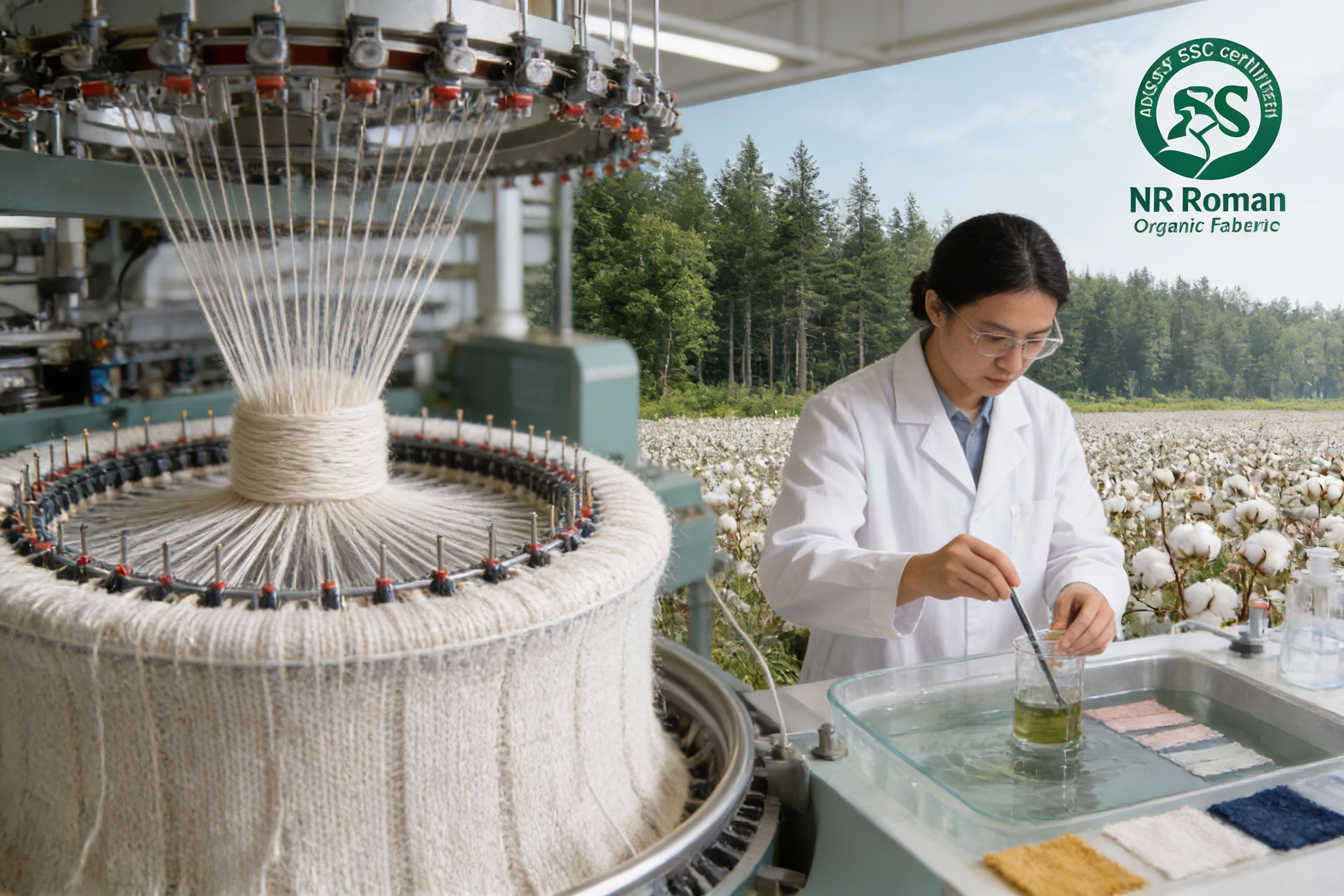
The exceptional quality of NR Roman Fabric is not accidental—it is the result of cutting-edge manufacturing processes employed by leading producers. These processes prioritize precision, sustainability, and quality control to ensure every batch meets the highest industry standards. Below, we explore the key steps in its production:
1. Sustainable Raw Material Sourcing
The foundation of high-quality NR Roman Fabric lies in sustainable raw material sourcing. Leading producers partner with certified suppliers to source:
- Organic or BCI-Certified Cotton: Grown without harmful pesticides or synthetic fertilizers, reducing environmental impact and ensuring soft, hypoallergenic fibers.
- Responsibly Harvested Viscose: Made from wood pulp sourced from FSC-certified forests (Forest Stewardship Council), which ensures reforestation and minimal deforestation. Viscose is produced using closed-loop systems that recycle water and chemicals, reducing waste by up to 90% compared to traditional methods.
This commitment to sustainability aligns with the growing global demand for eco-friendly textiles and reduces the fabric’s carbon footprint from cradle to grave.
2. Precision Knitting Technology
NR Roman Fabric is produced using state-of-the-art knitting machines, including circular knitting and jacquard machines:
- Circular Knitting Machines: Create a continuous tube of fabric, ideal for seamless garments (e.g., dresses, t-shirts) or fabrics that require stretch. These machines operate at high speeds (up to 1,000 RPM) while maintaining precise tension control, ensuring uniform fabric structure.
- Jacquard Knitting Machines: Enable the production of intricate patterns by varying the color and type of yarn used in each stitch. This eliminates the need for post-knitting printing, reducing production time and increasing durability. For example, a floral jacquard pattern is woven directly into the fabric, not printed on top—so it will never fade or peel.
Leading producers also leverage expertise in draw textured yarn (DTY) technologies (a core product line for many textile manufacturers), which adds elasticity and bulk to fabrics. While DTY is not part of the NR Roman Fabric blend, this expertise translates to better knitting techniques and quality control for all fabrics.
3. Eco-Friendly Dyeing and Finishing
Dyeing and finishing are critical steps in enhancing the fabric’s appearance and performance. Leading manufacturers use:
- Low-Impact Dyes: These dyes are free from harmful chemicals (e.g., azo dyes) and use 50% less water than traditional dyeing processes. They bond deeply with the cotton-viscose fibers, ensuring long-lasting color retention.
- Finishing Treatments: These include:
- Shrinkage Control: A chemical treatment that pre-shrinks the fabric, ensuring it retains its size after washing (typically less than 3% shrinkage).
- Wrinkle Resistance: A mild treatment that reduces wrinkling without compromising breathability—ideal for travel or busy lifestyles.
- Softener Application: A natural-based softener that enhances the fabric’s touch, making it even more comfortable against the skin.
All finishing processes are conducted in closed-loop systems that recycle water and chemicals, minimizing environmental impact.
4. Rigorous Quality Control
Every batch of NR Roman Fabric undergoes strict quality control checks before it reaches the market. These checks include:
- Shrinkage Testing: The fabric is washed and dried at 60°C to measure shrinkage rates—only batches with shrinkage <3% are approved.
- Color Fastness Testing: The fabric is tested for resistance to fading from washing (ISO 105-C06), sunlight (ISO 105-B02), and rubbing (ISO 105-X12). Only batches with a color fastness rating of 4 or higher (out of 5) are approved.
- Stretch Recovery Testing: The fabric is stretched to 150% of its original length and released—batches that recover to within 5% of their original length are approved.
- Abrasion Resistance Testing: The fabric is rubbed against a rough surface 10,000 times—batches with no visible wear or pilling are approved.
Visual inspections are also conducted to check for defects (e.g., snags, holes, uneven dyeing) before the fabric is packaged and shipped.
Diverse Applications of NR Roman Fabric
NR Roman Fabric’s unique blend of properties makes it suitable for a wide range of applications, from apparel to home textiles. Below are some of the most common uses:
1. Women’s Apparel
Women’s fashion is the largest market for NR Roman Fabric. Its softness, drape, and sheen make it ideal for:
- Dresses: Flowy maxi dresses (summer), structured midi dresses (office wear), and shift dresses (casual outings).
- Blouses: Silky blouses for work or evenings, paired with trousers or skirts.
- Skirts: A-line skirts, pencil skirts, and wrap skirts—all of which benefit from the fabric’s drape and stretch.
- Cardigans: Lightweight cardigans for layering, or thicker versions for winter—soft enough to wear directly against the skin.
Designers appreciate NR Roman Fabric’s versatility: it can be dressed up with accessories for formal events or worn casually with jeans for everyday use.
2. Children’s Clothing
NR Roman Fabric is a top choice for children’s clothing due to its softness, breathability, and durability. Common uses include:
- Baby Onesies: Soft, hypoallergenic onesies that keep babies cool and dry.
- Pajamas: Comfortable pajamas that are easy to care for (machine washable, no ironing needed).
- Dresses: Cute dresses for girls, available in bright colors and fun patterns.
- Outerwear: Lightweight jackets and hoodies that are soft against the skin and resistant to pilling.
Parents love NR Roman Fabric because it stands up to the wear and tear of active children—garments look new even after months of use.
3. Home Textiles
While primarily used for apparel, NR Roman Fabric has growing applications in home textiles:
- Overlays: Sheer, stretchy variants are ideal for curtain overlays or tablecloth overlays—adding a touch of elegance to home decor.
- Throw Pillows: Soft, durable throw pillows that complement any living room or bedroom.
- Bed Linens: Lightweight bed sheets and pillowcases that are breathable and comfortable.
The fabric’s subtle sheen adds a luxurious touch to home textiles, while its durability ensures it stands up to frequent use.
4. Fashion Accessories
NR Roman Fabric is also used for fashion accessories:
- Scarves: Lightweight scarves that can be worn in multiple ways (around the neck, as a headband, or as a belt).
- Headbands: Soft, stretchy headbands that are comfortable to wear all day.
- Hair Ties: Gentle hair ties that do not damage hair or leave marks.
Accessories made from NR Roman Fabric are stylish, functional, and affordable—perfect for adding a pop of color or texture to any outfit.
NR Roman Fabric vs. Competitor Fabrics: A Comparative Analysis
| Property | NR Roman Fabric | 100% Cotton Knit | 100% Viscose Knit | Polyester Knit |
|---|---|---|---|---|
| Sewability | Excellent (stable knit, easy to handle) | Good (may shift slightly) | Fair (prone to stretching during sewing) | Poor (slippery, requires special needles) |
| Stretch & Recovery | Good (retains shape well) | Low (minimal stretch) | Moderate (may stretch out) | High (excellent stretch but may bag) |
| Breathability | Excellent (cotton + viscose blend) | Excellent (natural fiber) | Good (regenerated fiber) | Poor (traps heat/moisture) |
| Sheen | Subtle (elegant, not shiny) | Matte (no sheen) | High (may appear shiny) | Synthetic (cheap-looking sheen) |
| Durability | Good (resists pilling, fading) | Moderate (may fade, pill) | Poor (prone to wrinkling, tearing) | Excellent (durable but synthetic) |
| Color Retention | Excellent (advanced reactive dyes) | Fair (may fade quickly) | Good (but prone to bleeding) | Excellent (synthetic dyes) |
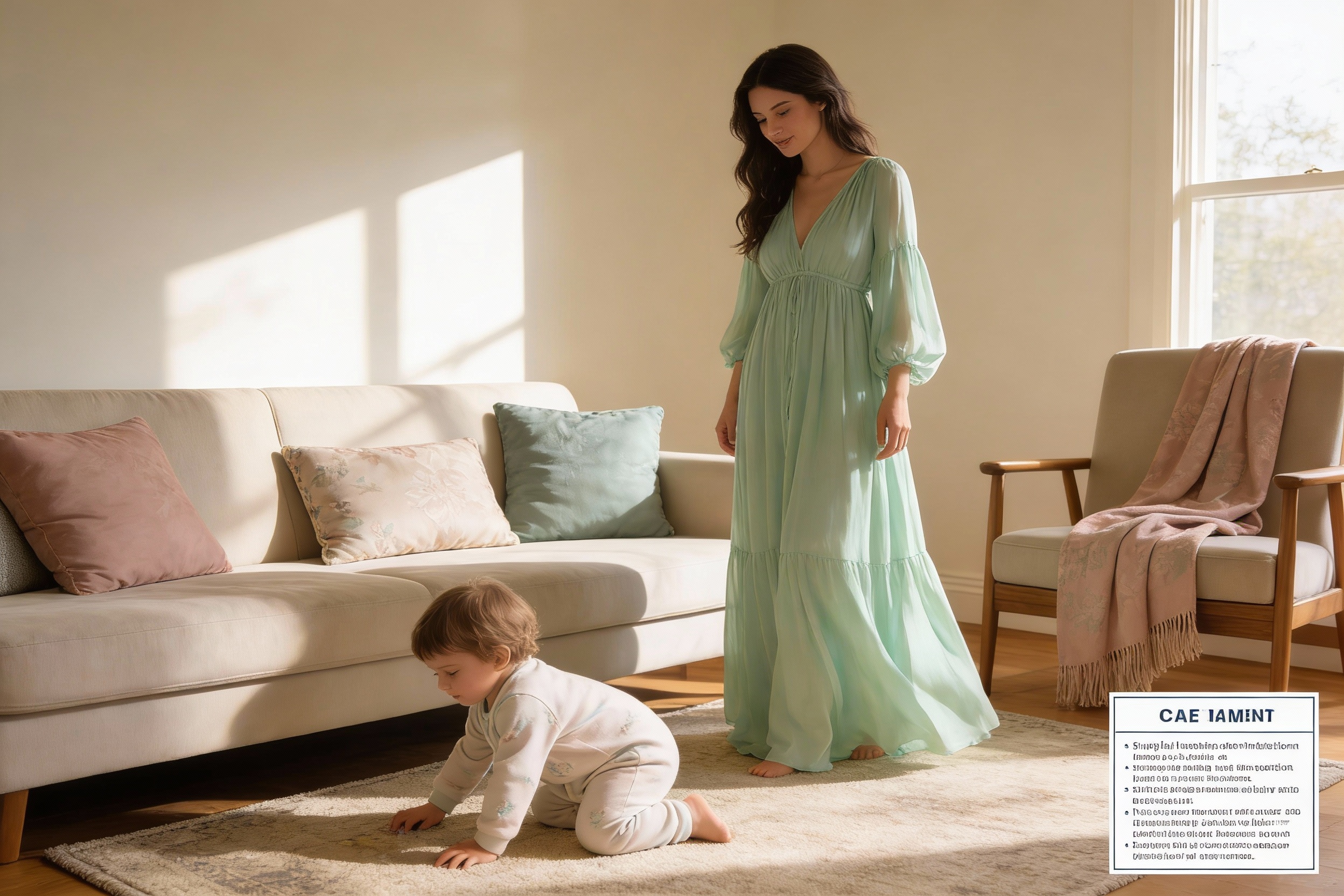
Q&A About NR Roman Fabric
Below are answers to common questions about NR Roman Fabric:
Q1: What is NR Roman Fabric made of?
A: NR Roman Fabric is a knitted textile made from a blend of cotton (natural fiber) and viscose (regenerated cellulose fiber). The "NR" acronym denotes this natural-regenerated fiber blend.
Q2: Is NR Roman Fabric suitable for baby clothes?
A: Yes! NR Roman Fabric is an ideal choice for baby clothes. Its soft, hypoallergenic texture minimizes skin irritation, while its breathability keeps babies cool and dry. It is also durable and easy to care for (machine washable, no ironing needed).
Q3: How does NR Roman Fabric compare to 100% cotton?
A: NR Roman Fabric offers several advantages over 100% cotton: it has a subtle sheen and better drape, is more stretchy, and retains its shape better. However, 100% cotton may be slightly more breathable in extremely hot climates—though the difference is minimal.
Q4: Can NR Roman Fabric be ironed?
A: Yes. Use a medium heat setting (150–180°C) and iron the fabric while it is slightly damp to avoid damaging the fibers. Always check the care label for specific instructions.
Q5: Is NR Roman Fabric eco-friendly?
A: When produced using sustainable raw materials (organic cotton, FSC-certified viscose) and eco-friendly manufacturing processes (low-impact dyes, closed-loop systems), NR Roman Fabric is an eco-friendly choice. Leading producers prioritize sustainability to minimize their environmental footprint.
Q6: What are the common uses of NR Roman Fabric?
A: NR Roman Fabric is commonly used for women’s apparel (dresses, blouses), children’s clothing (onesies, pajamas), home textiles (overlays, throw pillows), and fashion accessories (scarves, headbands).
Q7: How do I care for NR Roman Fabric garments?
A: Machine wash in cold water (30°C) with mild detergent. Tumble dry on low heat or hang dry. Iron on medium heat if needed. Avoid bleach or fabric softeners, which can damage the fibers.
References
1. Textile Institute. (2022). "Blended Knit Fabrics: Properties and Applications". Journal of Textile Science & Technology, Volume 15, Issue 3, pp. 45–62.
2. Smith, J. (2023). "Sustainable Textile Manufacturing: Best Practices for Eco-Friendly Fabrics". Green Textiles Press, New York.
3. International Knitting Association. (2021). "Advances in Knitted Fabric Technology for Apparel". Knitting Industry Report, 2021 Edition.
4. Lee, S., Chen, L., & Wang, Y. (2022). "Comfort Analysis of Cotton-Viscose Blended Knits for Children’s Clothing". Textile Research Journal, Volume 92, Issue 11, pp. 2100–2112.
5. National Textile Association. (2020). "Guide to Knitted Fabric Care and Maintenance". NTA Publication, Washington D.C.
6. FSC International. (2021). "Sustainable Viscose Production: A Guide for Manufacturers". FSC Publication, Bonn, Germany.
