
Jacquard Black And White Grid Fabric: A Timeless Blend of Durability, Versatility, and Style
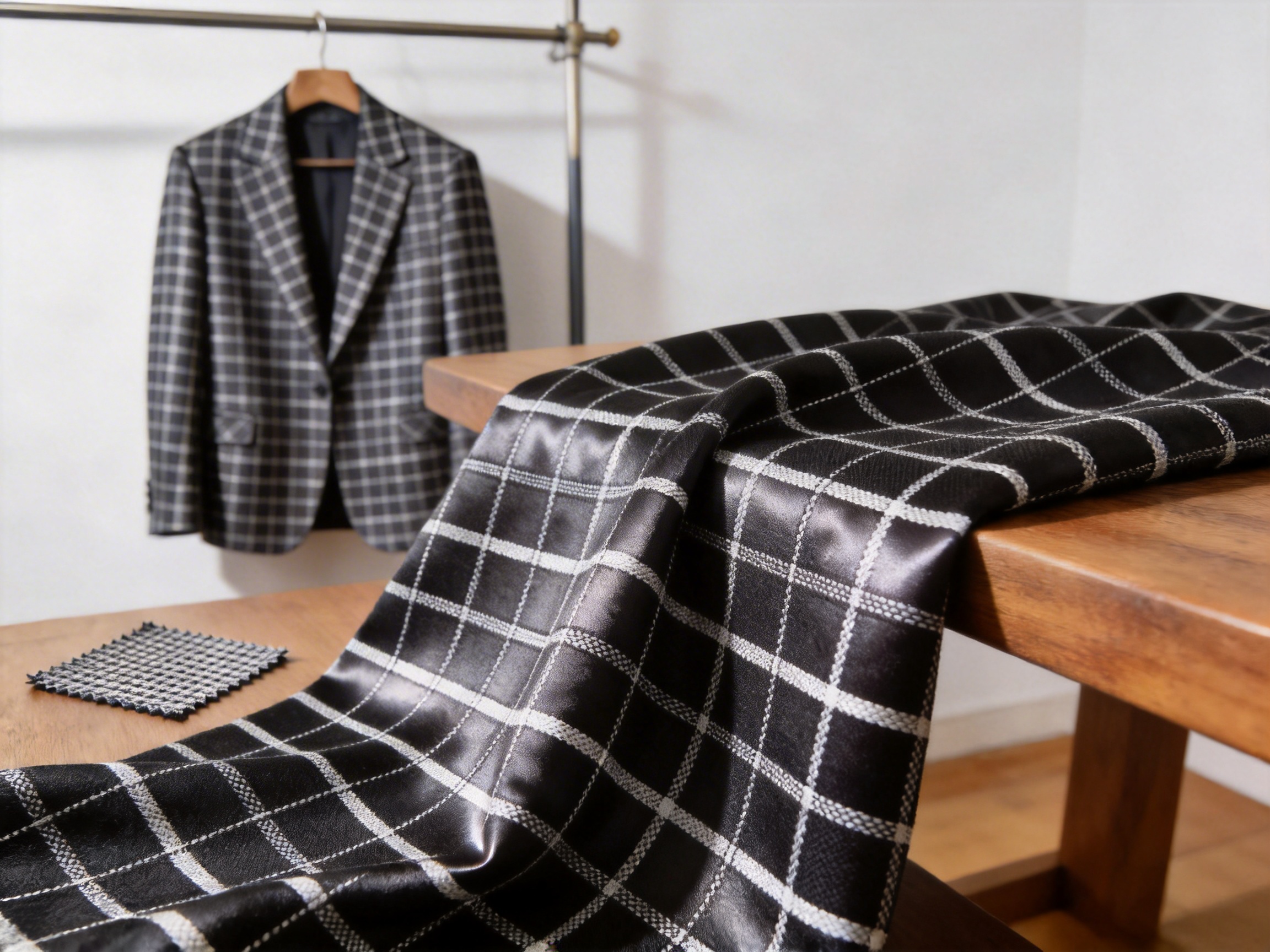
In the world of textiles, few fabrics balance classic aesthetics with modern functionality as seamlessly as Jacquard Black And White Grid Fabric. Characterized by its intricate woven grid pattern, this fabric has transcended fleeting fashion trends to become a staple in both garment design and home decor. Unlike printed or dyed alternatives, its pattern is integrated directly into the weave, ensuring longevity and depth that stand the test of time. Whether used for a tailored blazer, a statement throw pillow, or a bold upholstery piece, this fabric delivers unmatched durability, versatility, and visual appeal—making it a top choice for designers, crafters, and homeowners alike.
What is Jacquard Black And White Grid Fabric?
To understand the unique value of Jacquard Black And White Grid Fabric, it’s essential to first unpack the jacquard weaving process. Unlike basic woven fabrics where the pattern is printed onto the surface, jacquard fabrics use a specialized loom to create complex, repeating patterns by manipulating individual warp threads. This technique allows for precise, detailed designs—including the iconic black and white grid—that are woven into the fabric itself, rather than applied post-production.
Jacquard Black And White Grid Fabric typically combines high-quality yarns, often including polyester and rayon blends, to enhance its performance. Polyester contributes to durability, wrinkle resistance, and color retention, while rayon adds a soft, luxurious handfeel and drape. The grid pattern itself can vary in scale—from micro-grids (1mm line width, 2cm spacing) suitable for formal wear to larger, bolder grids (5mm line width, 10cm spacing) ideal for statement pieces—giving designers endless creative flexibility.
Another key characteristic of this fabric is its breathability. While polyester is often associated with being less breathable, the blend with rayon and the open structure of the grid weave allow air to circulate, making it comfortable for year-round use. Additionally, the woven pattern creates a subtle texture that adds depth to any design, whether it’s a minimalist garment or an ornate home decor item. For example, a micro-grid version of the fabric has a smooth, almost silk-like handfeel, while a larger grid has a more structured, tactile surface.
Advantages Over Competitor Fabrics
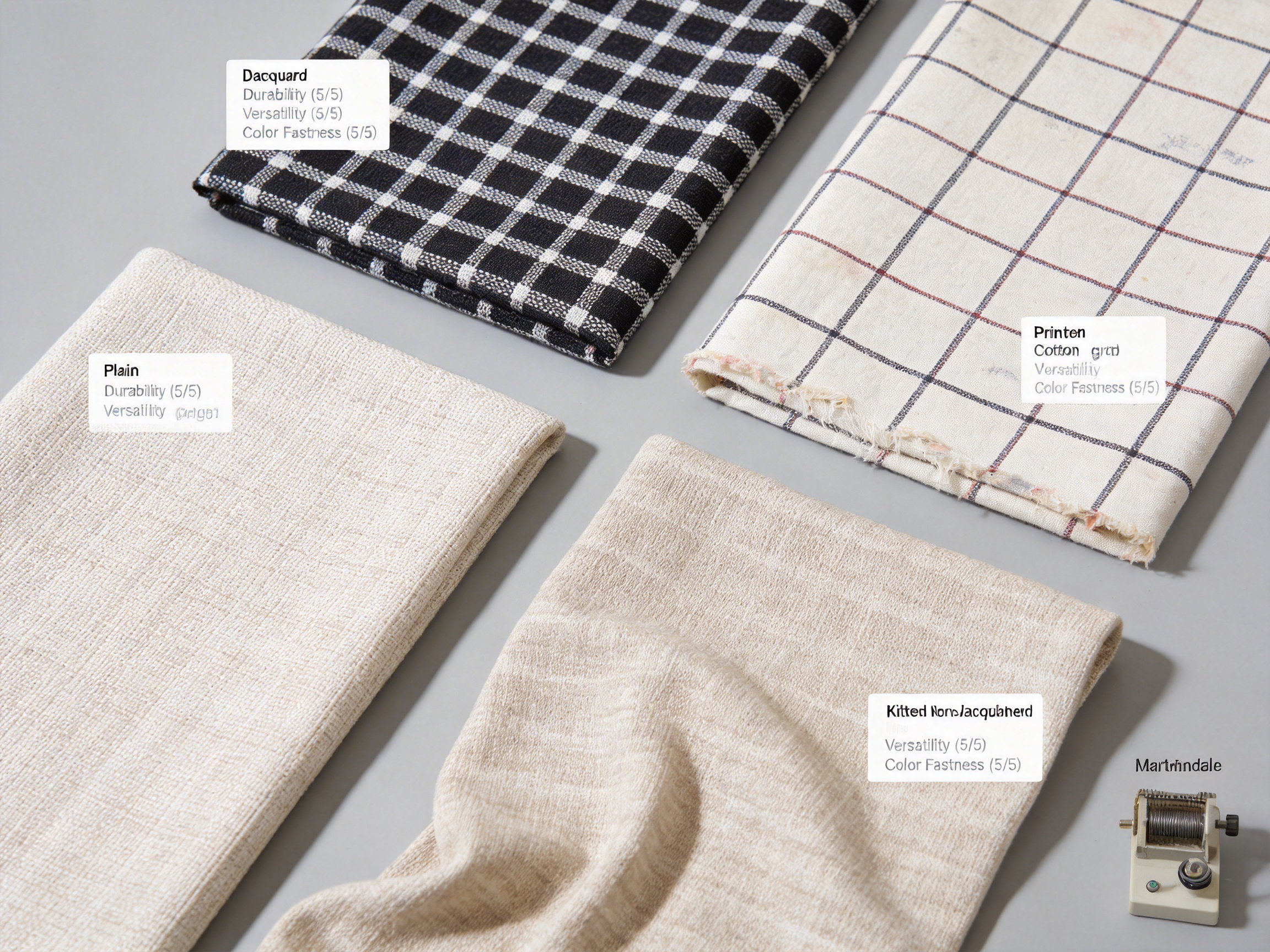
Jacquard Black And White Grid Fabric outperforms many alternative fabrics in key areas, making it a superior choice for a wide range of applications. Let’s compare it to three common competitors:
1. Printed Cotton Grid Fabric
Printed cotton grid fabrics are popular for their affordability, but they lack the longevity of jacquard. Over time, repeated washing and wear cause the printed pattern to fade or peel, losing its original vibrancy. In contrast, the jacquard weave integrates the pattern into the fabric’s structure, so the design remains crisp and intact for years. Additionally, printed cotton is more prone to wrinkling and requires delicate care (hand washing or dry cleaning), whereas the polyester-rayon blend in jacquard grid fabric resists wrinkles and is machine washable on a gentle cycle.
2. Plain Woven Grid Fabric
Plain woven grid fabrics (like basic cotton or linen grids) have a simple, flat structure that lacks the depth and texture of jacquard. While they are durable, their plain weave means the pattern is less distinct and can appear flat or one-dimensional. Jacquard grid fabric, with its raised or recessed pattern, adds visual interest and tactile variety, elevating any design from ordinary to exceptional. Furthermore, plain woven fabrics often have limited color options (typically two colors per fabric), whereas jacquard can incorporate multiple colors in a single weave without the need for post-printing.
3. Knitted Non-Jacquard Grid Fabric
Knitted grid fabrics are stretchy and comfortable, but they tend to lose their shape over time, especially with frequent wear. The jacquard weave, on the other hand, maintains its structure and elasticity (if blended with spandex) without sagging or stretching out. Knitted fabrics also have a softer, more casual handfeel, which may not be suitable for formal or structured designs. Jacquard grid fabric strikes a balance between structure and softness, making it ideal for both casual (e.g., t-shirts) and formal (e.g., blazers) applications.
To summarize these advantages, the table below provides a side-by-side comparison of Jacquard Black And White Grid Fabric with its key competitors:
| Fabric Type | Durability (1-5) | Versatility (1-5) | Color Fastness (1-5) | Cost Efficiency (1-5) | Primary Use Cases |
|---|---|---|---|---|---|
| Jacquard Black & White Grid | 5 | 5 | 5 | 4 | Garments (blazers, dresses), home decor (upholstery, pillows), accessories |
| Printed Cotton Grid | 3 | 3 | 2 | 5 | Casual wear, basic home decor |
| Plain Woven Grid | 4 | 3 | 3 | 4 | Structured garments, simple home decor |
| Knitted Non-Jacquard Grid | 3 | 4 | 3 | 3 | Casual wear, activewear |
As the table shows, Jacquard Black And White Grid Fabric leads in durability, versatility, and color fastness—three critical factors for any fabric that needs to withstand regular use and maintain its aesthetic appeal.
Advanced Manufacturing Processes and Company Strengths
The superior quality of Jacquard Black And White Grid Fabric is not accidental—it is the result of advanced manufacturing processes and a commitment to excellence from its producer. The company behind this fabric operates with a vertical integration model, controlling every step of the production process from yarn manufacturing to finished fabric, ensuring consistent quality and efficiency.
1. Yarn Production: DTY Polyester and Blended Yarns
The company specializes in producing Drawn Textured Yarn (DTY) polyester, a key raw material for the fabric. DTY polyester is created by drawing and texturing partially oriented yarn (POY), which gives it enhanced elasticity, softness, and bulk. This process involves precise temperature control (180-220°C) and tension management (2-5 cN/dtex) to ensure the yarn has uniform properties. By producing its own DTY polyester, the company avoids relying on third-party suppliers, which reduces lead times by 20% and ensures that the yarn meets strict quality standards (e.g., ISO 2060 for polyester yarn).
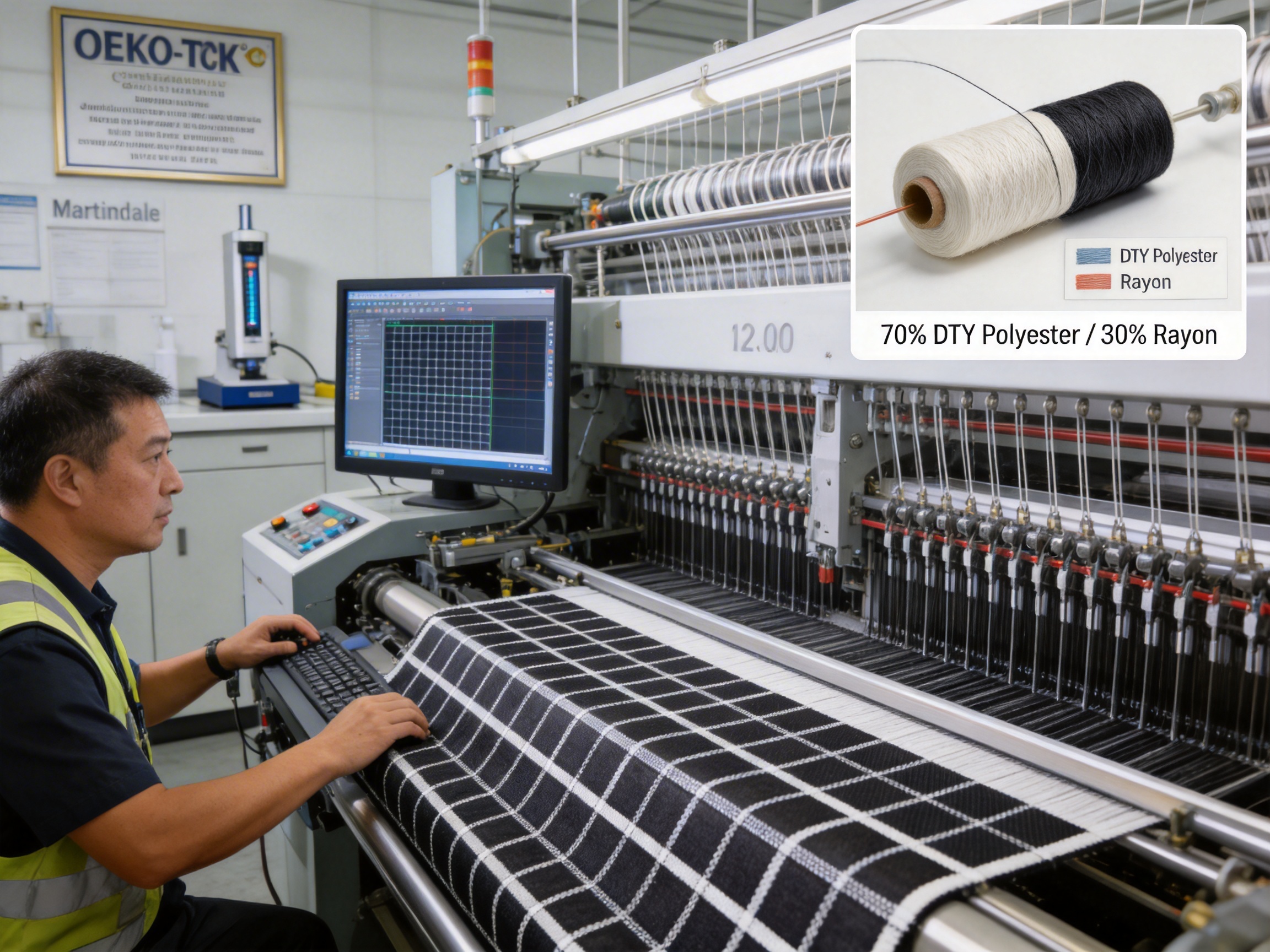
In addition to DTY polyester, the company blends it with rayon and other fibers (like spandex) to create the optimal fabric composition. The blending process is carefully calibrated: for example, a 70% DTY polyester / 30% rayon blend is used for garment fabrics to balance durability and softness, while an 80% DTY polyester / 20% spandex blend is used for upholstery fabrics to add stretch and resilience. The company’s R&D team tests over 50 different yarn blends each year to find the perfect combination for each fabric type.
2. Jacquard Weaving: Precision and Innovation
The fabric is woven on state-of-the-art jacquard looms, each equipped with up to 12,000 individual hooks—allowing for extremely complex and detailed patterns. These looms are controlled by computer-aided design (CAD) software, which translates digital pattern files into precise weaving instructions. For the black and white grid fabric, the CAD team designs grid patterns with varying line widths and spacing, ensuring that each design is unique and meets the needs of different clients.
One of the company’s key innovations is its "adaptive tension system," which adjusts the tension of each warp thread in real time based on the pattern being woven. This system reduces yarn breakage by up to 40% compared to traditional looms, increasing production efficiency while maintaining the highest quality. The looms also have built-in quality control sensors that detect defects (like uneven threads or misaligned patterns) and stop the loom automatically, preventing the production of faulty fabric. Each loom can produce up to 100 meters of fabric per day, with a defect rate of less than 0.1%—far below the industry average of 0.5%.
The company’s weavers are highly trained, with an average of 10 years of experience in jacquard weaving. They work closely with the R&D team to optimize the weaving process for each new fabric design. For example, when developing a finer grid pattern, the weavers adjust the loom speed from 300 to 250 picks per minute and increase the warp tension to 3.5 cN/dtex to ensure that the small grid lines are crisp and consistent.
3. Post-Dyeing and Finishing: Enhancing Performance
After weaving, the fabric undergoes post-dyeing and finishing processes to enhance its performance and appearance. The dyeing process uses eco-friendly, reactive dyes that bond tightly to the fabric fibers, ensuring excellent color fastness to washing (grade 4-5 on the AATCC 61 standard) and sunlight (grade 4-5 on the AATCC 16 standard). The company has invested in closed-loop dyeing systems that reduce water consumption by up to 35% compared to traditional methods—aligning with sustainable manufacturing practices.
The finishing process includes several steps: calendering (to smooth the fabric surface), sanforizing (to prevent shrinkage), and water-repellent treatment (optional, for outdoor applications). These steps not only improve the fabric’s look and feel but also enhance its durability and functionality. For example, sanforizing ensures that the fabric does not shrink by more than 1% after washing, making it ideal for garments and home decor items that need to maintain their size and shape. The water-repellent treatment uses a fluorine-free chemical that is safe for the environment and effective for up to 50 washes.
4. Quality Control: Rigorous Testing
The company has a comprehensive quality control system that tests every batch of fabric for a range of properties, including: durability (abrasion resistance, tested using the Martindale method), color fastness (washing, light, rubbing), shrinkage, and tensile strength. All tests are conducted in an in-house laboratory equipped with state-of-the-art equipment (e.g., a Martindale abrasion tester, a color fastness tester, and a tensile strength tester). The laboratory is accredited by the International Accreditation Service (IAS), ensuring that the test results are reliable and internationally recognized.
Additionally, the company is a self-employed export entity, meaning it has direct access to global markets and understands the specific quality requirements of international customers. This experience allows the company to tailor its manufacturing processes to meet the needs of clients in different regions: for example, European clients often require OEKO-TEX® certification, while North American clients may require compliance with the CPSC (Consumer Product Safety Commission) standards. The company has a dedicated team of export specialists who work with clients to ensure that all products meet their specific requirements.
Applications of Jacquard Black And White Grid Fabric
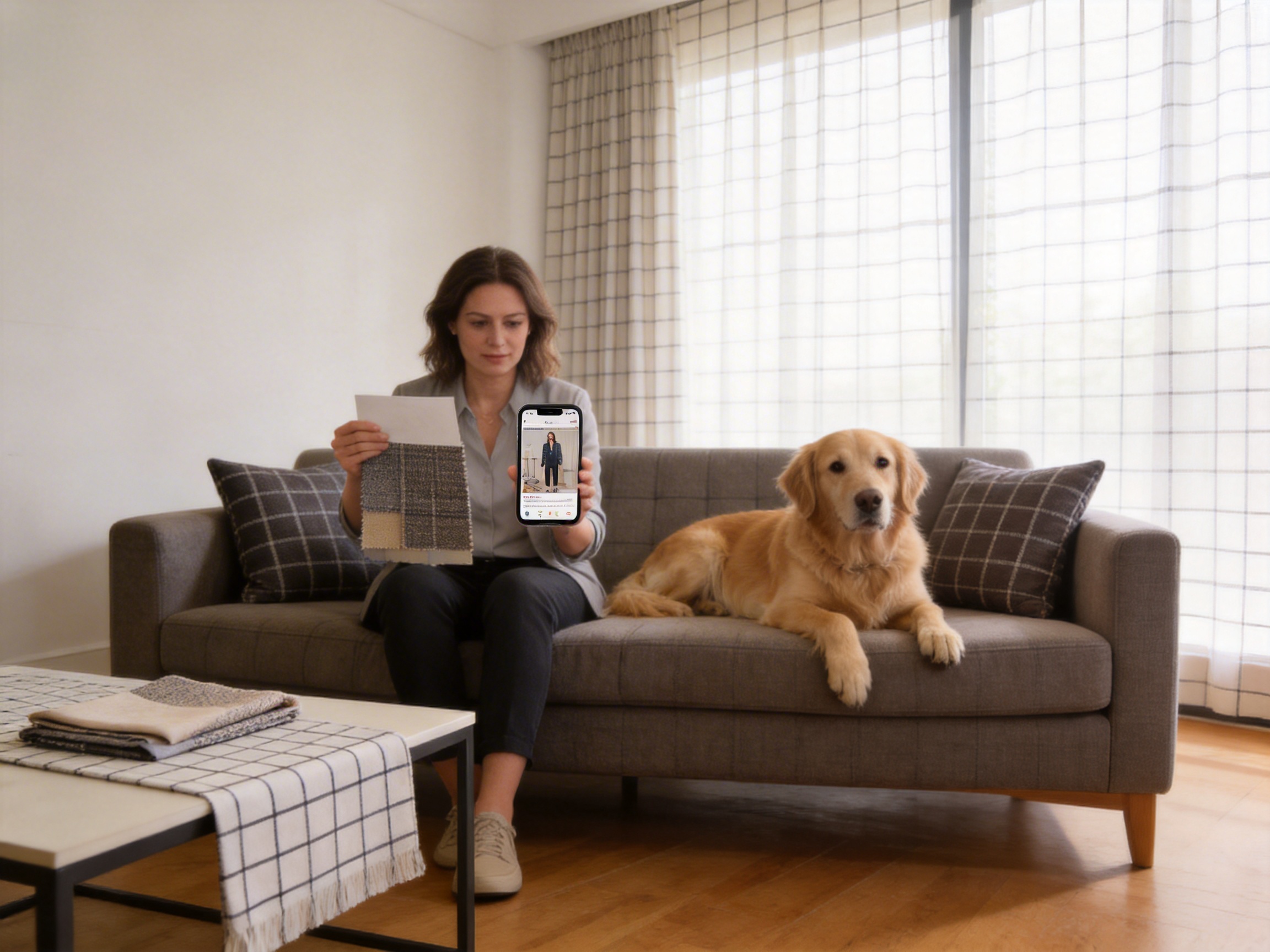
Jacquard Black And White Grid Fabric’s versatility makes it suitable for a wide range of applications, from high-fashion garments to luxury home decor. Let’s explore some of the most popular uses:
1. Garment Design
The fabric is a favorite among fashion designers for its ability to add structure and visual interest to garments. In 2023, New York-based designer Maria Lopez featured Jacquard Black And White Grid Fabric in her spring collection, "Urban Elegance." Lopez used a micro-grid version of the fabric for a tailored blazer paired with high-waisted trousers, creating a look that was both professional and modern. The fabric’s wrinkle resistance meant that the blazer stayed crisp even after a full day of wear, making it ideal for busy urban professionals. The collection received rave reviews from fashion critics, with Vogue calling it "a masterclass in modern tailoring."
Another example is London-based brand "Grid & Co.," which uses the fabric for its line of minimalist dresses. The brand’s best-selling "A-Line Grid Dress" uses a medium-sized grid pattern that flatters all body types. The fabric’s drape and breathability make it comfortable for summer wear, while its durability ensures that the dress lasts for multiple seasons. The brand has sold over 10,000 units of the dress since its launch in 2022, with customers praising its "timeless design" and "excellent quality."
For accessories, Paris-based brand "Le Tote" uses the fabric for its luxury tote bags. The bags are lined with a soft cotton blend and feature reinforced handles, making them durable enough to carry heavy items like laptops and books. The grid pattern adds a touch of sophistication to the bags, making them popular among fashion-forward professionals. The brand offers custom embroidery options, allowing customers to personalize their bags with their names or initials.
2. Home Decor
Los Angeles-based home decor brand "Home & Haven" used Jacquard Black And White Grid Fabric for its 2023 "Classic Modern" collection. The collection includes upholstered sofas, throw pillows, and curtains, all featuring the grid pattern. The fabric’s resistance to fading and wear makes it ideal for high-traffic areas like living rooms and family rooms. The brand’s customers have praised the fabric for its ability to add a timeless look to their homes without being too trendy. One customer wrote: "I bought the Jacquard Grid Sofa for my living room, and it’s held up perfectly even with two kids and a dog. The pattern still looks as good as the day I bought it!"
Another example is New York-based brand "Curtain Call," which uses the fabric for its line of blackout curtains. The fabric’s dense weave blocks up to 95% of sunlight, making it perfect for bedrooms and home theaters. The grid pattern adds a decorative touch to the curtains, so they don’t look plain or boring. The brand offers a range of grid sizes and colors, allowing customers to match the curtains to their existing decor.
3. Craft Projects
Home sewers and crafters love Jacquard Black And White Grid Fabric for its versatility and ease of use. It is ideal for projects like quilts and patchwork, as the grid pattern adds a unique, modern touch. Crafters can use different grid sizes to create interesting patterns and designs: for example, a combination of micro-grid and large-grid fabrics can be used to create a patchwork quilt with a contemporary look. The fabric is also easy to cut and sew, with minimal fraying—making it perfect for beginners and experienced crafters alike.
The fabric is also popular for home accents like table runners, placemats, and napkins. Its durability makes it perfect for dining table accessories that are used regularly, and its grid pattern adds a touch of elegance to any table setting. Many crafters use the fabric for holiday decorations, such as Christmas tree skirts or Halloween table runners, as the black and white pattern is versatile enough to work with any theme.
Sustainability and Ethical Manufacturing
In today’s textile industry, sustainability and ethical manufacturing are more important than ever. The company behind Jacquard Black And White Grid Fabric is committed to reducing its environmental impact and operating ethically. Here are some of the steps it takes:
1. Eco-Friendly Dyeing and Finishing
The company’s closed-loop dyeing system uses a combination of reverse osmosis and ultrafiltration to treat wastewater. The treated water is then reused in the dyeing process, reducing water consumption by up to 35% compared to traditional open-loop systems. The company also uses low-impact reactive dyes that are free from azo compounds, heavy metals, and other harmful substances. These dyes are certified by the Global Organic Textile Standard (GOTS), ensuring that they meet the highest environmental standards.
The finishing process uses water-based chemicals instead of solvent-based ones, reducing volatile organic compound (VOC) emissions by up to 50%. The company also uses a "dry finishing" technique for some fabrics, which eliminates the need for water in the finishing process, further reducing its environmental impact. The dry finishing technique uses heat and pressure to smooth the fabric surface, resulting in a soft, luxurious handfeel without the use of water.
2. Waste Reduction
The company’s computerized cutting systems use digital patterns to cut fabric with minimal waste. For example, the system can nest patterns together in a way that reduces waste by up to 20% compared to manual cutting. Leftover fabric scraps are collected and sent to a recycling facility, where they are turned into insulation for clothing and home decor items. The company also recycles cardboard and plastic packaging materials, reducing its waste sent to landfills by up to 70%.
The company has also implemented a "zero-waste" initiative for its sample production. Instead of cutting large pieces of fabric for samples, the company uses small swatches of fabric that are already available, reducing waste by up to 90% for sample production. The company also offers a "take-back" program for old fabric products, allowing customers to return their used fabric items for recycling.
3. Ethical Labor Practices
The company provides its employees with a safe working environment, including air-conditioned factories, fire safety equipment, and ergonomic workstations. Employees are paid above the minimum wage, and the company offers overtime pay for any extra hours worked. The company also provides free training programs for its employees, helping them develop new skills and advance their careers. For example, the company offers a 6-month training program for weavers, which includes both theoretical and practical training on jacquard loom operation. The program has a 90% completion rate, and many graduates have gone on to become senior weavers or supervisors.
The company is also a member of the Fair Labor Association (FLA), which ensures that it adheres to strict labor standards. The FLA conducts regular audits of the company’s factories, and the company has received a "high compliance" rating in all recent audits. The company also has a zero-tolerance policy for child labor, and all employees are required to provide proof of age before being hired.
4. OEKO-TEX® Certification
All fabrics produced by the company are OEKO-TEX® Standard 100 certified, which means they are free from harmful substances and safe for use in contact with skin. This certification is a testament to the company’s commitment to producing high-quality, safe fabrics. The OEKO-TEX® certification covers over 300 harmful substances, including pesticides, heavy metals, and phthalates. The company renews its certification every year, ensuring that its fabrics continue to meet the highest safety standards.
Frequently Asked Questions About Jacquard Black And White Grid Fabric
To help readers better understand this fabric, we’ve compiled answers to some of the most common questions:
Q1: Is Jacquard Black And White Grid Fabric machine washable?
A: Yes, most versions of this fabric are machine washable. However, it’s recommended to wash it on a gentle cycle with cold water and avoid using bleach. For best results, hang dry or tumble dry on low heat to prevent shrinkage and maintain the fabric’s shape. Avoid ironing the fabric at high temperatures—use a medium heat setting or place a cloth between the iron and the fabric to prevent damage.
Q2: Does the grid pattern fade over time?
A: No, the grid pattern is woven into the fabric, not printed. This means it will not fade or peel with regular washing and wear. The color fastness of the fabric is enhanced by the eco-friendly dyeing process, ensuring that the colors remain vibrant for years. The fabric has a color fastness rating of 4-5 on the AATCC 61 standard, which means it can withstand up to 50 washes without fading.
Q3: Is this fabric suitable for outdoor use?
A: Yes, some versions of the fabric are treated with a water-repellent finish, making them suitable for outdoor applications like patio furniture upholstery or outdoor curtains. The water-repellent finish is fluorine-free and safe for the environment, and it remains effective for up to 50 washes. However, it’s important to check the product specifications to ensure it has the necessary treatments for outdoor use.
Q4: Can this fabric be customized?
A: Yes, the company offers customization options for Jacquard Black And White Grid Fabric, including different grid sizes, color combinations (beyond black and white), and fabric weights. Customization is available for bulk orders (minimum 50 yards), making it ideal for designers and businesses looking for unique fabrics. The company’s CAD team works closely with clients to create custom patterns that meet their specific needs.
Q5: What is the minimum order quantity (MOQ) for this fabric?
A: The MOQ varies depending on the customization options and order type. For standard fabrics (e.g., black and white grid with fixed size), the MOQ is 50 yards. For custom fabrics (e.g., unique grid size or color combination), the MOQ is 100 yards. The company is flexible and can work with clients to meet their specific needs—for example, small businesses can order smaller quantities if they are willing to pay a slightly higher price per yard.
Q6: What is the difference between jacquard and brocade?
A: While both jacquard and brocade are woven fabrics, brocade is a type of jacquard that uses raised, embossed patterns. Jacquard Black And White Grid Fabric is a flat jacquard, meaning the pattern is woven into the fabric but not raised. Brocade is often used for formal wear (like wedding dresses) and luxury home decor, while jacquard grid fabric is more versatile and suitable for a wider range of applications. Brocade is also more expensive than jacquard grid fabric due to the additional labor required to create the raised patterns.
Q7: Can this fabric be used for baby clothes?
A: Yes, if the fabric is OEKO-TEX® Standard 100 certified (which it is). This certification ensures that the fabric is free from harmful substances and safe for use in contact with sensitive skin. The company offers a soft, lightweight version of the fabric that is ideal for baby clothes like onesies and dresses. The fabric is also hypoallergenic, making it suitable for babies with sensitive skin.
Q8: How long does it take to produce a custom order of this fabric?
A: The production time for a custom order varies depending on the complexity of the design and the quantity. For a standard custom order (e.g., a unique grid size or color combination), the production time is typically 2-3 weeks. For more complex designs (e.g., a grid pattern with additional motifs), the production time may be 4-5 weeks. The company provides regular updates to clients during the production process to keep them informed.
References
1. Textile Institute. (2022). Global Textile Industry Report: Trends in Jacquard Weaving. Manchester, UK: Textile Institute Press.
2. OEKO-TEX® Association. (2023). OEKO-TEX® Standard 100: A Guide to Safe Textiles. Zurich, Switzerland: OEKO-TEX® Association.
3. Fashion Institute of Technology. (2021). Sustainable Textiles: Best Practices for Dyeing and Finishing. New York, NY: FIT Press.
4. International Textile Manufacturers Federation. (2022). Vertical Integration in Textile Production: Benefits and Challenges. Geneva, Switzerland: ITMF.
5. American Association of Textile Chemists and Colorists (AATCC). (2022). Color Fastness Testing Standards. Research Triangle Park, NC: AATCC.
6. Fair Labor Association (FLA). (2023). FLA Compliance Guidelines for Textile Manufacturers. Washington, DC: FLA.
