
Double-Sided Mesh for Pants Fabric: Reversible Performance, Comfort, and Modern Knit Design
In modern apparel development, pants fabrics must do far more than simply cover the body. They need to support movement, maintain shape, feel comfortable against the skin, respond well to dyeing and finishing, and offer a visual identity that helps garments stand out in competitive markets. Double-sided mesh for pants fabric is designed to meet these demands through a balanced combination of knitted structure, jacquard technology, reversible appearance, breathable performance, and reliable production consistency.
This fabric belongs to the category of NR knitted fabric and is closely related to double-sided knitted jacquard fabric technology. It is engineered with two usable face sides, making it suitable for reversible design concepts, contrast-detail garment construction, and body-hugging styles that require elasticity, softness, and dimensional stability. Compared with ordinary single-face knitted fabrics, double-sided mesh fabric offers richer styling possibilities and more functional value. For designers, it opens a wider creative space. For garment manufacturers, it provides practical advantages in cutting, sewing, matching, and product differentiation. For end users, it delivers comfort, breathability, and a refined wearing experience.
The material is especially suitable for pants because pants are among the most movement-intensive garments in daily life. They must endure bending, stretching, sitting, walking, laundering, and repeated friction. A fabric used for pants should not only look attractive on the first day but also retain its performance and appearance after long-term use. Double-sided mesh for pants fabric answers this challenge by combining a stable knitted construction with jacquard patterning, reversible surfaces, and a comfortable mesh effect that improves ventilation and flexibility.
Hangzhou Jinfeng Textile Co., Ltd. supports the development of this type of fabric through integrated capabilities in research and development, production, dyeing, finishing, and sales. Located in Xiaoshan District, Hangzhou, the company covers a significant production area and has experience in blended fabrics, polyester, spandex-related materials, and drawn textured yarn production. This integration gives the company better control over yarn selection, fabric knitting, post-dyeing, finishing quality, and final product consistency. For buyers seeking stable supply, customization options, and manufacturing reliability, these strengths are essential.
Double-sided Mesh For Pants Fabric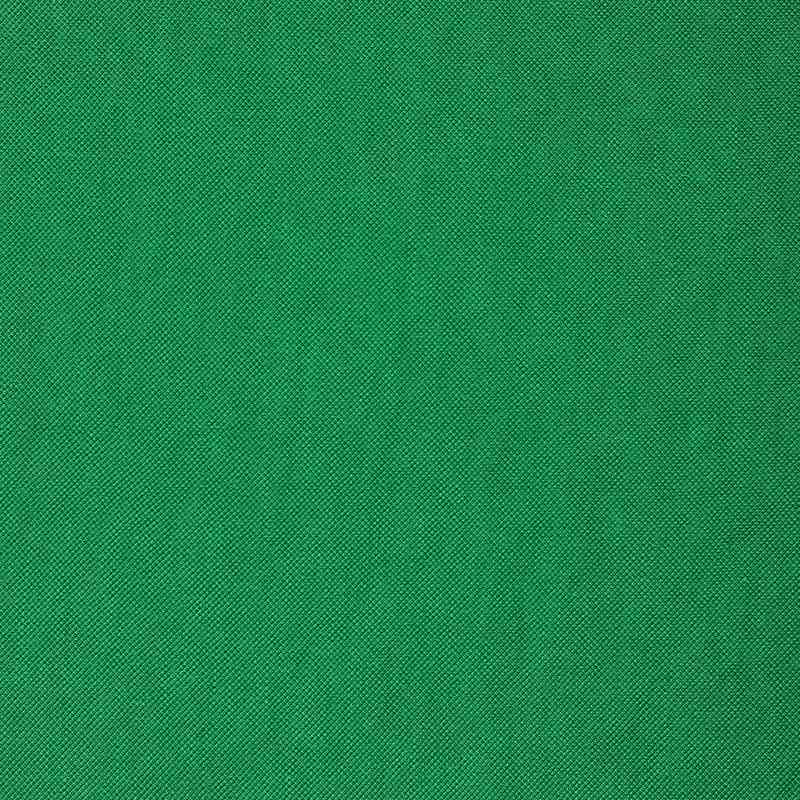
Understanding Double-Sided Mesh for Pants Fabric
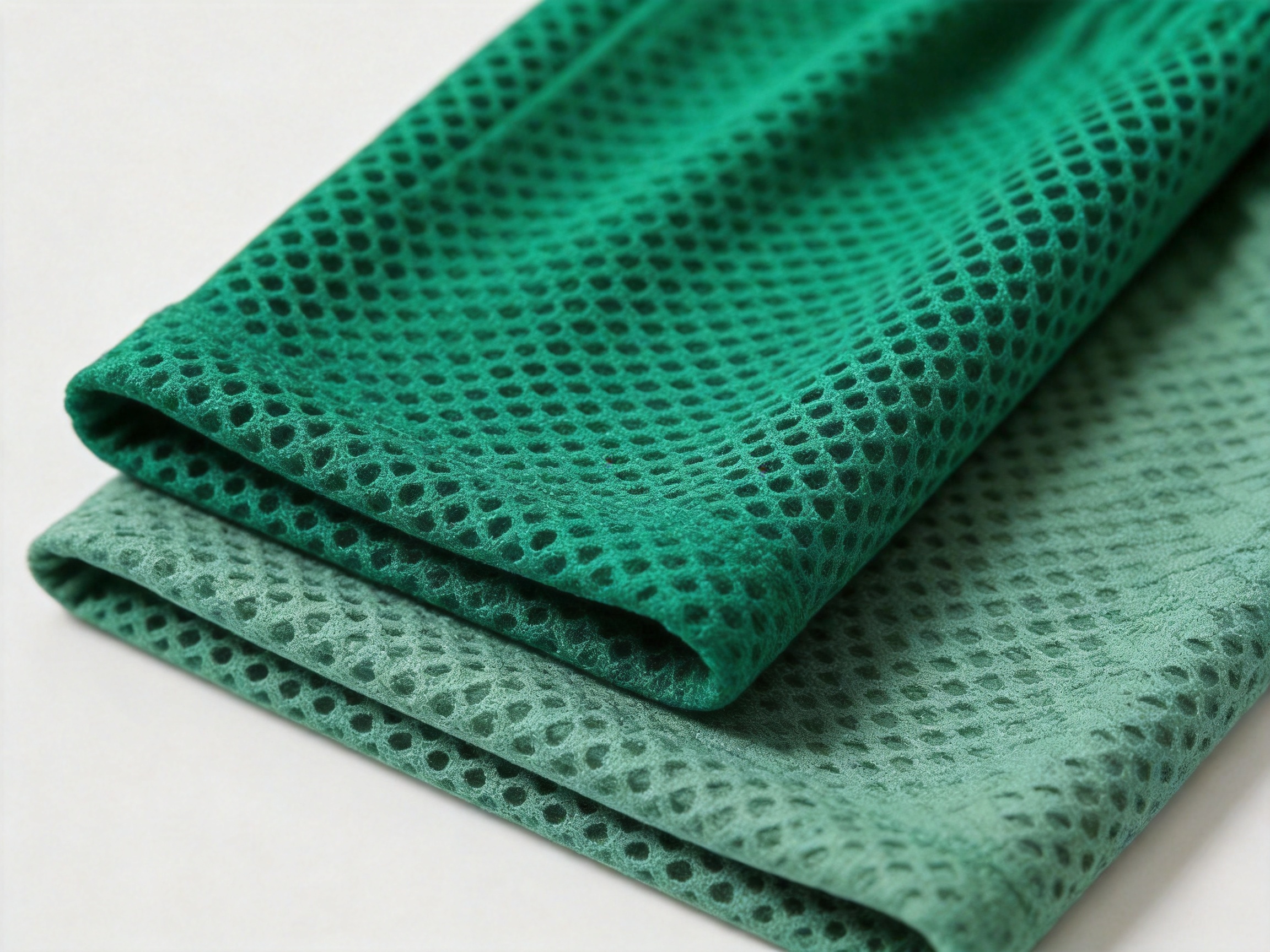
Double-sided mesh for pants fabric is a knitted jacquard fabric with two face sides. Unlike many fabrics that have one presentable exterior and one technical reverse side, this fabric can be used from both directions. Each side may display a different texture, pattern, tone, or visual effect, depending on the yarn combination, knitting design, and finishing process. This reversible nature makes the fabric highly practical for fashion and functional garment applications.
The term “mesh” suggests breathability, open structure, and ventilation. In a double-sided knitted construction, the mesh effect can be engineered while still maintaining enough density and structure for pants. This is important because pants fabric cannot be too loose or unstable. It must provide coverage, shape support, and durability. The technical challenge is to create a breathable, comfortable fabric without sacrificing strength, stretch recovery, or surface appearance.
Knitted jacquard technology gives the fabric its design flexibility. Jacquard knitting allows complex patterns, textured surfaces, and controlled structural changes across the fabric width. Instead of relying only on printed decoration, the design can be built into the fabric structure itself. This results in patterns that feel more integrated, more durable, and often more premium than surface-only effects. The fabric can therefore support both minimalist and decorative design directions.
For pants, this is particularly valuable. Fashion pants, casual pants, sports-inspired trousers, fitted pants, leisure pants, and body-hugging styles all require different balances of elasticity, opacity, texture, and visual character. Double-sided mesh fabric gives designers the opportunity to create garments with a smooth outer look, a textured inner feel, contrast cuff details, reversible panels, or decorative seam exposure. A single fabric can serve multiple design intentions.
Why Double-Sided Construction Matters
The most obvious advantage of double-sided knitted fabric is reversibility. However, the value goes beyond simply being able to use either side. Double-sided construction can improve fabric body, drape, stability, thickness control, and comfort. In many cases, a double-sided knit feels more substantial than a single jersey while remaining flexible and soft. This makes it suitable for pants that require both comfort and form.
A single-face fabric may curl at the edges, show limited pattern depth, or reveal a less attractive reverse side. Double-sided knitted fabric reduces these limitations. It can offer a cleaner reverse face, improved handling during sewing, and more design choices during garment construction. Manufacturers can use contrast effects on pocket edges, waistbands, hems, side panels, and decorative seams without introducing a second material. This can simplify sourcing and improve color or shrinkage compatibility.
From a consumer perspective, double-sided fabric can feel more refined. When the inside of a garment looks neat and intentional, the garment is often perceived as higher quality. The wearer may also benefit from a softer inner surface or a different texture designed for skin contact. In pants, where the fabric stays in close contact with the body for long periods, this comfort advantage is highly important.
Double-sided construction also contributes to durability. Because both surfaces are engineered rather than one side being merely a technical backside, the fabric can resist visual deterioration better in certain applications. When a garment bends or stretches, the reverse side may become visible at hems, cuffs, or movement areas. A double-sided fabric keeps the garment looking polished even when the fabric shifts during wear.
Advantages Over Conventional Pants Fabrics
Compared with many woven pants fabrics, double-sided mesh knitted fabric offers improved stretch and body adaptability. Woven fabrics can provide crisp structure, but they often require added elastane or special weaves to achieve comfort during movement. Knitted fabric naturally offers loop-based flexibility, making it easier to create pants that move with the body. This is particularly beneficial for slim-fit, athletic, casual, and lifestyle trousers.
Compared with ordinary single jersey or basic knit fabrics, double-sided mesh fabric provides more structure and design depth. Basic knits may be comfortable, but they can lack the stable hand feel needed for pants. They may also appear too simple for fashion-forward garments. Double-sided jacquard mesh fabric adds visual interest while maintaining the soft stretch that knitwear is known for.
Compared with printed fabrics, jacquard-knitted patterns are structurally integrated. Printed patterns may fade, crack, or lose clarity after repeated washing if not processed well. A jacquard effect created during knitting has a more durable character because it is formed by yarn placement and loop structure. While finishing still matters, the design is not merely sitting on the surface. This gives garments a more lasting and premium appearance.
Compared with heavy fleece or thick double-knit fabrics, double-sided mesh can provide better breathability. Pants made from very dense fabrics may feel warm, heavy, or restrictive, especially in transitional seasons or active settings. A mesh-oriented structure helps air circulation and moisture vapor movement, improving comfort during extended wear. This balance of coverage and breathability is a key reason the fabric is attractive for modern pants.
Compared with low-cost commodity knits, a well-produced double-sided mesh fabric offers better consistency, more refined texture, and stronger design identity. Commodity fabrics may compete mainly on price, but they often create problems in cutting loss, shade variation, shrinkage, pilling, or inconsistent elasticity. A fabric made with controlled yarn, knitting, dyeing, and finishing processes can reduce these risks and support more predictable garment production.
Key Product Characteristics
| Characteristic | Practical Meaning | Benefit for Pants Applications |
|---|---|---|
| Double-sided structure | Both surfaces can be visually and functionally usable | Supports reversible design, contrast details, and cleaner garment interiors |
| Knitted jacquard technology | Patterns and textures are formed during knitting | Creates durable visual effects without relying only on printing |
| Mesh-inspired breathability | Engineered structure supports air circulation | Improves comfort during daily wear and movement |
| Flexible knit construction | Loop structure provides natural stretch and recovery | Suitable for fitted, casual, and active pants styles |
| Stable fabric body | Double-sided construction gives substance and shape | Helps pants maintain appearance and reduces flimsy hand feel |
| Design versatility | Different colors, textures, or patterns can be developed | Allows brands to create distinctive seasonal collections |
| Comfortable touch | Surface can be finished for softness and skin comfort | Improves wearer satisfaction for long periods of use |
Comfort for Body-Hugging Styles
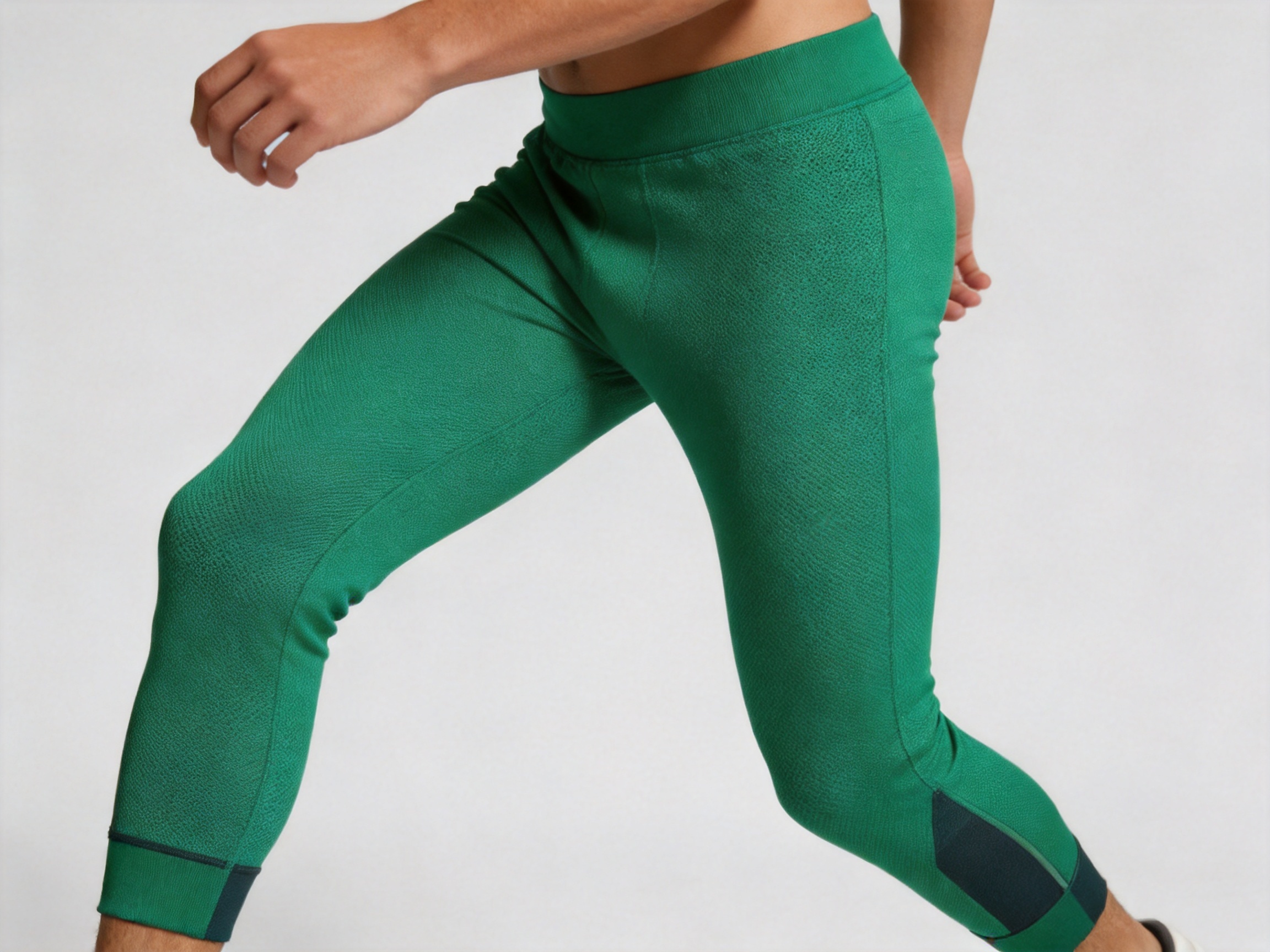
One of the stated strengths of double-sided knitted jacquard fabrics is their suitability for body-hugging styles. This is particularly relevant in contemporary fashion, where consumers expect pants to be stylish and comfortable at the same time. Slim silhouettes, stretch trousers, leggings-inspired pants, athleisure bottoms, and casual fitted pants all require fabrics that can follow body movement without feeling tight or unstable.
Double-sided mesh for pants fabric provides a strong foundation for such garments because it combines elasticity with structural support. The knitted loops allow the fabric to extend and recover, while the double-sided construction gives enough body to reduce excessive cling or transparency. The mesh design can help regulate comfort, especially when the garment is worn for long hours or in warm indoor environments.
In body-hugging styles, the inner surface matters as much as the outer appearance. A rough or poorly finished reverse side can cause discomfort, irritation, or a lower-quality feeling. Because this fabric has two face sides, the inside can be designed to feel more pleasant and look more refined. This supports garments that are not only attractive on the hanger but comfortable in real use.
The fabric also supports freedom of movement. Pants experience stress at the knees, hips, seat, and waistband. A flexible double-sided knit can adapt to these movement zones better than rigid materials. With proper garment patterning and sewing techniques, the fabric can help create pants that remain comfortable during walking, sitting, commuting, working, and leisure activities.
Design Possibilities for Apparel Brands
Fashion brands constantly seek materials that help them create differentiation. A fabric that can be used on both sides gives designers more creative freedom without requiring multiple fabric sources. The outer side may show a clean, refined mesh jacquard pattern, while the reverse side may offer a contrasting texture or color effect. Designers can expose the reverse side at hems, waistbands, pocket openings, side stripes, or turn-up cuffs.
This makes the fabric suitable for both subtle and expressive fashion. A minimalist brand may use the double-sided effect only for small contrast details, giving the garment a quiet premium character. A trend-oriented brand may emphasize the reversible aspect more strongly, creating bold contrast panels or garments that can be styled in two ways. Sportswear-inspired collections may use the mesh structure to communicate breathability and technical comfort.
Because the pattern is created through jacquard knitting, the fabric can be developed with geometric textures, small repeat patterns, tonal effects, or more complex surface structures. This gives apparel companies the chance to design exclusive seasonal looks. Instead of purchasing a generic fabric available to many competitors, buyers can work with a capable manufacturer to develop customized textures, yarn combinations, or finishing effects.
The fabric also works well for coordinated collections. A pants fabric with a distinctive double-sided mesh texture can be matched with jackets, tops, panels, or accessories. Even when the fabric is primarily used for pants, its reversible appearance can help build a recognizable collection language. This is valuable for brands that want consistency across multiple garment categories.
Performance in Pants Manufacturing
A fabric may have excellent concept value, but it must also perform reliably in garment manufacturing. Double-sided mesh for pants fabric offers several practical benefits in production. Its knitted structure can be easier to shape and sew for stretch garments than rigid fabrics. Its reversible surfaces can reduce concerns about exposed reverse sides. Its stable body can improve handling compared with very thin or unstable knits.
During cutting, fabric consistency is essential. If width, weight, stretch, or pattern alignment vary excessively, garment factories face higher waste and lower efficiency. A manufacturer with integrated production management can help control these factors from yarn selection to final inspection. Consistent fabric rolls allow garment factories to plan cutting markers more efficiently and reduce shade or texture differences among garment panels.
During sewing, double-sided fabric can produce cleaner seams and more attractive internal construction. Since both sides are usable, the garment interior appears more finished. This is useful for pants where the inside may be visible during dressing, movement, or cuff styling. It also supports higher-end product positioning because consumers often examine interior finishing as a sign of quality.
During finishing and garment washing, dimensional stability matters. Pants must maintain their size after laundering. If shrinkage is not controlled, waist, inseam, and hip measurements may change, causing customer dissatisfaction. Through proper knitting density, dyeing control, heat setting, and finishing, the fabric can be prepared for more stable performance. This is one of the areas where manufacturing expertise directly influences product success.
Manufacturing Strengths Behind the Fabric
Hangzhou Jinfeng Textile Co., Ltd. has capabilities that support the production of advanced knitted and blended fabrics. The company is involved in production and processing, post-dyeing, finishing, and sales of blended fabrics such as polyester and spandex-related materials, as well as DTY polyester yarn production, processing, and sales. This combination is important because fabric quality begins with yarn and continues through every stage of manufacturing.
Drawn textured yarn, commonly known as DTY, is widely used in knitted fabrics because it offers bulk, elasticity, softness, and good processing performance. When a textile manufacturer understands DTY production and application, it can better match yarn properties with fabric requirements. For double-sided mesh pants fabric, yarn selection affects stretch, recovery, surface texture, dye uptake, hand feel, and durability.
Integrated production also helps reduce communication gaps. When yarn sourcing, fabric knitting, dyeing, and finishing are managed with coordinated technical knowledge, problems can be identified and corrected more efficiently. For example, if a fabric requires a softer hand, better stretch recovery, or more stable shade, the solution may involve yarn selection, knitting parameters, dyeing process control, or finishing adjustments. A manufacturer with broad process experience can evaluate the whole production chain rather than treating each step separately.
The company’s plant area and production foundation also contribute to supply reliability. Buyers of pants fabric often need repeat orders, stable bulk quality, and timely delivery. A fabric that performs well in sampling but cannot be reproduced consistently in bulk creates risk for apparel brands. Manufacturing strength is therefore not only about machines but also about production organization, technical personnel, quality control, and service philosophy.
Advanced Knitting and Jacquard Development
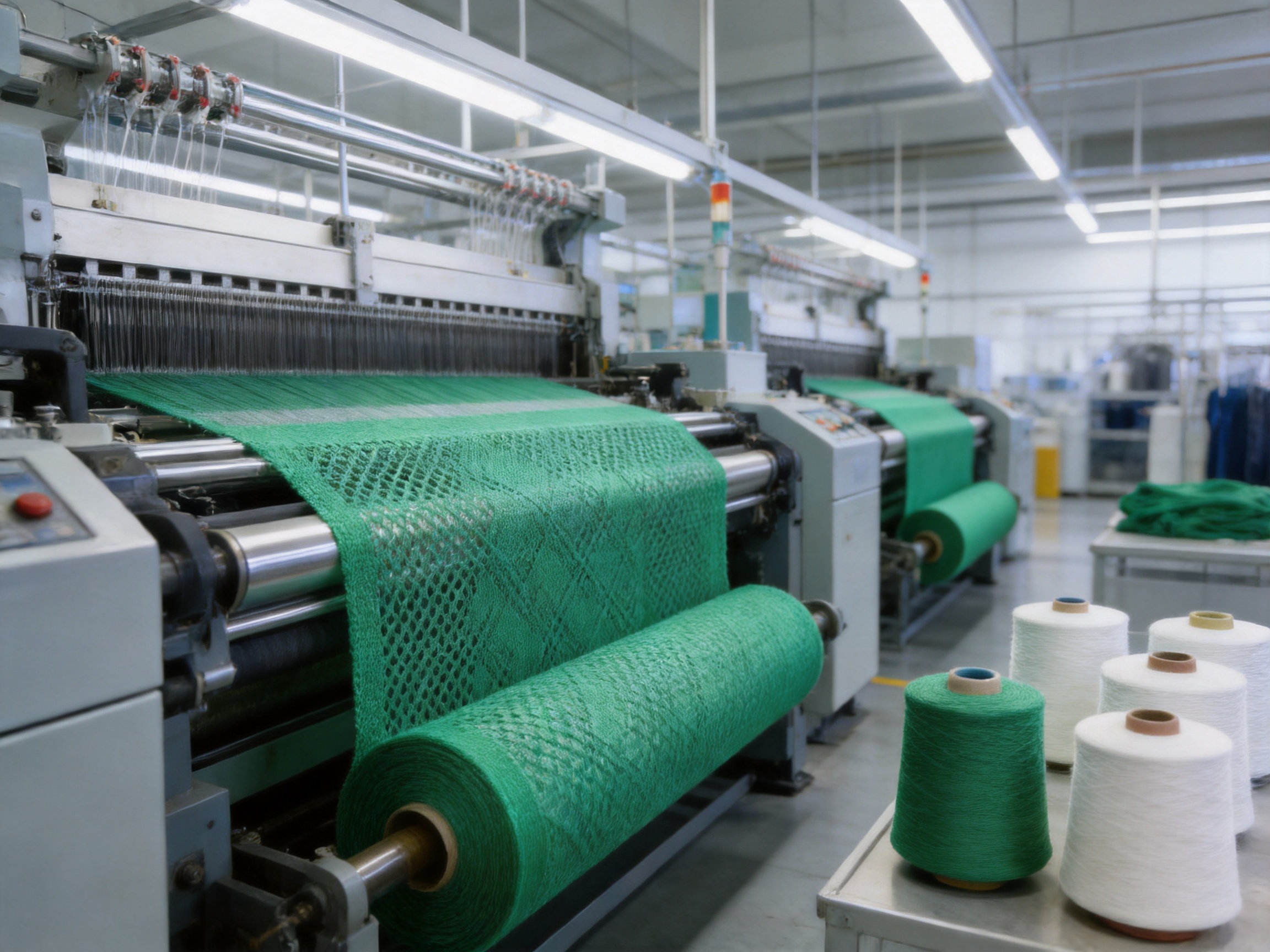
The core of double-sided mesh fabric lies in knitted structure development. Jacquard knitting requires accurate control of needle selection, yarn feeding, loop formation, pattern repeat, fabric tension, and machine settings. Unlike plain knitting, where the structure is relatively simple, jacquard knitting introduces more variables. Each pattern must be developed with attention to appearance, stability, weight, stretch, and production efficiency.
For pants fabric, jacquard development must be especially careful. A pattern that looks attractive may not be suitable if it causes uneven stretch, weak points, excessive thickness, or poor recovery. The fabric must support body movement and garment construction. Therefore, technical development is needed to balance design and performance. A reliable manufacturer tests and refines fabric structures to ensure that the final material is practical, not merely decorative.
Double-sided jacquard construction can also involve different surface effects on each side. This requires thoughtful yarn arrangement and structural planning. The two sides must work together rather than behave as separate unstable layers. Proper interconnection helps prevent distortion, curling, or separation. This is one reason why experienced knitting knowledge is valuable.
Mesh effects must also be controlled. An overly open mesh may compromise opacity or strength, while a too-dense structure may lose breathability. The fabric must be engineered for the intended pants category. Casual fashion pants may require a different weight and openness than sports-inspired pants or fitted lifestyle trousers. Advanced manufacturing allows these parameters to be adjusted according to customer needs.
Dyeing, Finishing, and Surface Quality
After knitting, dyeing and finishing determine much of the final fabric value. Color clarity, shade consistency, softness, dimensional stability, pilling resistance, and surface smoothness all depend on controlled processing. For double-sided mesh fabric, dyeing must penetrate and balance both surfaces while preserving the intended contrast or tonal effect if required.
Post-dyeing control is important for bulk production. Apparel manufacturers need fabric rolls that match approved lab dips and sample yardage. Shade variation between batches or within a roll can cause visible panel differences in finished pants. With proper dyeing management, temperature control, chemical selection, washing, and inspection, these risks can be reduced.
Finishing gives the fabric its final hand feel and performance characteristics. A fabric for pants may require softness, smoothness, moderate firmness, elastic recovery, and stable width. Heat setting can help control shrinkage and improve dimensional stability, especially when synthetic fibers or elastic components are involved. Mechanical and chemical finishing can adjust the touch and surface appearance.
The finishing stage can also enhance the fabric’s competitive advantages. A similar-looking fabric from a less controlled supplier may feel rough, shrink unevenly, pill quickly, or lose shape after washing. By contrast, a well-finished double-sided mesh fabric can maintain a cleaner appearance and more reliable wearing performance. This difference is often what separates ordinary fabric from fabric suitable for quality apparel production.
Polyester, Rayon, Spandex, and Blended Fabric Expertise
The broader product background includes polyester rayon fabric, knitted jacquard fabric, NTR knitted fabric, NR knitted fabric, and slight intermingled drawn textured yarn. This material environment indicates experience with blended textile systems. Blending fibers is one of the most effective ways to create balanced performance. Polyester can contribute strength, durability, shape retention, and easy-care properties. Rayon can contribute softness, drape, and comfort. Spandex can contribute stretch and recovery. DTY polyester yarn can contribute texture, bulk, and resilience.
For pants fabric, no single property is enough. A fabric that is strong but uncomfortable will not satisfy wearers. A fabric that is soft but unstable will create production and quality problems. A fabric that stretches but does not recover will bag at the knees or seat. Therefore, fabric development depends on balancing fibers, yarns, structures, and finishing processes.
Experience with different knitted fabric categories helps the manufacturer adapt to diverse customer requirements. Some buyers may want a fabric with a smoother hand and elegant drape. Others may want a sportier fabric with more resilience and ventilation. Some may require darker shades for classic pants, while others may need fashion colors or contrast jacquard effects. A company familiar with blended fabric development can propose more suitable solutions for each application.
Slight intermingled DTY is also relevant to process stability. Intermingling helps yarn handling by creating cohesion between filaments, improving performance during knitting and subsequent processing. Proper yarn quality reduces defects such as broken filaments, uneven loops, streaks, and inconsistent texture. This contributes directly to the final quality of double-sided mesh fabric.
Durability and Long-Term Wear
Pants are exposed to repeated stress. The knees stretch, the seat experiences abrasion, the inner thighs encounter friction, and the waistband undergoes tension. A suitable pants fabric must withstand these demands while maintaining its appearance. Double-sided mesh for pants fabric is advantageous because it combines structural depth with knitted flexibility. The fabric can move with the body rather than resisting every motion, which can reduce stress concentration.
Durability is also influenced by yarn selection and finishing. Polyester-based yarns, when properly processed, can offer good resistance to wear and deformation. Blended constructions can improve comfort and performance. Knitted jacquard structure can help maintain pattern identity because the design is integrated into the fabric rather than applied only on top.
Pilling resistance is another important consideration. Pants often rub against chairs, bags, and other garments. Poor-quality knits may develop fuzz or pills quickly, making the garment look old. Good yarn quality, proper fabric density, controlled finishing, and quality inspection can improve surface performance. While exact performance depends on final specification, a responsible manufacturing process can help create a fabric suitable for repeated use.
Shape retention is equally important. Pants that bag at the knees or seat after a few hours of wear create a negative user experience. Double-sided knit construction can provide better recovery than weak single knits, especially when combined with suitable elastic fiber or textured yarn. This helps garments maintain a neat silhouette throughout the day.
Breathability and Everyday Comfort
Comfort is not only about softness. It also includes temperature regulation, moisture movement, stretch, weight, and tactile feel. Double-sided mesh fabric offers a breathable structure that supports everyday comfort. The mesh effect can allow air movement and reduce the stuffy sensation associated with dense synthetic fabrics.
For pants, breathability is particularly valuable because lower-body garments are often worn for long periods. Whether the wearer is commuting, working indoors, walking outdoors, traveling, or relaxing at home, ventilation can improve comfort. A breathable fabric helps the garment feel lighter and more adaptable to different environments.
The double-sided nature can also improve comfort by allowing different surface properties. One side may be designed for visual effect, while the other may be optimized for skin contact. This creates a garment that performs both aesthetically and physically. When a fabric feels good inside and looks good outside, it has a stronger chance of satisfying consumers.
Weight balance is also important. A fabric that is too light may feel flimsy or lack coverage. A fabric that is too heavy may feel restrictive. Double-sided mesh construction can be engineered to provide a medium, supportive hand while maintaining ventilation. This makes it well suited for pants that need comfort without sacrificing structure.
Quality Control and Consistency
Quality control is central to competitive textile manufacturing. Buyers do not only evaluate a fabric sample; they evaluate whether the supplier can reproduce that quality in bulk. Double-sided mesh fabric requires inspection at multiple stages, including yarn quality, knitting defects, fabric weight, width, pattern accuracy, dyeing shade, finishing hand feel, shrinkage, and packing.
Common knitted fabric defects may include needle lines, holes, barre, uneven tension, oil stains, color variation, and edge instability. Jacquard fabrics require additional attention because pattern accuracy and surface consistency are critical. A small defect in a plain fabric may be less noticeable, but in a structured jacquard mesh it can disrupt the visual effect. Therefore, process discipline is important.
Dimensional control is another quality priority. Garment factories need stable width and shrinkage data. If fabric shrinks unpredictably after cutting or sewing, finished measurements become difficult to control. Proper relaxation, heat setting, and testing help reduce such problems. A reliable supplier can provide more predictable fabric behavior, reducing risk for garment production.
Color consistency is especially important for pants because panels are large and shade differences are easy to see. Proper dyeing and lot management help ensure that front and back panels, waistbands, pockets, and side pieces match as intended. This is an important advantage over lower-quality competitors that may struggle with bulk consistency.
Applications Beyond Standard Pants
Although the product is described as double-sided mesh for pants fabric, its potential applications can extend across multiple apparel categories. It can be used for casual trousers, fitted pants, leisure pants, sports-inspired bottoms, jogger panels, leggings-style garments, fashion waistbands, contrast inserts, and coordinated tops or jackets. Its reversible character allows it to be used creatively in areas where both sides may become visible.
For home décor or other textile applications, double-sided knitted jacquard fabric can also be attractive because both surfaces are presentable. However, for pants specifically, the fabric’s combination of stretch, breathability, structure, and design flexibility makes it especially relevant. The ability to use both sides can reduce the need for linings or additional decorative fabrics in certain garment constructions.
In fashion collections, the fabric can support premium casualwear. Consumers increasingly prefer garments that combine comfort with polished appearance. Double-sided mesh pants fabric fits this market direction because it can look more refined than basic sweatpant fabric while feeling more comfortable than rigid woven trousers. This hybrid quality gives brands a way to address the growing demand for versatile clothing.
In travel and work-leisure garments, the fabric can help create pants that are easy to wear for long periods. Stretch and breathability improve comfort, while jacquard texture adds visual sophistication. In youth fashion, contrast reversible details can create a more dynamic look. In mature casualwear, tonal jacquard effects can provide quiet texture without excessive decoration.
Sustainability and Efficient Material Use
Modern textile buyers increasingly consider sustainability, efficiency, and responsible production. While exact environmental performance depends on specific yarns, dyes, and finishing methods, double-sided mesh fabric can support more efficient design in several ways. Because both sides are usable, designers can create contrast effects without adding separate materials. This may reduce fabric complexity in garment bills of materials and simplify production.
Using one reversible fabric instead of multiple fabrics can also improve compatibility during laundering and finishing. Different fabrics may shrink, dye, or age differently, causing garment distortion. A double-sided fabric that provides both main surface and contrast detail can reduce these risks. It can also reduce leftover materials associated with small contrast fabric orders.
Durability is another sustainability factor. A garment that lasts longer and maintains appearance after repeated wear offers better value and may reduce replacement frequency. By focusing on stable construction, quality yarns, and controlled finishing, the fabric can support longer-lasting pants. This aligns with the market movement toward better-quality, more responsible apparel.
Efficient manufacturing also matters. Integrated production and quality control can reduce rework, defects, and rejected goods. When fabric is produced consistently, garment factories experience fewer losses during cutting and sewing. This efficiency benefits buyers economically and can reduce waste throughout the supply chain.
Customization Opportunities
One of the major strengths of double-sided knitted jacquard fabric is customization. Customers can develop different structures, patterns, colors, weights, and hand feels according to their target market. A pants brand may request a compact mesh texture for urban trousers, a softer stretch version for leisurewear, or a more decorative jacquard pattern for seasonal fashion lines.
Customization can begin at the yarn level. Different yarn counts, filament types, textured yarns, blended materials, or elastic components can influence the final fabric. It can continue through knitting design, where pattern repeat, mesh openness, double-sided contrast, and fabric density are determined. Dyeing and finishing then refine color, softness, stability, and surface appearance.
This development process requires communication between buyer and supplier. A capable manufacturer can help translate garment requirements into fabric specifications. For example, if a buyer wants pants with a structured appearance but soft comfort, the manufacturer may adjust yarn composition, knitting density, and finishing. If a buyer wants high breathability, the mesh structure can be optimized while maintaining coverage.
Custom jacquard effects can also help brands protect their design identity. Instead of using common fabrics available in the open market, a brand can develop a distinctive texture or reversible contrast. This supports product differentiation and may improve perceived value at retail.
Why Buyers Should Choose This Fabric
Buyers should consider double-sided mesh for pants fabric when they need a material that combines comfort, design flexibility, and production practicality. It is especially suitable for brands looking to upgrade from basic knits or develop pants with a more technical and fashionable identity. The fabric provides the comfort of knitted construction, the visual richness of jacquard design, and the practical advantage of two usable surfaces.
Compared with competitors offering standard fabrics, this product provides a stronger value proposition. It is not merely a plain knit or a printed surface fabric. Its design is built into the structure. Its double-sided construction creates more usable possibilities. Its mesh effect supports breathability. Its stable body supports pants applications. These combined features help brands create garments that feel distinctive and perform well.
The manufacturing background further strengthens the product. With experience in DTY polyester yarn, blended fabrics, knitting, dyeing, and finishing, Hangzhou Jinfeng Textile Co., Ltd. can support quality from raw material to finished fabric. This integrated capability helps improve consistency, customization, and supply reliability. For international and domestic customers, such stability is a key advantage.
The company’s business philosophy emphasizes cooperation and win-win service. In fabric sourcing, this matters because successful development often requires repeated communication, sample refinement, and bulk production coordination. A supplier that understands both technical production and customer needs can become a long-term partner rather than a one-time vendor.
Recommended Buyer Considerations
When sourcing double-sided mesh for pants fabric, buyers should evaluate several factors. First, they should define the intended garment style. A fitted pant, jogger, casual trouser, and fashion statement piece may each require different weight, stretch, and surface design. Second, buyers should determine whether both sides will be visible in the garment. This affects color planning, finishing, and quality inspection standards.
Third, buyers should request data on shrinkage, width, weight, colorfastness, and stretch recovery according to their own market requirements. Fourth, they should consider the sewing method. Stretch knits often require appropriate needles, thread, seam types, and tension settings. Fifth, buyers should evaluate bulk consistency, especially for jacquard pattern accuracy and shade control.
It is also useful to discuss customization at an early stage. If a brand wants exclusive patterns or a specific contrast effect, development time should be planned before bulk deadlines. Good results come from collaboration between design teams, technical teams, and production specialists. A well-organized supplier can help guide this process efficiently.
Q&A Section
What is double-sided mesh for pants fabric?
Double-sided mesh for pants fabric is a knitted jacquard fabric with two usable face sides. It combines reversible appearance, mesh-inspired breathability, flexible knit construction, and a structured hand suitable for pants and body-hugging garments.
Why is this fabric suitable for pants?
It is suitable for pants because it offers stretch, comfort, breathability, durability, and enough body to support garment shape. Pants require fabric that can handle movement at the knees, hips, and seat, and this double-sided knit construction helps meet those requirements.
How does it differ from ordinary single-sided knitted fabric?
Ordinary single-sided knitted fabric usually has one main face and one less attractive reverse side. Double-sided mesh fabric has two presentable surfaces, allowing reversible use, contrast design, cleaner interiors, and improved fabric body.
What advantages does jacquard knitting provide?
Jacquard knitting creates patterns and textures directly in the fabric structure. This gives the fabric a more integrated and durable visual effect than many surface-only printed designs. It also allows customized patterns and rich design possibilities.
Can both sides of the fabric be used in garment design?
Yes. Both sides can be used for sewing and styling. Designers can expose the reverse side at waistbands, cuffs, pockets, side panels, or decorative seams to create contrast and increase design value.
Is the fabric comfortable for fitted pants?
Yes. The knitted structure provides flexibility, while the double-sided construction adds stability and coverage. The mesh effect also improves ventilation, making the fabric comfortable for body-hugging or slim-fit styles.
What makes this fabric competitive against lower-cost alternatives?
Its competitive advantages include reversible construction, jacquard design depth, breathable mesh structure, better garment versatility, and the potential for more stable manufacturing quality. Lower-cost alternatives may lack these combined features and may create issues with shrinkage, surface quality, or design uniqueness.
What manufacturing strengths support this product?
The fabric is supported by expertise in yarn processing, DTY polyester yarn, knitted fabric production, blended materials, post-dyeing, finishing, and sales. Integrated production knowledge helps improve consistency, customization, and quality control.
Can the fabric be customized?
Yes. It can be customized in terms of pattern, texture, color, weight, yarn selection, stretch, and finishing hand feel. Customization allows apparel brands to create distinctive pants fabrics for different market segments.
What should buyers check before placing an order?
Buyers should check fabric weight, width, shrinkage, stretch recovery, colorfastness, pattern consistency, hand feel, and suitability for their garment construction. They should also confirm whether both sides need to meet visible-surface standards.
Conclusion
Double-sided mesh for pants fabric represents a practical and creative solution for modern apparel development. It brings together the comfort of knitted construction, the breathability of mesh-inspired design, the visual richness of jacquard technology, and the versatility of two usable face sides. For pants, these advantages are especially meaningful because the garment must combine movement, durability, comfort, and style.
Compared with ordinary fabrics, this material offers stronger design potential and better functional balance. It supports reversible details, contrast styling, fitted silhouettes, and premium casualwear. It can help brands differentiate their products in a crowded market while also supporting practical garment manufacturing needs.
Behind the fabric, advanced production capabilities play a decisive role. Expertise in DTY polyester yarn, blended fabrics, knitting, dyeing, and finishing allows Hangzhou Jinfeng Textile Co., Ltd. to support fabric quality from raw material through final processing. This integrated strength helps customers achieve stable quality, customized development, and reliable supply.
For brands seeking a pants fabric that is not only attractive but also comfortable, adaptable, and production-ready, double-sided mesh for pants fabric is a strong choice. It reflects the direction of modern textiles: smarter structures, better comfort, richer design, and manufacturing quality that supports long-term cooperation.
References
Spencer, D. J. Knitting Technology: A Comprehensive Handbook and Practical Guide. Woodhead Publishing.
Gong, R. H., and Wright, R. M. Fancy Yarns: Their Manufacture and Application. Woodhead Publishing.
Sinclair, R. Textiles and Fashion: Materials, Design and Technology. Woodhead Publishing.
Horrocks, A. R., and Anand, S. C. Handbook of Technical Textiles. Woodhead Publishing.
Cook, J. G. Handbook of Textile Fibres: Man-Made Fibres. Woodhead Publishing.
