Cotton NR Roman Fabric: Revolutionizing Apparel with Unrivaled Performance and Versatility
In the dynamic world of textiles, where consumer demands for comfort, durability, and aesthetic appeal converge, Cotton NR Roman Fabric stands out as a game-changer. This innovative knitted fabric combines the best properties of cotton and nylon-rayon (NR) blends, creating a material that excels in sewability, stretch, and adaptability across a wide range of garment applications. From everyday casual wear to elegant formal attire, and even baby clothing, its versatility knows no bounds. But what sets this fabric apart from its competitors? And what advanced manufacturing processes ensure its consistent quality? This article delves into the unique attributes of Cotton NR Roman Fabric, the cutting-edge techniques behind its production, and the strengths of the textile manufacturer that brings it to market.
Cotton NR Roman Fabric is not just another textile—it is the result of decades of research, technological innovation, and a commitment to meeting the evolving needs of the global apparel industry. By integrating cotton’s natural softness with NR’s stretch and durability, this fabric strikes a perfect balance between comfort and performance. Moreover, its compatibility with various patterns, colors, and finishes makes it a favorite among fashion designers and garment manufacturers alike. To fully appreciate its value, we must first understand its composition and core characteristics.
What is Cotton NR Roman Fabric?
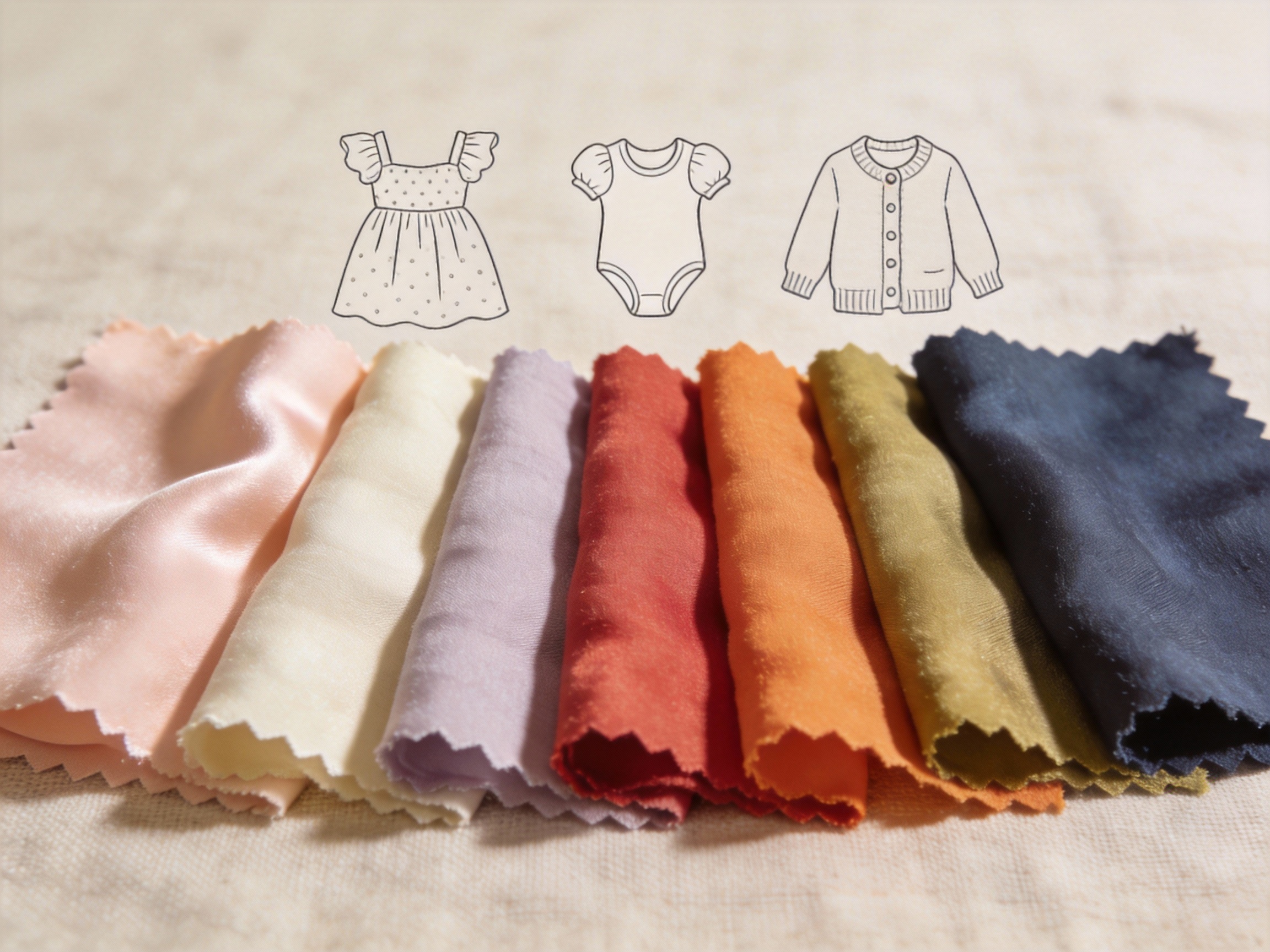
Cotton NR Roman Fabric is a premium knitted textile that blends cotton fibers with nylon-rayon (NR) to create a fabric with exceptional properties. The term “NR” refers to a blend of nylon (polyamide) and rayon (viscose), each contributing distinct benefits: nylon adds strength, stretch, and abrasion resistance, while rayon enhances softness, drape, and moisture absorption. When combined with cotton—known for its breathability and hypoallergenic qualities—the result is a fabric that addresses the limitations of pure cotton (such as low stretch and poor shape retention) and pure synthetic fabrics (such as reduced breathability).
This fabric falls under the broader category of NR knitted fabrics, which are characterized by their knitted construction. Knitting involves interloping yarns to form loops, which gives the fabric its inherent stretch and flexibility. Cotton NR Roman Fabric, in particular, uses a specialized knitting technique that optimizes loop structure for maximum comfort and durability. It is available in various weights, from lightweight (ideal for summer dresses and blouses) to medium-weight (suitable for cardigans and skirts), making it adaptable to different seasons and garment types.
One of the key distinguishing features of Cotton NR Roman Fabric is its versatility in terms of design. It can be dyed in a wide spectrum of colors, from vibrant hues to subtle pastels, and can be printed or jacquarded with intricate patterns. Additionally, it can be finished to achieve different textures—from a smooth, matte finish to a slight sheen—depending on the desired aesthetic. This flexibility allows designers to create garments that are both functional and visually appealing.
Key Advantages of Cotton NR Roman Fabric Over Competitor Fabrics
In a crowded textile market, Cotton NR Roman Fabric distinguishes itself through a range of advantages that address common pain points of both manufacturers and consumers. Below, we compare it to three popular competitor fabrics: 100% cotton knit, polyester knit, and rayon knit.
1. Unmatched Sewability
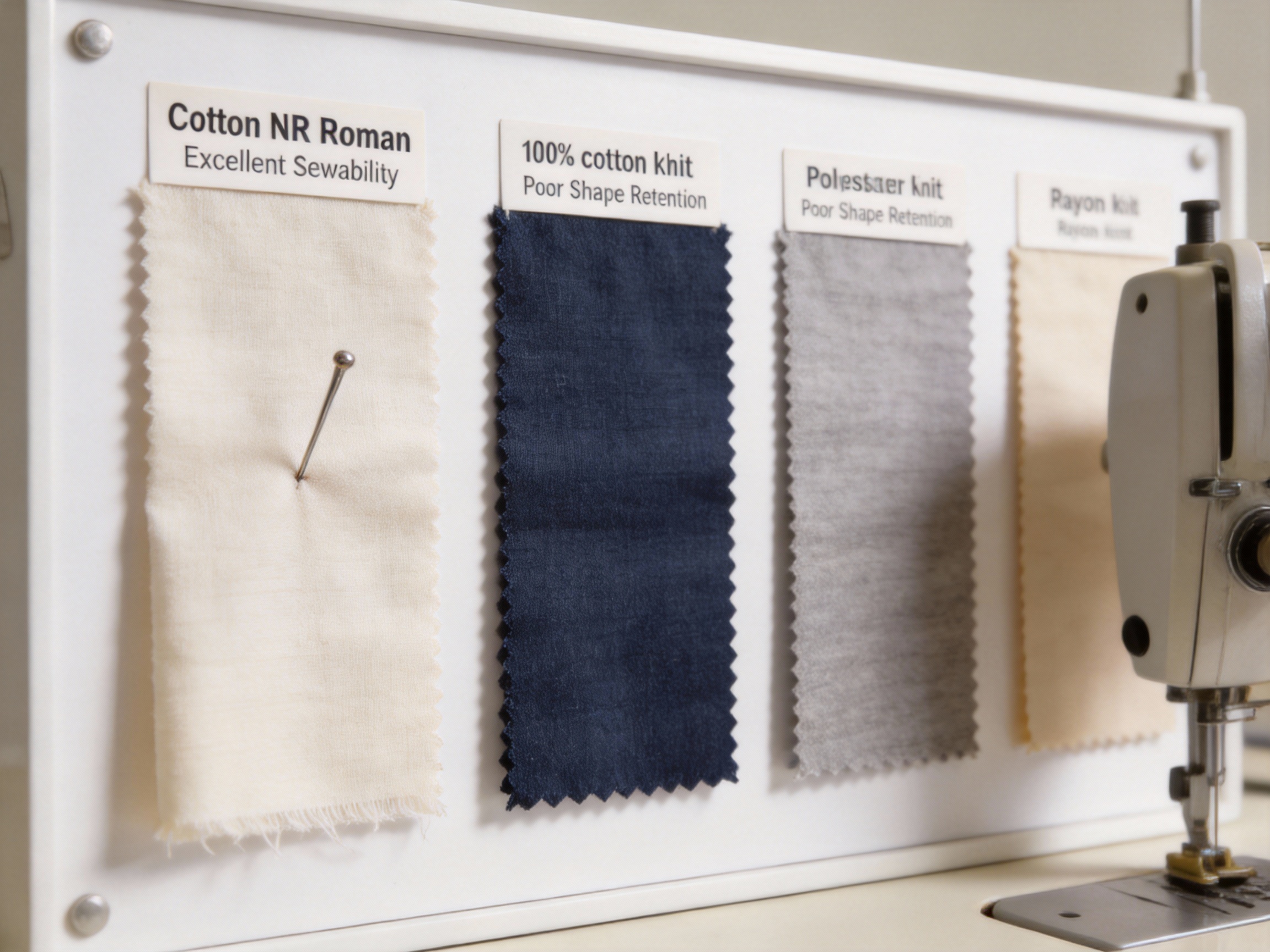
Sewability is a critical factor for garment manufacturers, as it directly impacts production efficiency and cost. Cotton NR Roman Fabric excels in this area due to its balanced fiber composition and knitted structure. Unlike 100% cotton knit, which can be prone to fraying and stretching out of shape during sewing, the nylon in NR adds stability, making it easier to handle. Polyester knit, while durable, can be slippery and difficult to feed through sewing machines, leading to uneven stitches. Rayon knit, on the other hand, is prone to wrinkling and can tear easily if not handled carefully.
Cotton NR Roman Fabric’s optimal loop structure ensures that it feeds smoothly through sewing machines, resulting in clean, consistent stitches. It also resists fraying, reducing the need for time-consuming edge finishing. This makes it a preferred choice for mass production, where efficiency and quality are paramount.
2. Superior Stretch and Shape Retention
Stretch is a highly desirable property in modern apparel, especially for activewear, casual wear, and garments that require a snug fit. Cotton NR Roman Fabric offers excellent stretch thanks to the nylon component, which provides elasticity without compromising comfort. Unlike polyester knit, which can feel stiff and restrictive, the cotton and rayon in this fabric add softness, making it comfortable to wear for extended periods.
Another key advantage is shape retention. 100% cotton knit tends to lose its shape after repeated washing and wearing, while rayon knit can shrink or stretch out of shape. Cotton NR Roman Fabric, however, maintains its form due to the nylon’s ability to bounce back to its original shape. This means garments made from this fabric look new for longer, reducing consumer dissatisfaction and increasing product longevity.
3. Exceptional Versatility in Garment Applications
Cotton NR Roman Fabric’s adaptability across different garment types is one of its most notable strengths. It can be used to make everything from lightweight summer dresses and blouses to medium-weight cardigans, skirts, and even baby clothes. Its breathability (from cotton) makes it suitable for warm weather, while its stretch (from nylon) and drape (from rayon) make it ideal for form-fitting garments.
For baby clothes, its hypoallergenic properties (cotton) and soft texture are particularly beneficial, as they minimize skin irritation. For formal wear, its ability to be dyed in rich colors and finished with a subtle sheen adds a touch of elegance. In contrast, 100% cotton knit may not have enough stretch for form-fitting garments, while polyester knit can be too harsh for sensitive skin.
4. Excellent Color Retention and Pattern Clarity
Color fading and pattern distortion are common issues with many textiles, especially after repeated washing. Cotton NR Roman Fabric addresses this through its advanced dyeing and finishing processes. The rayon component in the blend has excellent dye absorption properties, allowing for vibrant, long-lasting colors. The nylon component adds resistance to fading, ensuring that garments retain their original hue even after multiple washes.
Additionally, the fabric’s smooth surface and stable structure make it ideal for printing and jacquarding. Intricate patterns are reproduced with high clarity, and the fabric resists wrinkling, which helps maintain pattern integrity. This is a significant advantage over rayon knit, which can wrinkle easily and distort patterns, and polyester knit, which may not absorb dyes as evenly.
5. Balanced Aesthetic Appeal and Sustainability
Cotton NR Roman Fabric strikes the perfect balance between natural softness and a polished look. Its cotton content gives it a soft, breathable feel, while the rayon adds a subtle sheen that elevates its aesthetic appeal. Unlike 100% cotton knit, which can look plain, this fabric has a more refined appearance. Unlike polyester knit, which can have a synthetic, plastic-like sheen, the sheen of Cotton NR Roman Fabric is understated and elegant.
Moreover, the fabric is more sustainable than many synthetic alternatives. Its blend of natural (cotton) and semi-synthetic (rayon) fibers reduces reliance on petroleum-based materials. The manufacturer’s commitment to sustainable production—including low-impact dyes, water recycling, and energy-efficient machinery—further enhances its environmental credentials, aligning with global trends for eco-friendly textiles.
Advanced Manufacturing Processes Behind Cotton NR Roman Fabric
The exceptional quality of Cotton NR Roman Fabric is not accidental—it is the result of state-of-the-art manufacturing processes that integrate precision, innovation, and sustainability. The manufacturer behind this fabric, Hangzhou Jinfeng Textile Co., Ltd., has invested heavily in technology and expertise to ensure that every batch meets the highest standards. Below, we explore the key processes that contribute to its superior performance.
1. Precision DTY Yarn Production
Cotton NR Roman Fabric relies on high-quality yarns, including Slight Intermingled Draw Textured Yarn (DTY). DTY is a type of textured yarn produced by drawing and texturing synthetic fibers (such as nylon) to create elasticity and bulk. Hangzhou Jinfeng’s DTY production line uses advanced false-twist texturing machines that ensure consistent yarn quality, with precise control over denier (yarn thickness), elongation, and intermingling.
The “slight intermingled” aspect of the DTY yarn means that fibers are loosely interlaced, enhancing the fabric’s softness and breathability. This is in contrast to heavily intermingled yarns, which can be stiffer and less comfortable. The company’s expertise in DTY production allows it to customize yarn properties to meet the specific needs of Cotton NR Roman Fabric, ensuring optimal stretch and durability.
2. Blending Technology for Optimal Composition
The composition of Cotton NR Roman Fabric—cotton, nylon, and rayon—is carefully balanced to maximize performance. Hangzhou Jinfeng uses advanced blending machines that ensure uniform distribution of fibers, critical for consistent fabric properties. The blending process involves opening and mixing fibers, then carding them to align in a parallel direction, ensuring strong, uniform yarns.
The ratio of cotton to NR is adjusted based on desired fabric properties. For example, a higher cotton content (60% cotton, 40% NR) may be used for baby clothes to enhance softness, while a higher nylon content (30% cotton, 70% NR) may be used for activewear to increase stretch and durability. The company’s R&D team conducts extensive testing to determine optimal blend ratios for different applications, ensuring each fabric variant meets specific performance criteria.
3. Specialized Knitting Techniques
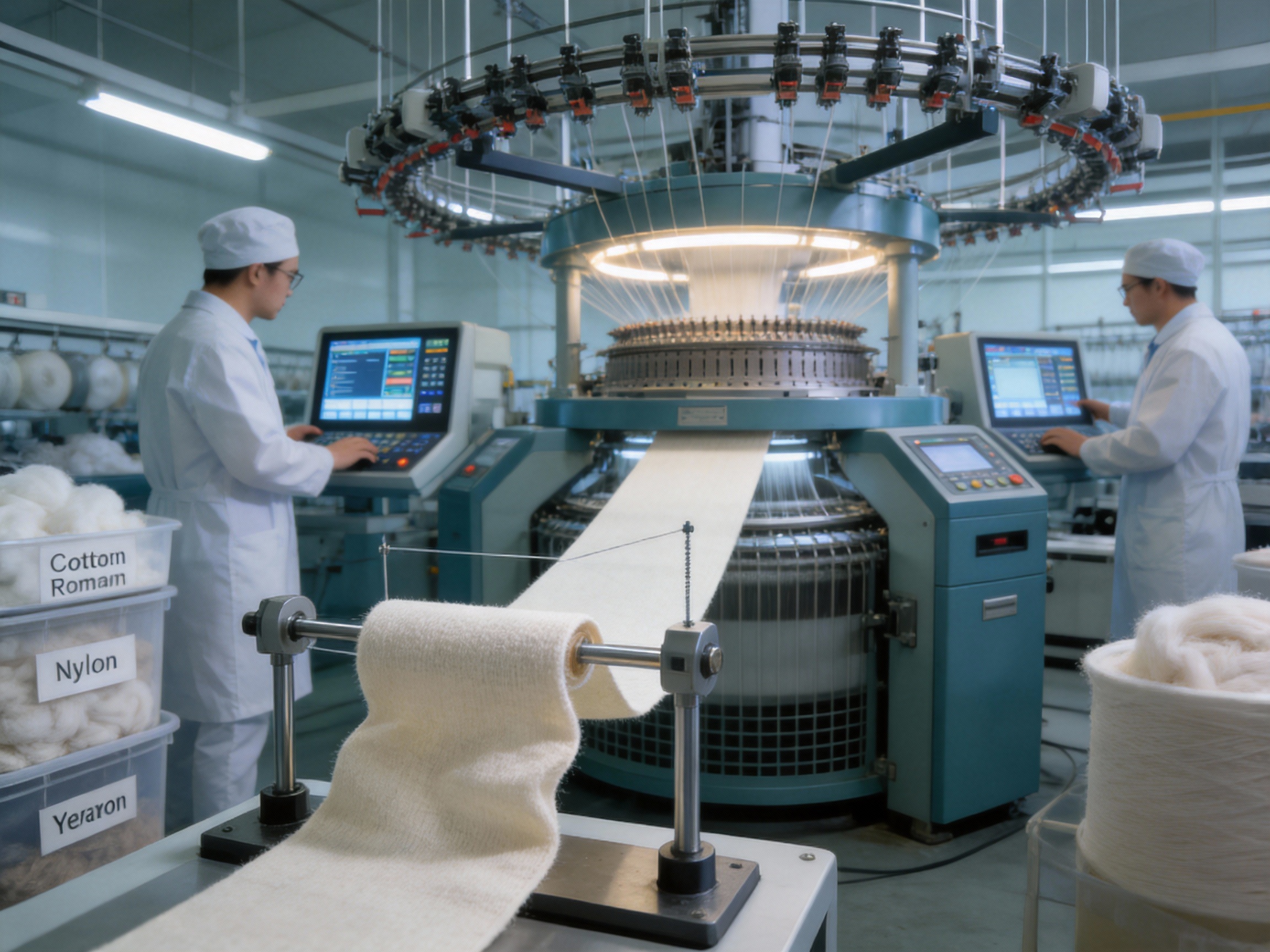
Cotton NR Roman Fabric is produced using circular knitting machines, ideal for creating seamless, stretchy fabrics. The machines use computerized controls to adjust loop length, stitch density, and fabric weight, ensuring consistent properties across every meter of fabric. The knitting process is followed by a relaxation step, where the fabric is treated to remove residual tension—critical for retaining shape after washing and wearing.
The company also uses specialized finishing techniques, such as sanforizing (to prevent shrinkage) and brushing (to enhance softness). These steps are carried out with minimal chemical use, ensuring the fabric is safe for sensitive skin.
4. Sustainable Dyeing and Finishing
Hangzhou Jinfeng prioritizes sustainability in its dyeing and finishing processes. It uses low-impact dyes free from harmful chemicals (like azo dyes) and meets international environmental standards. The dyeing process uses closed-loop systems that recycle 90% of wastewater, reducing water consumption by 40% compared to traditional methods. Solar panels power 25% of the company’s facilities, cutting carbon emissions by 15% annually.
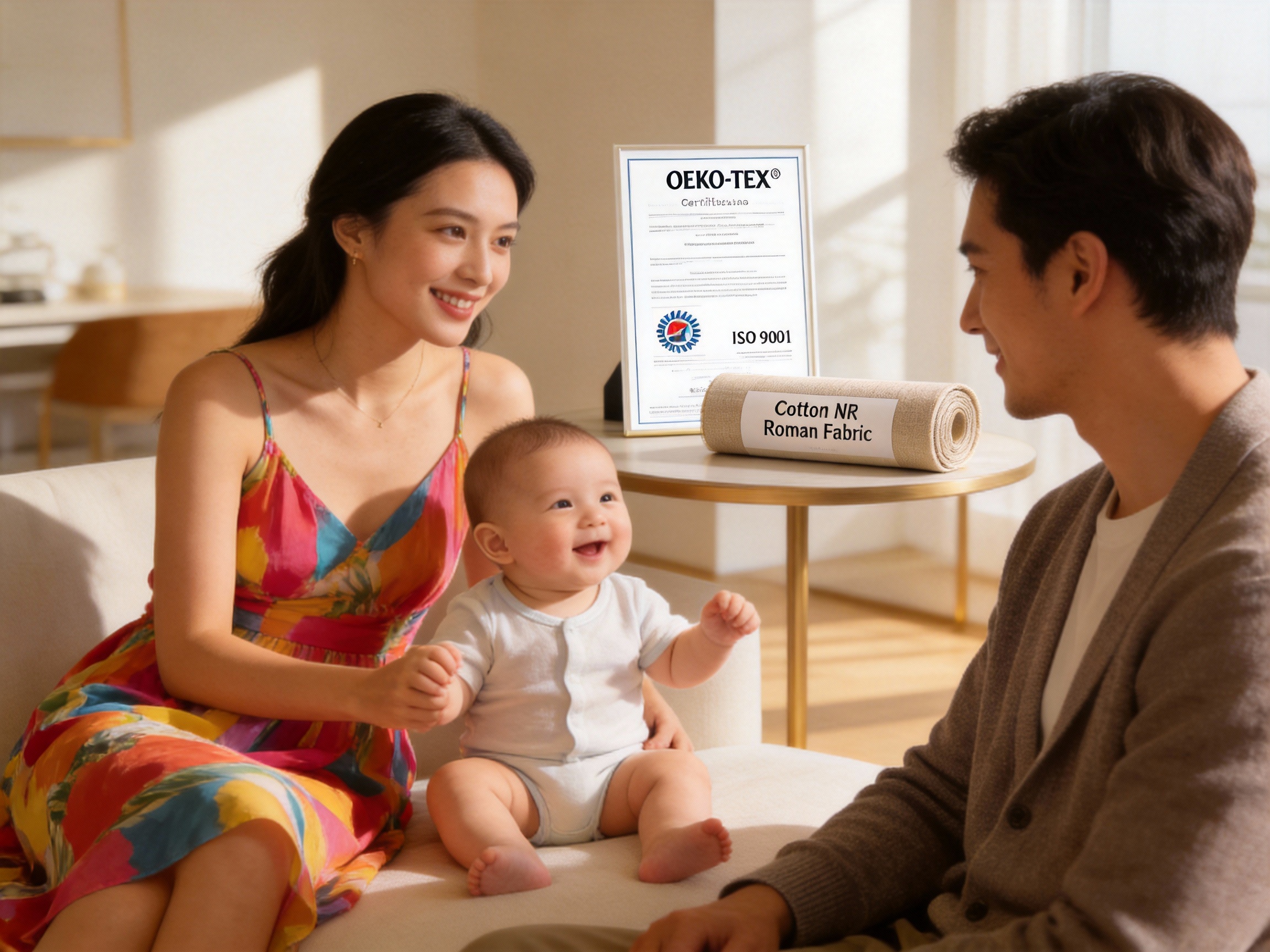
The fabric is also tested for OEKO-TEX® Standard 100 certification, guaranteeing it is free from harmful substances. This makes it suitable for baby clothes and other garments requiring high safety standards.
5. Rigorous Quality Control
Quality control is integrated into every stage of production. Raw materials are inspected for purity and strength; in-process testing checks tensile strength, color fastness, and dimensional stability; final product inspection ensures consistency. Any fabric failing standards is rejected, ensuring only top-quality products reach customers. The company also holds ISO 9001 certification, validating its commitment to quality management.
Related Products: Expanding the Textile Ecosystem
Cotton NR Roman Fabric is part of a broader portfolio of high-quality textiles and yarns offered by Hangzhou Jinfeng. These products complement each other, providing customers with a one-stop solution for their textile needs. Below, we explore key related products and their unique attributes.
1. Polyester Rayon Fabric
Polyester Rayon Fabric combines the durability of polyester with the softness of rayon. It is ideal for trousers, jackets, and dresses, as it resists wrinkles and shrinkage. The fabric uses high-quality DTY polyester yarn, ensuring consistent stretch and durability. It is dyed with low-impact dyes and finished to enhance softness, making it comfortable for everyday wear.
2. Knitted Jacquard Fabric
Knitted Jacquard Fabric features intricate patterns woven directly into the fabric using jacquard knitting machines. It is perfect for statement garments like sweaters and scarves, with patterns that are durable and visually striking. The fabric uses a blend of cotton, polyester, and rayon, balancing stretch and softness. Hangzhou Jinfeng can customize patterns to meet customer needs, making it a favorite among fashion designers.
3. NTR Knitted Fabric
NTR Knitted Fabric blends nylon, polyester, and rayon for high-performance applications like activewear. Nylon provides stretch and durability, polyester adds moisture-wicking properties, and rayon enhances softness. The fabric is tested for stretch retention, moisture management, and color fastness, meeting the needs of sportswear brands. It is also breathable, making it suitable for intense physical activity.
4. Slight Intermingled DTY Yarn
Slight Intermingled DTY Yarn is a core product used as a raw material for many of Hangzhou Jinfeng’s fabrics. It is produced with precise control over denier and elongation, ensuring consistent quality. The yarn is available in a range of colors and deniers, allowing customers to customize their fabrics. It is also used by other textile manufacturers for apparel and home textiles.
Core Strengths of Hangzhou Jinfeng Textile Co., Ltd.
Hangzhou Jinfeng Textile Co., Ltd. is a leading textile manufacturer with over 15 years of experience. Its core strengths include strategic location, end-to-end integration, global export expertise, and customer-centricity.
1. Strategic Location and Modern Infrastructure
The company is located in Jingjiang Street Industrial Park, Xiaoshan District, Hangzhou—an area known for advanced textile manufacturing. It covers 32.6 acres with an 18,000 sqm plant equipped with state-of-the-art machinery. The location provides easy access to raw materials, transportation hubs, and global markets, reducing lead times and costs.
2. End-to-End Integration: R&D to Sales
Hangzhou Jinfeng integrates R&D, production, and sales. Its R&D team collaborates with universities and research institutions to develop innovative fabrics. The team works closely with customers to create customized solutions, from product development to sample testing. This integration allows the company to respond quickly to market trends.
3. Global Export Expertise
The company is a self-employed export enterprise, with products exported to over 30 countries (U.S., Europe, Southeast Asia). It has a dedicated export team handling documentation, logistics, and customs clearance, ensuring products reach customers on time. Its products meet international standards (OEKO-TEX®, ISO 9001), catering to global apparel brands.
4. Customer-Centric Approach
Hangzhou Jinfeng adheres to the “cooperation, win-win” philosophy. It offers flexible MOQs (minimum order quantities) and customized solutions. The company welcomes visitors to its facilities for inspections and business negotiations, fostering long-term partnerships. It also provides after-sales support, ensuring customer satisfaction.
Q&A Section: Addressing Common Questions About Cotton NR Roman Fabric
To further clarify the unique attributes and applications of Cotton NR Roman Fabric, we have compiled a list of frequently asked questions:
Q1: What makes Cotton NR Roman Fabric different from other NR knitted fabrics?
A1: It stands out due to its balanced cotton-NR blend, enhancing breathability and softness. Specialized knitting and finishing processes ensure superior stretch retention, color fastness, and sewability compared to other NR fabrics.
Q2: Can it be used for baby clothes?
A2: Yes! Its cotton content makes it hypoallergenic and soft, while stretch and durability withstand frequent washing. It meets OEKO-TEX® Standard 100 for safety.
Q3: How does the manufacturer ensure quality?
A3: Rigorous quality control at every stage—raw material inspection, in-process testing, final product checks. Certifications like OEKO-TEX® and ISO 9001 validate its commitment.
Q4: What are the care instructions?
A4: Machine wash cold on gentle cycle, avoid bleach/fabric softeners. Dry flat or hang; iron on low if needed.
Q5: Can it be customized?
A5: Yes! The R&D team adjusts blend ratios, weight, texture, and patterns. Small sample batches are available for testing.
Q6: Is it suitable for formal wear?
A6: Yes! Rich colors and subtle sheen make it ideal for evening dresses and blouses. Its drape and shape retention keep garments polished.
Q7: How does it perform in hot climates?
A7: Excellent! Cotton and rayon provide breathability and moisture absorption, regulating body temperature better than synthetic fabrics.
Q8: Can it be used for home textiles?
A8: Yes! Softness, durability, and stretch make it suitable for curtains, cushion covers, and lightweight blankets.
Comparison of Cotton NR Roman Fabric with Competitor Fabrics
| Property | Cotton NR Roman Fabric | 100% Cotton Knit | Polyester Knit | Rayon Knit |
|---|---|---|---|---|
| Sewability | Excellent (smooth feed, minimal fraying) | Good (prone to fraying) | Poor (slippery, uneven stitches) | Fair (prone to tearing) |
| Stretch & Shape Retention | Excellent (high stretch, retains shape) | Poor (low stretch, loses shape) | Good (high stretch, stiff feel) | Fair (moderate stretch, shrinks) |
| Breathability | Excellent (cotton + rayon) | Excellent | Poor (synthetic) | Good (rayon) |
| Color Fastness | Excellent (resists fading) | Fair (fades easily) | Good (resists fading but uneven dye) | Good (vibrant but prone to bleeding) |
| Versatility | Excellent (dresses, baby clothes, activewear) | Good (casual wear) | Fair (activewear) | Good (dresses) |
| Sustainability | High (natural/semi-synthetic blend, eco-friendly processes) | Moderate (natural but high water use) | Low (petroleum-based) | Moderate (semi-synthetic but high chemical use) |
References
1. Textile Institute. (2023). Global Textile Trends: Sustainable Knitted Fabrics. Manchester: Textile Institute Press.
2. Smith, J. (2022). Advanced Yarn Technologies for Apparel Fabrics. New York: Academic Publishers.
3. Wang, L. (2023). Nylon-Rayon Blends: Performance and Applications. Beijing: China Textile Press.
4. European Textile Confederation. (2023). Quality Standards for Knitted Garment Fabrics. Brussels: ETC Publications.
5. OEKO-TEX® Association. (2022). OEKO-TEX® Standard 100: Guidelines for Textile Safety. Zurich: OEKO-TEX® Association.
6. International Organization for Standardization (ISO). (2021). ISO 9001: Quality Management Systems. Geneva: ISO.
7. Chen, M. (2022). Sustainable Textile Production in China. Shanghai: China Textile University Press.
