
Cotton NR Roman Fabric: A Structured, Comfortable, and Versatile Knitted Textile for Modern Apparel
Cotton NR Roman fabric is a practical knitted textile designed for apparel manufacturers, fashion brands, wholesalers, and garment makers seeking a balanced combination of comfort, stretch, structure, and visual appeal. Its Roman-knit construction gives the fabric a stable hand and a refined surface, while the cotton and rayon-based composition can provide a soft touch, natural comfort, and attractive drape. Depending on the production specification, the fabric may also include nylon or other supporting fibers to improve durability, recovery, dimensional stability, and service performance.
Unlike lightweight single jersey fabrics that can appear too thin or unstable for certain garments, Cotton NR Roman fabric offers a more substantial body. It is suitable for dresses, skirts, tops, jackets, cardigans, trousers, children’s clothing, and selected fashion accessories. The fabric can be developed in different weights, colors, finishes, and pattern effects, allowing buyers to adapt it to seasonal collections, private-label programs, and specialized clothing applications.
This article explains the construction, performance, manufacturing process, design advantages, quality considerations, and commercial value of Cotton NR Roman fabric. It also examines how an experienced textile manufacturer can add value through fiber selection, knitting control, dyeing, finishing, inspection, and customer-oriented development.

Cotton NR Roman Fabric
Understanding Cotton NR Roman Fabric
The name Cotton NR Roman fabric generally refers to a knitted fabric combining cotton with an NR fiber group, commonly understood in the textile trade as nylon-rayon, nylon-viscose, or a similar blended construction. In some product programs, the term may also be used for a cotton-viscose or cotton-rayon Roman knit. Because textile naming conventions can vary between suppliers and markets, buyers should always confirm the exact fiber content, yarn count, fabric weight, width, stretch percentage, and finishing method before placing a bulk order.
Roman knit fabric is valued for its compact and stable knitted structure. It typically has more body than a lightweight jersey and a smoother, more polished appearance than many loosely constructed knits. The fabric can be soft against the skin while still maintaining enough firmness for garments that require shape. This makes it especially useful when a designer wants the comfort of knitwear without the overly casual appearance of a thin T-shirt fabric.
Cotton contributes breathability, moisture absorption, and a familiar natural hand feel. Rayon or viscose can improve softness, drape, color depth, and surface smoothness. Nylon, when used in the blend, can support abrasion resistance, tensile strength, and shape retention. The final performance depends on the exact blend ratio, yarn construction, knitting parameters, dyeing conditions, finishing process, and garment treatment.
The most important benefit of this type of fabric is balance. It is not selected only for softness, only for stretch, or only for strength. Instead, it is developed to offer several useful properties at the same time. A well-produced Cotton NR Roman fabric can feel comfortable, look refined, sew efficiently, and perform reliably in finished garments.
Key Characteristics of the Fabric
Comfortable Hand Feel
Cotton-based fibers are widely appreciated for their familiar, breathable, and skin-friendly feel. When cotton is combined with rayon or viscose, the surface may become smoother and more fluid. This makes the fabric appropriate for garments worn close to the body, including dresses, blouses, skirts, pullovers, and children’s clothing.
The hand feel can be adjusted through yarn selection and finishing. A brushing or softening process may create a warmer and more velvety touch, while a compact finishing process may produce a cleaner and more structured surface. Buyers can select the desired result according to the target product, climate, retail positioning, and garment design.
Useful Stretch and Recovery
As a knitted fabric, Cotton NR Roman fabric naturally offers greater flexibility than most woven materials. The looped structure allows the textile to move with the body, making it suitable for fitted silhouettes and everyday garments. If elastane or another stretch-supporting yarn is included, the fabric can provide additional elasticity and recovery.
Stretch performance should be evaluated in both the width and length directions. A fabric may feel flexible but still have limited recovery, or it may offer strong recovery but be too firm for a particular garment. Professional development therefore considers stretch percentage, recovery after repeated extension, growth during wear, and the effect of washing or steaming.
Stable and Substantial Body
Roman-knit structures are often selected because they offer a denser and more stable body than lightweight jersey. This stability helps garments hang smoothly and reduces the risk of an overly flimsy appearance. It can also support clean hems, controlled seams, and more structured silhouettes.
The fabric body is particularly useful for skirts, tailored knit dresses, cardigans, lightweight jackets, and trousers. It can conceal minor body lines more effectively than a very thin knit and can create a more premium visual impression. At the same time, it remains more comfortable and flexible than many traditional suiting fabrics.
Attractive Surface Appearance
A high-quality Roman fabric can have a smooth, even, and refined surface. The appearance may be plain, mélange, jacquard-inspired, brushed, or patterned depending on the yarns and knitting technology used. Its surface can be developed for minimalist garments as well as more decorative fashion products.
Color clarity is another important advantage. Rayon and viscose components can contribute to rich color absorption, while carefully controlled dyeing helps maintain an even shade across the roll. Dark colors, soft neutrals, bright seasonal tones, and customized shades can all be developed through a suitable dyeing program.
Versatile Sewing Performance
Cotton NR Roman fabric is generally suitable for industrial garment production and small-scale sewing. Its stable structure can make cutting and sewing easier than working with a very slippery or highly elastic knit. Correct needle selection, thread choice, stitch type, and feeding adjustment remain important, especially when the fabric contains high stretch or a smooth rayon component.
The fabric can be used with coverstitching, overlocking, lockstitching, binding, decorative topstitching, and other common apparel construction methods. The best sewing settings depend on the final blend, fabric weight, stretch, and garment design. A pre-production sewing test is recommended before bulk cutting.
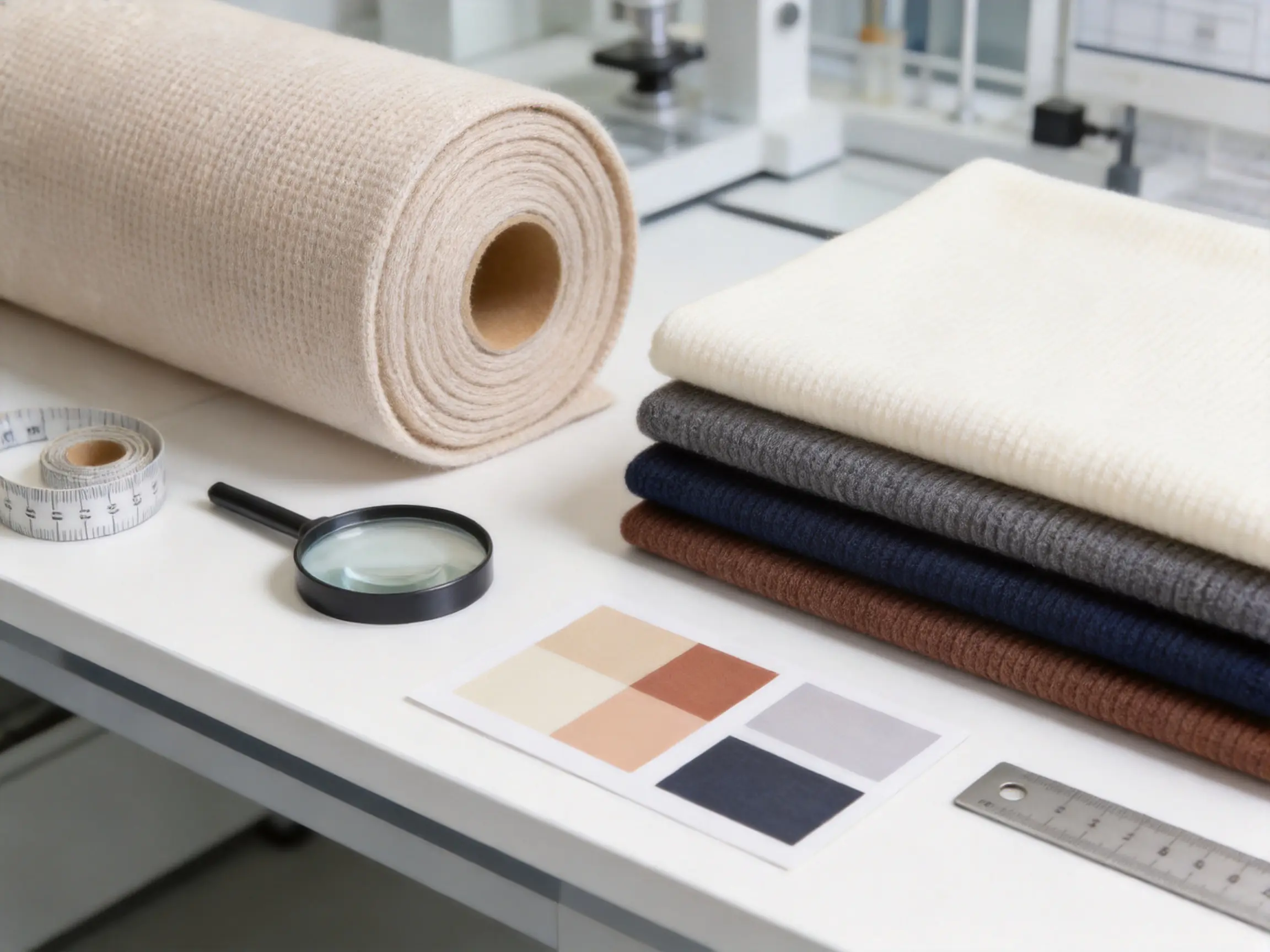
Why Cotton NR Roman Fabric Is Competitive
More Structure Than Lightweight Jersey
One major advantage over lightweight jersey is its greater substance and dimensional stability. Lightweight jersey remains popular for T-shirts and casual basics, but it may curl at the edges, show body lines, or lose shape in garments requiring a polished appearance. Roman fabric offers a more controlled alternative for fashion items that need both comfort and structure.
This advantage is valuable for brands that want knit garments to resemble refined ready-to-wear products rather than basic leisurewear. The fabric can support a clean silhouette while preserving the stretch and softness that consumers expect from knit clothing.
More Flexibility Than Many Woven Fabrics
Compared with conventional woven suiting or dress fabrics, Roman knit fabric provides greater movement comfort. It can reduce the restrictive feeling associated with fitted woven garments and may require fewer complicated garment features for ease of movement.
This makes the material attractive for workwear-inspired dresses, travel clothing, smart casual collections, office skirts, and transitional-season jackets. A garment can look neat and tailored while still being suitable for extended daily wear.
Balanced Fiber Performance
A single fiber rarely delivers every desired property. Cotton is comfortable and breathable, but it may crease or lose shape when used alone. Rayon provides softness and drape, but it can require careful handling. Nylon can improve strength and wear resistance, but a high proportion may alter the natural hand feel.
A controlled blend allows the manufacturer to balance these characteristics. The result can provide a more useful overall performance profile than a single-fiber fabric. For buyers, this means greater freedom to develop products for different price points and usage conditions.
Broad Garment Applications
The fabric is not limited to one clothing category. It can be developed for women’s dresses, skirts, blouses, tops, cardigans, lightweight outerwear, trousers, children’s apparel, and selected baby garments. Its range of possible weights and finishes allows the same basic fabric family to support multiple seasonal collections.
For a garment brand, this versatility can simplify product development. A supplier may be able to provide coordinated colors or related structures for several styles, helping the brand create visual consistency across a collection.
Suitable for Custom Development
Cotton NR Roman fabric can be customized in terms of composition, weight, width, color, surface treatment, stretch, pattern, and finishing. This is an important advantage over standardized commodity fabrics that may offer limited options.
Custom development allows a buyer to target specific requirements. For example, a summer dress may need a lighter weight and softer drape, while a winter skirt may require a heavier body and brushed surface. A children’s garment may prioritize softness and color fastness, while a fashion cardigan may emphasize texture and visual depth.
Manufacturing Process and Technical Control
The quality of Cotton NR Roman fabric depends on more than the fiber blend printed on a specification sheet. Every stage, from raw material preparation to final inspection, affects the appearance and performance of the finished textile. An advanced manufacturer should therefore maintain process control across yarn preparation, knitting, dyeing, finishing, inspection, and packing.
Fiber and Yarn Selection
Production begins with the selection of suitable fibers and yarns. Cotton quality can influence softness, strength, absorbency, and surface appearance. Rayon or viscose quality affects luster, drape, color uptake, and smoothness. Nylon quality can influence strength, resilience, and abrasion performance.
Yarn count, twist, evenness, hairiness, and blending uniformity must be considered. Inconsistent yarn can result in horizontal bars, uneven dye uptake, slubs, weak points, or an irregular surface. Reliable suppliers work with stable raw materials and maintain clear production records for each batch.
For blended fabrics, compatibility between fiber types is especially important. Different fibers may absorb dyes differently or respond differently to heat and moisture. The production team must select a dyeing and finishing route that creates an even color while protecting the hand feel and dimensional stability of the fabric.
Knitting Preparation
Before knitting begins, yarn packages are checked for winding quality, tension consistency, and visible defects. Proper yarn preparation helps prevent interruptions and reduces the risk of fabric faults. The knitting machine must be set according to the selected structure, gauge, yarn size, target weight, and required width.
Roman-knit construction requires controlled loop formation. Excessive tension can create a hard hand, narrow width, or poor stretch. Insufficient control can cause loose areas, uneven density, or unstable dimensions. Skilled technicians monitor machine speed, yarn feed, needle condition, take-down tension, and fabric roll formation.
Knitting and Structure Formation
During knitting, the fabric is formed through interlocking loops rather than crossed warp and weft threads. This construction provides flexibility and contributes to the fabric’s characteristic comfort. The exact knitting method determines the thickness, surface, stretch, recovery, and visual texture.
Roman structures are valued for their compact appearance and relatively firm body. The knitting parameters can be adjusted to create a lighter or heavier fabric, a softer or firmer hand, and a more open or dense surface. Patterned effects may be introduced through yarn combinations, machine settings, jacquard techniques, or other specialized knitting methods.
Continuous monitoring is essential during this stage. Operators should inspect the fabric for dropped stitches, holes, needle lines, oil marks, barre, tension differences, and width variation. Early detection allows problems to be corrected before a full production lot is completed.
Scouring and Pretreatment
Greige fabric may contain natural impurities, spinning oils, knitting lubricants, and processing residues. Pretreatment removes unwanted substances and prepares the material for even dye penetration. The treatment must be carefully controlled because cotton, rayon, nylon, and other components may react differently to chemicals, temperature, and processing time.
Overly aggressive pretreatment can damage fibers, weaken the fabric, or produce an undesirable hand. Insufficient pretreatment can lead to uneven dyeing, poor absorbency, or inconsistent shade development. A professional production team selects the process according to the actual fiber composition and target finish.
Dyeing and Color Development
Color is one of the most important commercial features of apparel fabric. Buyers often require exact shade matching, repeatable production, and good fastness performance. Cotton NR Roman fabric can be developed in a broad range of colors, from natural whites and muted neutrals to strong fashion shades.
Blended-fiber dyeing requires technical expertise because each fiber may require a different dye class or absorption condition. The production process must create a visually unified shade without damaging the fabric. Temperature, pH, chemical concentration, liquor ratio, agitation, and holding time are all important variables.
Laboratory dips or sample dyeing are useful before bulk production. They allow the buyer and manufacturer to confirm color direction, depth, surface appearance, and compatibility with the final garment design. Approved standards should be retained for comparison during bulk dyeing.
Finishing and Surface Enhancement
Finishing determines many of the final performance characteristics. Common finishing operations may include softening, compacting, heat setting, brushing, raising, tentering, calendaring, or moisture management treatment. Not every fabric requires every process; the finishing route should match the desired application.
Softening can improve comfort and drape. Compacting can reduce shrinkage and improve dimensional stability. Heat setting may support width control and stretch recovery when suitable synthetic fibers are present. Brushing or raising can create a warmer surface for colder seasons. Calendaring can produce a smoother and more polished appearance.
Finishing must be controlled carefully to avoid excessive shine, harshness, distortion, or loss of elasticity. The final fabric should be evaluated after finishing and, when appropriate, after washing tests that simulate consumer use.
Inspection and Quality Assurance
Final inspection is essential before packing and shipment. The inspection team should review the fabric for visible defects, shade consistency, width, weight, stretch, recovery, shrinkage, skew, bowing, surface cleanliness, and roll presentation.
A defect classification system can help determine whether a roll meets the buyer’s standard. Major defects may include holes, severe streaks, large stains, broken needles, or unacceptable shade differences. Minor imperfections may be assessed according to the agreed quality level and end use.
Quality assurance is most effective when it begins before production rather than at the end. Incoming yarn checks, first-piece approval, in-process inspections, laboratory testing, and final roll audits create a more reliable control system.
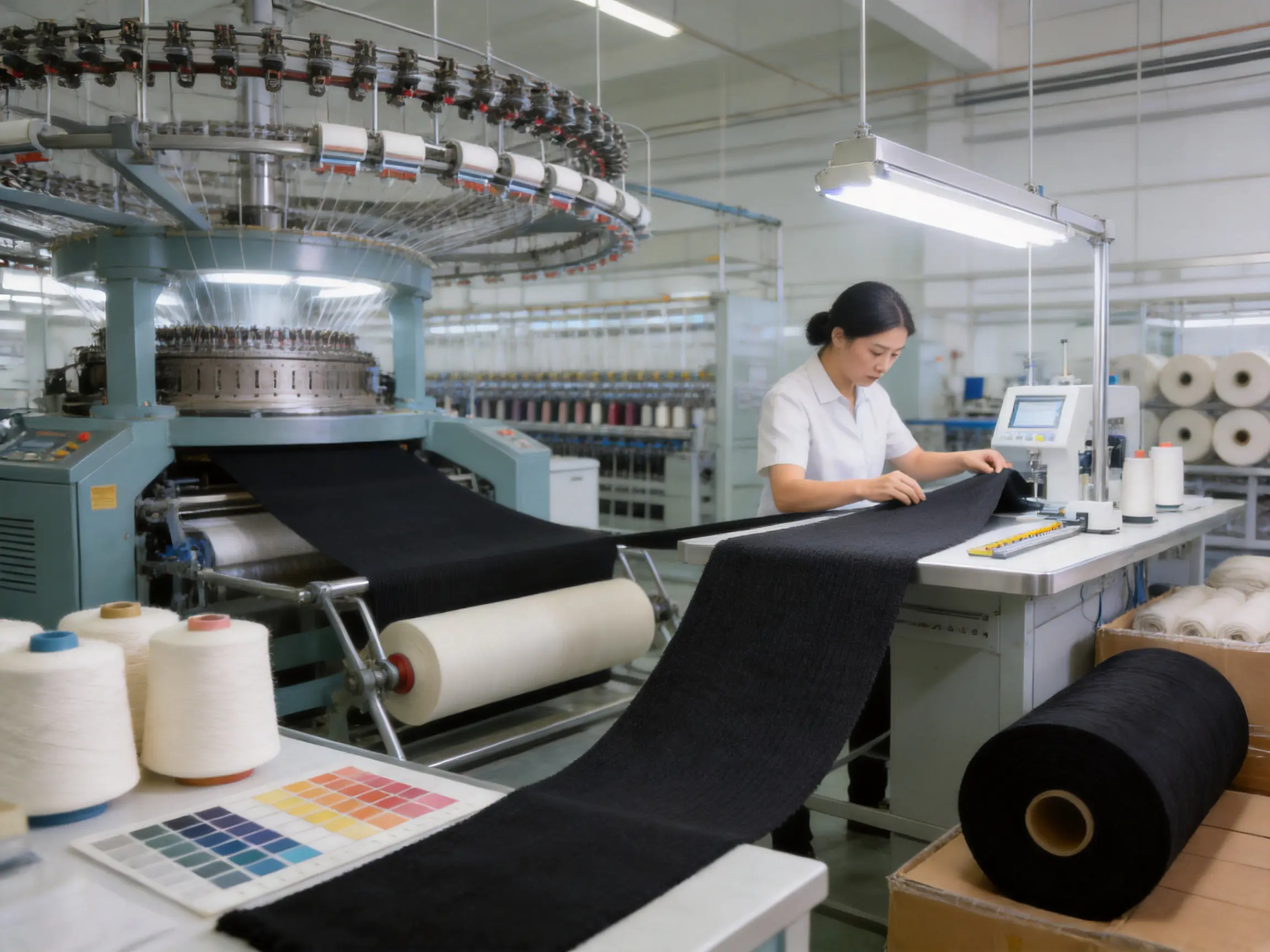
Applications in Apparel and Fashion
Dresses
Cotton NR Roman fabric is well suited to dresses that require a smooth fall and comfortable movement. It can be used for fitted dresses, A-line styles, wrap-inspired designs, long-sleeved dresses, and casual office silhouettes. Its body helps the garment maintain a clean outline, while its knitted flexibility supports everyday comfort.
For close-fitting dresses, stretch and recovery should be checked carefully. The fabric must provide sufficient ease without excessive growth at the elbows, waist, seat, or neckline. A lining may be unnecessary for some weights, but the decision should be based on opacity, garment design, and the intended level of support.
Skirts and Trousers
The substantial hand of Roman fabric makes it useful for pencil skirts, A-line skirts, pull-on trousers, wide-leg knit trousers, and coordinated sets. The fabric can create a streamlined appearance while remaining easier to wear than many woven alternatives.
For bottoms, dimensional stability and recovery are especially important. The waistband area is subject to repeated extension, and poor recovery can cause bagging. A suitable fabric specification, combined with correct garment construction, helps preserve the original silhouette.
Blouses and Tops
Depending on its weight and drape, the fabric can be used for long-sleeved tops, mock-neck garments, relaxed blouses, and layered fashion pieces. A softer finish may be selected for garments worn directly against the skin, while a firmer finish may be suitable for structured tops.
Designers can use plain colors for essential wardrobe products or select textured and patterned variations for more distinctive collections. The fabric can also work well with contrast panels, binding, decorative seams, and coordinated knit components.
Cardigans and Lightweight Jackets
The body of Roman fabric supports cardigans and lightweight jackets that need more presence than a thin jersey layer. It can be cut into open-front cardigans, collarless jackets, cropped jackets, or relaxed outer layers.
When used for outer layers, the fabric should be evaluated for pilling, abrasion, seam stability, and appearance after repeated wear. A compact structure and appropriate yarn selection can help improve the product’s perceived quality.
Children’s and Baby Clothing
Soft knitted fabrics are widely used for children’s clothing because they provide flexibility and comfort. Cotton NR Roman fabric may be considered for children’s dresses, skirts, tops, cardigans, and selected baby garments, provided that the exact composition and finishing meet the applicable market requirements.
For children’s and baby products, buyers should pay particular attention to softness, color fastness, dimensional stability, chemical compliance, loose fibers, seam safety, and accessory selection. The fabric itself should be supported by responsible garment construction and appropriate testing.
Layering Pieces and Fashion Accessories
Roman knit fabric can also be used for boleros, vests, scarves, soft belts, headbands, and other fashion accessories. Patterned or jacquard-like structures can add visual interest without requiring complex garment decoration.
These applications allow manufacturers to use coordinated fabric programs across a complete collection. A dress, cardigan, scarf, and skirt can share related colors or surface effects, strengthening the visual identity of a seasonal range.
Advantages of Working with an Integrated Textile Manufacturer
Hangzhou Jinfeng Textile Co., Ltd. operates as a textile enterprise involved in research and development, production, processing, post-dyeing, finishing, and sales. Its product scope includes polyester and spandex blended fabrics, knitted fabrics, DTY polyester yarn, and related textile products.
An integrated manufacturing structure can provide several advantages to buyers. When fabric development, dyeing, finishing, inspection, and sales coordination are managed within one organization, communication can become more direct. Technical questions may be addressed faster, and adjustments can be coordinated across multiple production stages.
Experience with Blended Fabrics
Blended fabrics require careful handling because each component contributes different characteristics. Experience with polyester, spandex, cotton, rayon, nylon, and related fibers can help a manufacturer select a more suitable production route for the buyer’s intended use.
Knowledge of blended fabric production is valuable when a customer needs a specific balance between softness, stretch, strength, drape, recovery, and cost. The manufacturer can discuss whether the requirement is best achieved through fiber ratio, yarn construction, knitting design, or finishing.
Post-Dyeing and Finishing Capability
Post-dyeing and finishing are not merely cosmetic steps. They strongly affect the fabric’s usability in garment production. Stable width, controlled shrinkage, even softness, smooth surface, and consistent color can reduce cutting and sewing problems.
A manufacturer with post-dyeing and finishing experience can develop fabrics for different market positions. A basic program may prioritize cost efficiency and dependable bulk production, while a premium program may emphasize hand feel, surface refinement, color depth, and specialized finishing.
DTY Polyester Yarn Knowledge
Drawn textured yarn, commonly called DTY polyester yarn, is produced by drawing and texturing polyester yarn to create bulk, flexibility, and a softer appearance than flat filament yarn. Although Cotton NR Roman fabric is a separate product category, DTY yarn knowledge can support the development of other blended and knitted textiles within a coordinated supply program.
A supplier with experience in both yarn and fabric can better understand how yarn characteristics influence knitting performance, surface texture, coverage, stretch behavior, and end-use durability. This broader technical perspective can be useful for customers sourcing multiple textile products.
Export-Oriented Service
An export-oriented textile company must coordinate product specifications, sample approval, production timing, packing, documentation, and shipment requirements. Clear communication is essential when the customer is located in another country or when the order involves several colors and fabric constructions.
Professional service includes confirming technical details before production, maintaining approved samples, communicating realistic lead times, and supporting quality discussions after delivery. These practices help reduce misunderstandings and improve long-term cooperation.
Production Scale and Facility Resources
Hangzhou Jinfeng Textile Co., Ltd. is located in Xiaoshan District, Hangzhou, Zhejiang Province, and operates from an industrial facility with a reported plant area of approximately 18,000 square meters. Its business covers production, processing, finishing, research and development, and sales.
A dedicated industrial facility can support organized material flow, equipment maintenance, production scheduling, inspection, and warehousing. Facility size alone does not guarantee quality, but it can provide the infrastructure needed for stable manufacturing when combined with trained personnel and effective process control.
Product Development Options
One of the strengths of Cotton NR Roman fabric is the number of variables that can be adjusted during development. Buyers should define the intended garment and market before requesting a sample, since the best specification for a fitted dress may not be the best specification for a cardigan or children’s garment.
| Development Item | Possible Options | Effect on the Finished Fabric |
|---|---|---|
| Fiber composition | Cotton, rayon, viscose, nylon, polyester, elastane, or selected blends | Influences softness, strength, drape, stretch, absorbency, and cost |
| Fabric weight | Light, medium, or heavy constructions | Affects opacity, warmth, body, drape, and seasonal suitability |
| Knitted structure | Compact Roman knit, textured knit, jacquard effect, or related structures | Controls surface appearance, stability, stretch, and visual character |
| Color | Stock shades, seasonal colors, neutrals, dark tones, or custom shades | Determines collection coordination and retail presentation |
| Finishing | Softening, compacting, brushing, heat setting, or surface polishing | Changes hand feel, shrinkage, recovery, warmth, and surface effect |
| Width | According to machine capability and garment planning | Influences cutting efficiency and fabric consumption |
| Stretch performance | Natural knit flexibility or enhanced stretch with elastane | Determines comfort, fit, recovery, and garment shape retention |
These options should be confirmed in a written technical specification. A clear specification reduces production risk and ensures that the approved sample is an accurate reference for bulk manufacturing.
Quality Tests Buyers Should Consider
Testing requirements depend on the target market and product category, but several basic evaluations are useful for nearly every Cotton NR Roman fabric program.
Fabric Weight and Width
Fabric weight is commonly measured by grams per square meter. It affects drape, coverage, warmth, cost, and cutting consumption. Width should be measured after the fabric has relaxed under controlled conditions, because knitted materials may change width after tension is released.
Dimensional Stability
Washing and drying can alter the dimensions of knitted fabric. Shrinkage should be evaluated in both length and width directions. Buyers should specify the intended washing method, water temperature, drying process, and number of cycles for testing.
Stretch and Recovery
Stretch testing shows how far the fabric can extend, while recovery testing shows how well it returns toward its original dimensions. Both values matter for fitted garments. A fabric with high stretch but poor recovery may become loose or baggy during wear.
Color Fastness
Color fastness should be evaluated against washing, rubbing, perspiration, and light exposure when appropriate. Dark and bright shades may require particular attention. The required performance level depends on the garment category, care instructions, and destination market.
Pilling and Abrasion
Pilling occurs when small fiber balls form on the surface after rubbing. Abrasion testing can help estimate how well the fabric will withstand repeated use. These tests are especially relevant for skirts, trousers, cardigans, uniforms, and garments exposed to bags, seats, or frequent washing.
Seam and Bursting Performance
Knitted fabrics should be evaluated for seam slippage, seam strength, and bursting resistance where applicable. These properties are affected by fabric construction, yarn strength, stretch, sewing thread, stitch density, and garment design.
Surface and Appearance Inspection
Visual inspection remains important even when laboratory results are satisfactory. Uneven dyeing, streaks, needle lines, holes, oil marks, creases, barre, and excessive width variation can reduce the commercial value of a fabric. Inspection under suitable lighting and against an agreed standard is recommended.
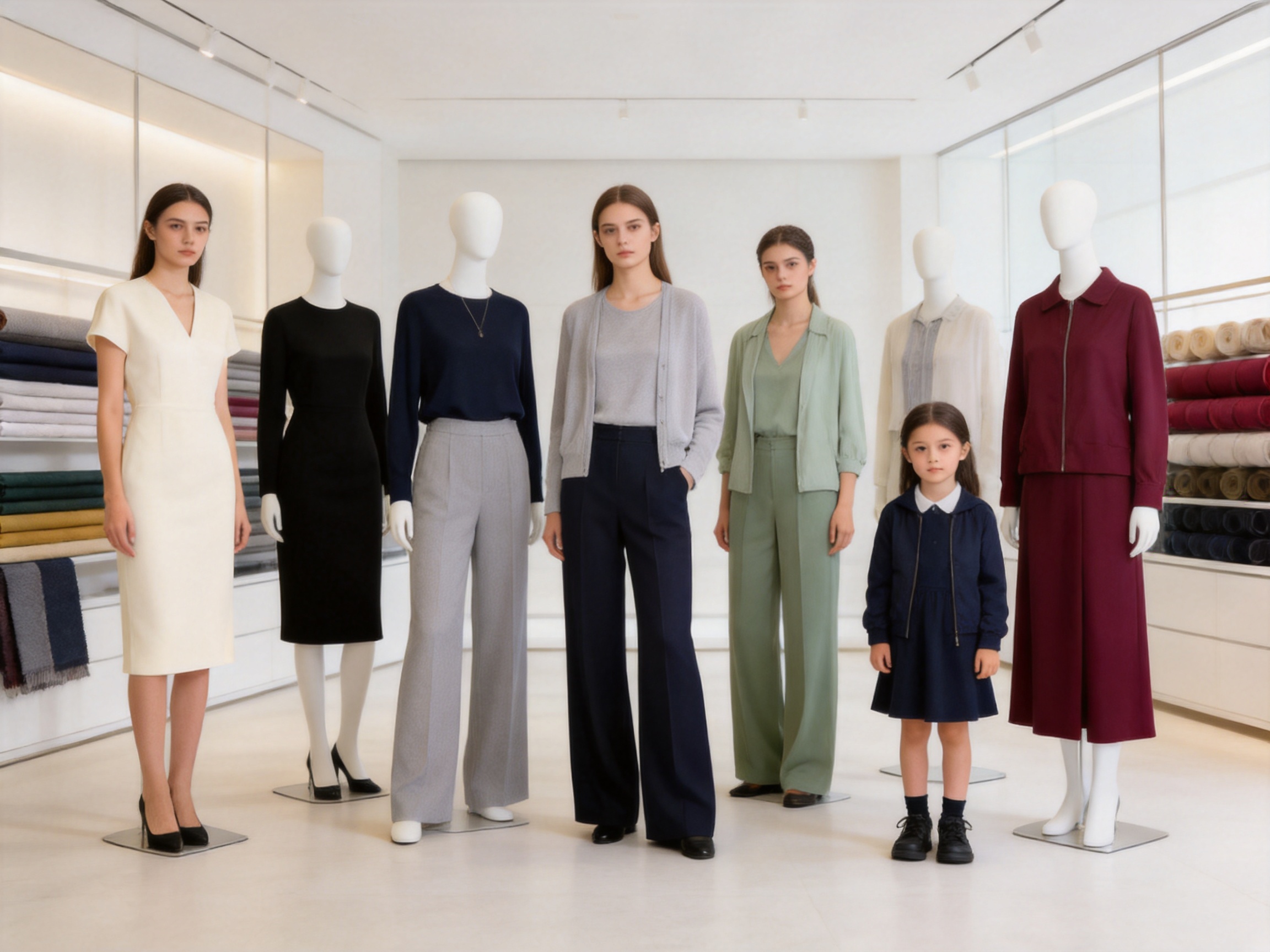
Guidance for Garment Designers and Manufacturers
Allow the Fabric to Relax
Knitted fabric may be held under tension during production, inspection, rolling, and transportation. Allowing it to relax before spreading and cutting can improve accuracy. The required relaxation time depends on the structure and finishing but should be established during the sampling stage.
Use Appropriate Cutting Methods
Cutting markers should account for fabric direction, pattern alignment, stretch, and potential distortion. Patterned or jacquard-effect Roman fabrics may require additional attention to matching. Excessive spreading tension can cause panels to change size after cutting.
Select Suitable Needles and Threads
Needle size and point should be matched to the fabric. A damaged or unsuitable needle may create holes, skipped stitches, or visible marks. Stretch-compatible thread and appropriate stitch settings can improve seam performance and preserve comfort.
Control Garment Pressing
Heat and pressure can affect cotton, rayon, nylon, polyester, and elastane differently. Excessive pressing may create shine, flatten the surface, distort the fabric, or reduce stretch recovery. Pressing tests should be conducted before production, especially for fabrics with a polished or textured finish.
Plan Care Instructions Carefully
Care labeling should reflect the actual fiber blend and tested performance. Washing, drying, ironing, and dry-cleaning instructions can influence shrinkage, color retention, surface appearance, and garment life. The final label should be based on verified testing rather than general assumptions.
Sustainability and Responsible Production Considerations
Textile sustainability depends on the entire product life cycle, including raw materials, manufacturing, dyeing, finishing, transportation, garment use, and end-of-life treatment. Cotton NR Roman fabric can support responsible product development when buyers and manufacturers select appropriate materials and control production impacts.
Longer garment life is one important consideration. A fabric that retains its shape, color, comfort, and appearance through repeated use may reduce the need for replacement. Durable and versatile garments can therefore support more responsible consumption patterns.
Efficient production also matters. Accurate knitting, controlled dyeing, reduced reprocessing, optimized cutting width, and proper inventory management can help reduce waste. Manufacturers may also improve resource efficiency through better chemical management, water control, energy monitoring, and equipment maintenance.
Buyers seeking sustainability claims should request relevant documentation and define the exact standard required for their market. Terms such as recycled content, organic fiber, responsible sourcing, chemical compliance, and wastewater management should be supported by appropriate records or certifications where applicable.
Commercial Benefits for Brands and Wholesalers
Cotton NR Roman fabric offers commercial flexibility because it can serve both essential and fashion-oriented product lines. Plain versions are suitable for core collections, uniforms, and repeat programs, while textured or patterned versions can support seasonal launches and higher visual differentiation.
The fabric’s balance of comfort and structure can also help brands target several consumer preferences at once. Customers who want soft clothing may appreciate the cotton and rayon hand feel, while those seeking a polished appearance may value the stable body and smooth surface.
For wholesalers, the product can be presented across multiple garment categories. A supplier may offer several weights, colors, and finishes to support different customer groups. This broad application range can increase the usefulness of the inventory and reduce dependence on one narrow market segment.
For private-label customers, custom development can create product distinction. A unique color, carefully selected fiber ratio, specialized finish, or custom pattern can make the finished garment less interchangeable with low-cost commodity products.
How to Select the Right Specification
The correct specification begins with the final garment. Buyers should identify whether the fabric will be used for a close-fitting dress, a relaxed top, a structured skirt, a cardigan, children’s clothing, or another product. They should then define the required weight, width, opacity, stretch, recovery, softness, drape, and color range.
It is also important to consider the target season. A lighter and more breathable construction may be better for warm-weather dresses and tops. A heavier or brushed construction may be appropriate for autumn and winter garments. Transitional products may require a medium weight that layers easily without becoming bulky.
Price objectives should be discussed together with performance objectives. Reducing the cost of a fabric may involve changes to fiber ratio, yarn quality, weight, finishing, or color program. However, any cost adjustment should be reviewed against the intended garment quality and consumer expectations.
Samples should be tested not only as loose fabric but also as a finished garment. Sewing, pressing, washing, fitting, and wear trials can reveal issues that are not visible during roll inspection. A fabric that performs well in laboratory testing may still require pattern or construction adjustments.
Q&A: Cotton NR Roman Fabric
What does NR mean in Cotton NR Roman fabric?
NR is a trade abbreviation that may refer to a nylon-rayon, nylon-viscose, or related blended fiber construction. Product naming can differ between suppliers. Buyers should request the exact fiber composition and technical specification before ordering.
Is Cotton NR Roman fabric woven or knitted?
It is a knitted fabric. Its looped construction provides flexibility and contributes to its comfortable hand. The Roman structure generally gives it more body and stability than a lightweight single jersey.
What garments can be made from this fabric?
Typical applications include dresses, skirts, tops, blouses, cardigans, lightweight jackets, trousers, children’s clothing, baby garments, and fashion accessories. The best application depends on the fabric weight, stretch, opacity, and finishing.
Is the fabric suitable for fitted clothing?
It can be suitable for fitted clothing because knitted construction provides flexibility. If a fitted garment requires strong recovery, the buyer should confirm whether elastane or another stretch-supporting component is included and should conduct recovery testing.
Does the fabric require lining?
Not always. A medium or heavy Roman fabric may provide sufficient coverage for some garments, while a lighter version or pale color may require lining. The decision should be based on opacity, garment design, desired drape, and end-use requirements.
Can the color be customized?
Yes, colors can generally be developed according to a buyer’s approved standard, subject to the fiber composition, dyeing method, minimum order quantity, and production capability. Laboratory samples should be approved before bulk dyeing.
Can the surface be customized?
Surface characteristics may be adjusted through knitting structure, yarn selection, and finishing. Options can include a smoother surface, softer hand, brushed effect, compact appearance, or patterned and jacquard-inspired texture.
Is Cotton NR Roman fabric easy to sew?
Its relatively stable knitted body can make it easier to handle than very thin or highly slippery knits. Nevertheless, sewing settings should be adjusted to the actual stretch and fiber composition. Testing with the intended machine, needle, thread, and stitch is recommended.
How should the fabric be tested before bulk production?
Important evaluations may include weight, width, stretch, recovery, shrinkage, color fastness, pilling, abrasion, seam performance, and visual inspection. Finished garment testing is also useful because it shows how the fabric behaves after cutting, sewing, pressing, and laundering.
Can it be used for children’s and baby clothing?
It may be used for these products when the exact fabric and finishing meet the relevant safety and compliance requirements. Buyers should pay close attention to softness, color fastness, chemical compliance, dimensional stability, and the safety of all garment components.
What information should be included in a purchase inquiry?
A purchase inquiry should include the desired composition, weight, width, color, stretch, finish, application, quantity, packing method, testing requirements, delivery destination, and any certification or compliance requirements. Clear information helps the supplier recommend a practical specification.
What makes an integrated supplier valuable?
An integrated supplier can coordinate fabric development, dyeing, finishing, inspection, and sales support within one production system. This may improve communication, shorten the response time for technical adjustments, and provide more consistent control from raw material to finished roll.
Why Choose a Professional Supplier for Cotton NR Roman Fabric
The quality of a knitted fabric is determined by the consistency of many small technical decisions. A professional supplier should be able to explain the composition, structure, finishing route, expected performance, testing method, production lead time, and packing standard. Buyers should look for clear answers rather than relying only on attractive samples.
Hangzhou Jinfeng Textile Co., Ltd. combines textile research and development, production, post-dyeing, finishing, and sales. The company works with blended fabrics and DTY polyester yarn and operates from Xiaoshan District, Hangzhou, Zhejiang Province. Its stated business principle emphasizes cooperation and mutual benefit, which is important for customers developing repeat textile programs.
For buyers, the practical value of such a supplier lies in technical communication and production coordination. A supplier should help transform a general request, such as “soft medium-weight Roman fabric,” into a measurable specification. This may include fiber content, fabric weight, finished width, stretch range, recovery target, shade standard, finishing method, and inspection criteria.
Reliable supply is also important. A fabric may look excellent in one sample but fail to remain consistent across multiple production lots. Stable yarn sourcing, controlled knitting, repeatable dyeing, documented finishing, and final inspection all contribute to dependable bulk quality.
Conclusion
Cotton NR Roman fabric is a versatile knitted textile that combines comfort, structure, flexibility, and visual refinement. Its cotton component can provide a breathable and familiar hand feel, while rayon, viscose, nylon, elastane, or other selected fibers can be used to adjust softness, drape, strength, recovery, and durability. The Roman-knit structure gives the fabric a more substantial body than many lightweight jerseys, making it suitable for polished apparel as well as casual clothing.
Its competitive advantage comes from balance. It can be softer and more comfortable than many woven fabrics, more stable and substantial than thin jersey, and more adaptable than a single-fiber construction. Through changes in composition, weight, knitting structure, color, and finishing, it can be developed for dresses, skirts, tops, cardigans, trousers, children’s clothing, baby garments, and fashion accessories.
Successful production depends on technical control at every stage. Yarn selection, knitting tension, pretreatment, dyeing, finishing, inspection, and packing must all be managed carefully. Buyers should confirm the exact meaning of NR, approve laboratory color standards, test stretch and recovery, evaluate shrinkage and fastness, and conduct garment trials before bulk production.
With experience in blended fabrics, post-dyeing, finishing, DTY polyester yarn, research and development, and export-oriented textile service, Hangzhou Jinfeng Textile Co., Ltd. is positioned to support customers seeking customized and commercially reliable fabric solutions. A well-defined specification and close cooperation between buyer and manufacturer can turn Cotton NR Roman fabric into a dependable foundation for modern apparel collections.
References
International Organization for Standardization. Textile Testing Principles for Knitted Fabrics.
American Society for Testing and Materials. Standard Methods for Textile Fiber, Fabric, Colorfastness, and Dimensional Stability Testing.
Textile Institute. Textile Terms and Definitions.
Textile Research Journal. Studies on Knitted Fabric Structure, Stretch Recovery, and Garment Performance.
Color Index International. General Principles of Dye Classification and Textile Coloration.
Industry technical documentation on cotton, rayon, viscose, nylon, polyester, elastane, and blended-fiber textile processing.
Manufacturer-provided product and company information for Cotton NR Roman fabric, blended fabrics, knitted fabrics, and drawn textured polyester yarn.
