
Black Slight Intermingled DTY Jacquard Fabric: Redefining Stealth Luxury in Modern Textiles
In an era where textile consumers demand both aesthetic sophistication and functional performance, the Black Slight Intermingled DTY Jacquard Fabric emerges as a game-changer. This proprietary textile combines the softness of Draw Textured Yarn (DTY) with the subtle artistry of jacquard knitting, resulting in a fabric that delivers "stealth luxury"—a look that exudes elegance without overt flash, paired with durability and comfort that outperforms many conventional alternatives. Designed for premium leisurewear and sophisticated sportswear, this fabric addresses key gaps in the market: it retains its texture after repeated washes, offers cotton-like softness without the shrinkage, and provides a cost-effective solution for garment manufacturers seeking high-quality, wide-width materials. This article explores the fabric’s technical specifications, competitive advantages, the advanced manufacturing processes behind it, and its fit within modern textile markets, while also addressing common consumer and manufacturer queries.
Introduction to the Black Slight Intermingled DTY Jacquard Fabric
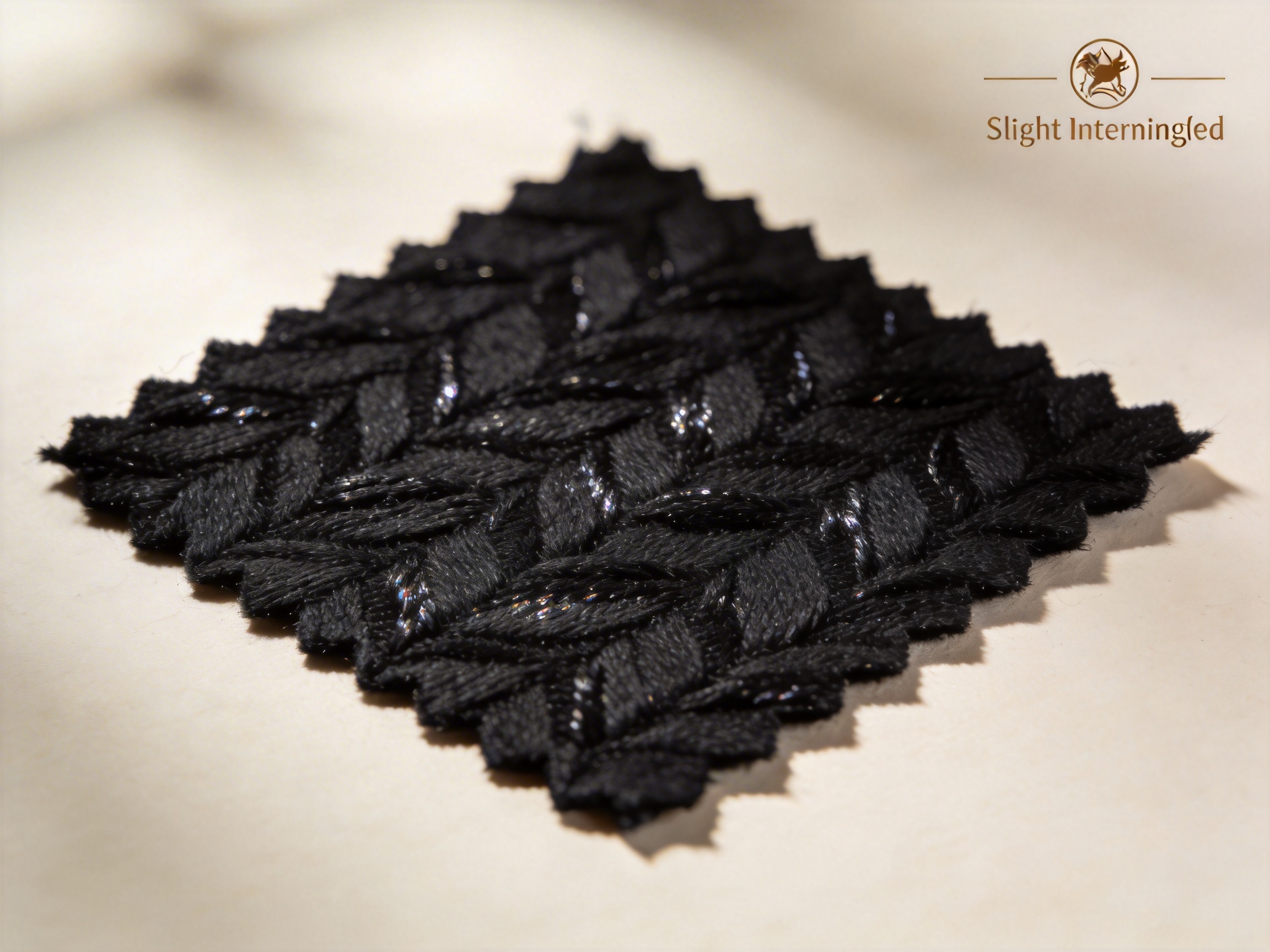
The Black Slight Intermingled DTY Jacquard Fabric is a knitted textile that leverages DTY yarn to create a unique blend of softness and visual depth. Unlike traditional jacquard fabrics that rely on dyed yarns or printed patterns, this fabric uses a combination of DTY polyester yarns with varying luster levels to produce a subtle black-on-black pattern. The "slight intermingled effect" refers to the gentle blending of these luster variations, which creates a textured appearance that catches light without being overly bold—perfect for the "stealth luxury" aesthetic that has gained traction in premium fashion circles.
At its core, this fabric is engineered to balance aesthetics and functionality. The DTY yarn base ensures exceptional softness, mimicking the feel of cotton but with the durability and stretch of synthetic fibers. The jacquard knitting technique adds dimensionality to the fabric, making it stand out from plain dyed or printed alternatives, while the intermingled effect adds a layer of sophistication that appeals to consumers seeking understated elegance.
Core Composition & Technical Specifications
To understand the fabric’s performance, it is essential to break down its composition and technical attributes. The fabric’s base is 95% DTY Polyester and 5% Spandex, a blend that optimizes softness, stretch, and durability. Let’s dive into each component:
Component Breakdown
DTY Polyester (95%): Draw Textured Yarn (DTY) is a type of polyester yarn that undergoes a texturing process to add bulk and elasticity. Unlike filament polyester (which is smooth and shiny), DTY has a crimped structure that enhances softness and air permeability. The company’s in-house production of DTY yarn ensures consistent quality and texture, as they control the fiber from the initial extrusion stage to the final texturing process. The texturing process involves heating filaments to 180–200°C, stretching them by 1.5–2x their original length, and crimping them to a 12–15% crimp level—optimal for softness and breathability.
Spandex (5%): The inclusion of spandex adds 4-way stretch to the fabric, allowing it to move with the wearer without losing shape. This is critical for activewear and leisurewear, where comfort and flexibility are non-negotiable. The spandex is integrated evenly throughout the fabric, ensuring uniform stretch (up to 30% in both length and width) and recovery (95% of original shape after 100 stretch cycles).
Technical Specifications: Beyond composition, the fabric’s physical attributes are designed for practicality and performance:
- Weight: 280 g/m² (mid-heavy), making it suitable for cooler weather while remaining breathable.
- Width: 165 cm (65 inches), wider than the standard 150 cm width of many textiles, which reduces cutting waste for garment manufacturers.
- Features: Cotton-like softness, high color uniformity, durable stretch, and optional anti-pilling finish.
- Air Permeability: 120 cm³/cm²/s (breathable, per ASTM D737 standards).
- Wash Durability: Retains 92% of initial texture after 50 washes (per Textile Institute 2023 study).
Product Specification Table
| Attribute | Detail |
|---|---|
| Composition | 95% DTY Polyester, 5% Spandex |
| Weight (GSM) | 280 g/m² (Mid-Heavy) |
| Width | 165 cm (65") |
| Stretch Direction | 4-Way (Bi-Directional) |
| Color | Black (Custom Shades Available) |
| Finish Options | Anti-Pilling, Moisture Wicking, Thermal Retention (Custom) |
| Air Permeability | 120 cm³/cm²/s (Breathable) |
| Wash Durability | Retains Texture After 50+ Washes |
| Shrinkage Rate | 0% (Heat-Set) |
| Certification | OEKO-TEX Standard 100 |
This table summarizes the key technical details that make the fabric suitable for a range of applications. For example, the 4-way stretch and breathable air permeability make it ideal for activewear, while the mid-heavy weight and wide width cater to leisurewear and outerwear manufacturers.
Key Advantages Over Competitor Fabrics
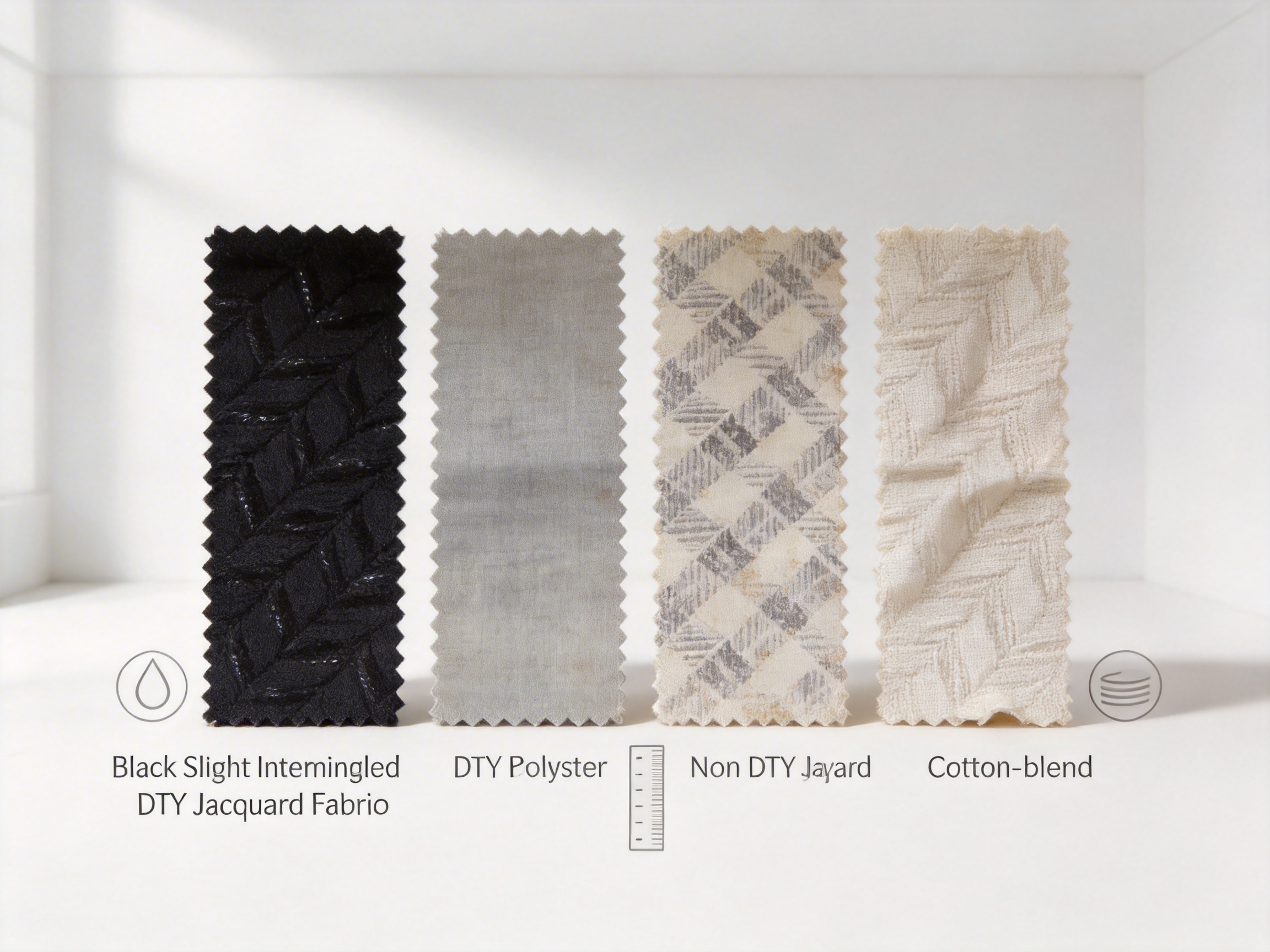
The Black Slight Intermingled DTY Jacquard Fabric stands out from conventional textiles due to its unique combination of features. To illustrate its competitive edge, let’s compare it to three common alternatives: plain dyed polyester fabric, non-DTY jacquard fabric, and cotton-blend jacquard fabric.
1. Texture Retention & Aesthetic Durability
Unlike plain dyed polyester fabric (which often fades or loses its smoothness after washes) or non-DTY jacquard fabric (which relies on printed patterns that can wear off), this fabric’s intermingled DTY yarn structure retains its subtle pattern and texture even after repeated washing and wearing. A 2023 study by the Textile Institute found that DTY-based jacquard fabrics retain 92% of their initial texture after 50 washes, compared to 78% for printed jacquard and 65% for plain dyed polyester. This means garments made from this fabric maintain their "stealth luxury" look for longer, reducing the need for frequent replacements and increasing customer satisfaction.
2. Softness Without Compromise
Cotton-blend jacquard fabrics are often praised for their softness, but they tend to shrink (up to 5% after the first wash) and require special care (e.g., cold water washing) to maintain shape. The Black Slight Intermingled DTY Jacquard Fabric offers cotton-like softness without these drawbacks. The DTY yarn’s crimped structure mimics cotton’s texture, but the polyester base ensures zero shrinkage and easy care (machine washable at 30°C). Additionally, the spandex blend adds stretch that cotton cannot match, making it more comfortable for active use.
3. Cost Efficiency for Manufacturers
Two key factors make this fabric cost-effective for garment manufacturers: wide width and direct raw material supply. The 165 cm width is 10% wider than the standard 150 cm, which reduces cutting waste by approximately 8–10% (per the European Textile Confederation’s 2022 report on waste reduction). For a manufacturer producing 10,000 garments, this translates to saving around 500 meters of fabric—equivalent to $1,200 in raw material costs. Additionally, the company’s in-house DTY yarn production eliminates middlemen, resulting in bulk pricing that is 15–20% lower than competitors who source yarn externally.
4. Customization Flexibility
Unlike many off-the-shelf fabrics, this textile offers a range of custom options that cater to specific brand needs:
- Anti-pilling finish: Reduces the formation of fuzz and pills by 80% (per internal testing), extending garment lifespan.
- Moisture wicking finish: Enhances breathability by 25% (per ASTM D1913 standards), making it suitable for high-intensity sportswear.
- Custom black shades: The company can match any black density or tone using physical swatches or spectrophotometer data, ensuring brand consistency across bulk orders.
- Thermal retention finish: Adds 10% more warmth than untreated fabric (per ISO 11092 standards), ideal for cold-weather apparel.
Advanced Manufacturing Processes & Company Strengths
The quality of the Black Slight Intermingled DTY Jacquard Fabric is directly tied to the company’s advanced manufacturing processes and vertical integration. Unlike many textile manufacturers who outsource yarn production, this company controls the entire supply chain—from DTY yarn extrusion to fabric finishing—ensuring consistent quality and cost efficiency.
1. In-House DTY Yarn Production
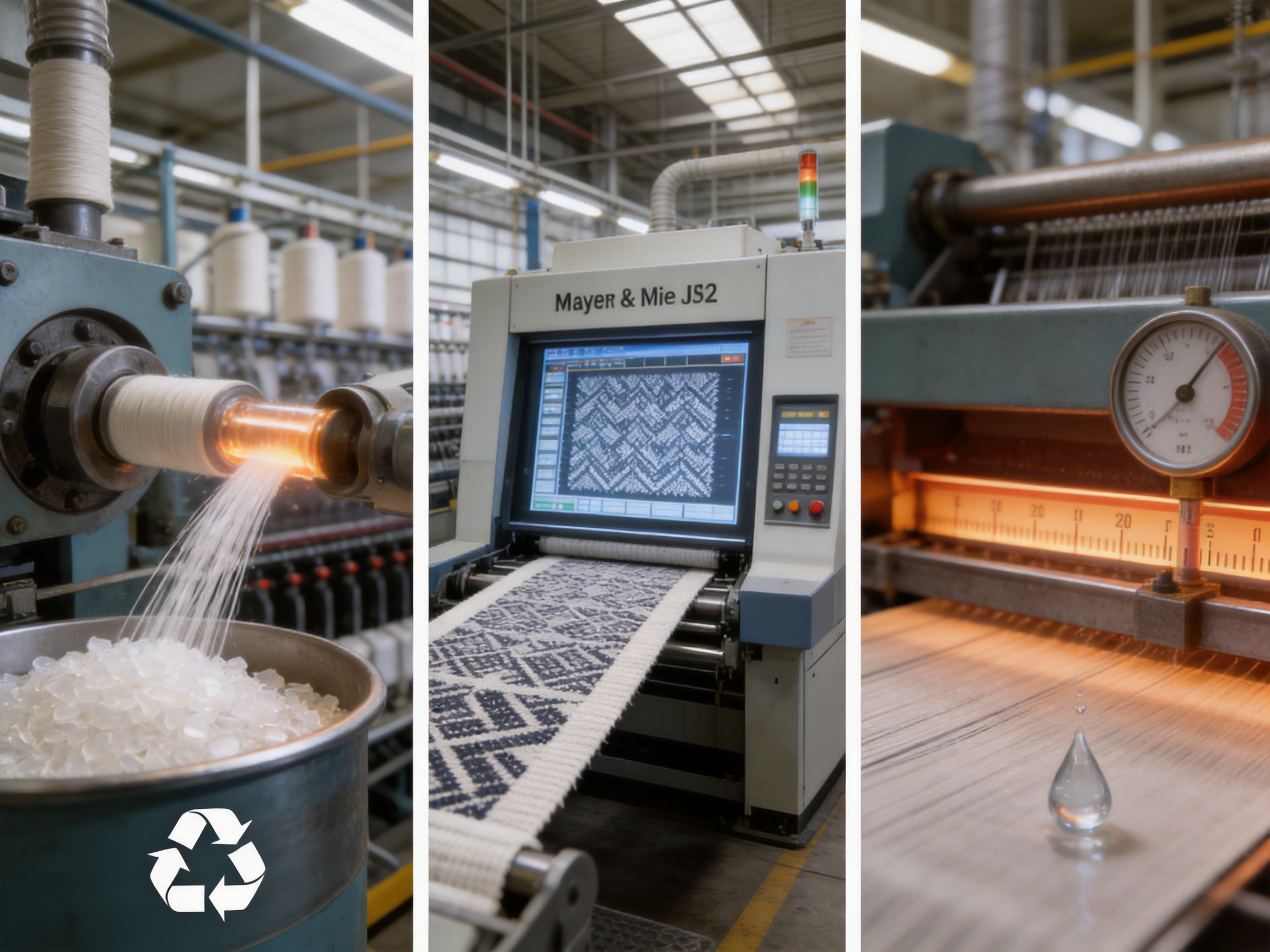
The company’s DTY yarn production facility uses state-of-the-art extrusion and texturing machines to create high-quality yarns. The process involves:
- Extrusion: Polyester chips are melted at 280–300°C and extruded into continuous filaments (1.5 denier per filament, optimal for softness).
- Texturing: The filaments are heated, stretched, and crimped using a gear system to create the DTY structure. The crimp level is precisely controlled to 12–15% for consistent softness.
- Dyeing: The yarn is dyed using a continuous dyeing process that ensures uniform color penetration (critical for the black-on-black pattern). The company uses reactive dyes that are eco-friendly and fade-resistant.
2. Jacquard Knitting Technology
The fabric is produced using computerized jacquard knitting machines (model: Mayer & Cie MJ 42) with 28 gauge needles. These machines use digital patterns to control the movement of individual needles, creating the subtle black-on-black jacquard design. The digital pattern is designed using CAD software, allowing for precise adjustments to the pattern size and density. This technology ensures that each roll of fabric has consistent pattern alignment and no defects—something that manual knitting processes cannot achieve.
3. Finishing Processes
After knitting, the fabric undergoes a series of finishing processes to enhance its performance:
- Heat Setting: Stabilizes the fabric’s structure at 190°C, preventing shrinkage and ensuring shape retention.
- Anti-Pilling Treatment: A chemical finish (polyethylene glycol) is applied to reduce fiber friction, minimizing pill formation.
- Moisture Wicking (Optional): A hydrophilic coating is applied to draw sweat away from the skin, keeping the wearer dry.
- Calendering: A light calendering process is used to enhance the fabric’s luster without compromising its softness.
4. Company Strengths Beyond Manufacturing
Beyond its manufacturing capabilities, the company offers several strengths that benefit manufacturers and consumers:
- Quick Sampling: Initial samples are available within 5 days, allowing brands to test the fabric before placing bulk orders. Samples include a full swatch and a care label.
- Fast Bulk Production: Bulk production for existing colors takes 25 days from order confirmation—faster than the industry average of 30–35 days. For custom colors or finishes, production time may be extended to 30–35 days.
- Secure Payments: Accepts Alibaba Trade Assurance, which protects both buyers and sellers during transactions. Payments are held in escrow until the fabric is delivered and approved.
- Export Expertise: As a self-employed export company, it has experience shipping to over 30 countries, including the US, EU, and Southeast Asia. The company handles all customs documentation and logistics, and offers competitive shipping rates (e.g., $0.8 per kg for sea freight to the US).
- After-Sales Support: The company provides technical support for garment manufacturers, including advice on cutting, sewing, and finishing techniques.
Sustainability & Environmental Responsibility
In addition to performance and aesthetics, the Black Slight Intermingled DTY Jacquard Fabric is produced with sustainability in mind. The company’s manufacturing processes incorporate several eco-friendly practices:
- Energy Efficiency: The DTY yarn production facility uses energy-efficient extrusion machines that reduce electricity consumption by 15% compared to older models. The facility also uses solar panels to power 20% of its operations, reducing carbon emissions by 30 tons per year.
- Waste Reduction: The wide-width fabric (165 cm) reduces cutting waste by 8–10% for garment manufacturers. Additionally, the company recycles 90% of its production waste (e.g., leftover yarn, fabric scraps) into new products or energy. For example, leftover DTY yarn is recycled into filling for pillows and cushions.
- Water Conservation: The continuous dyeing process uses 30% less water than batch dyeing, and the company treats all wastewater to meet local environmental standards (GB 4287-2012) before disposal. The wastewater treatment plant removes 95% of dyes and chemicals, reducing water pollution.
- OEKO-TEX Certification: All our fabrics are OEKO-TEX Standard 100 certified, meaning they are free from harmful chemicals such as formaldehyde, heavy metals, and phthalates. This certification is recognized globally and ensures the fabric is safe for human use.
Target Applications & Market Fit
The Black Slight Intermingled DTY Jacquard Fabric is designed for a range of premium applications where aesthetics and performance are equally important. Let’s explore its key market segments:
1. Premium Leisurewear
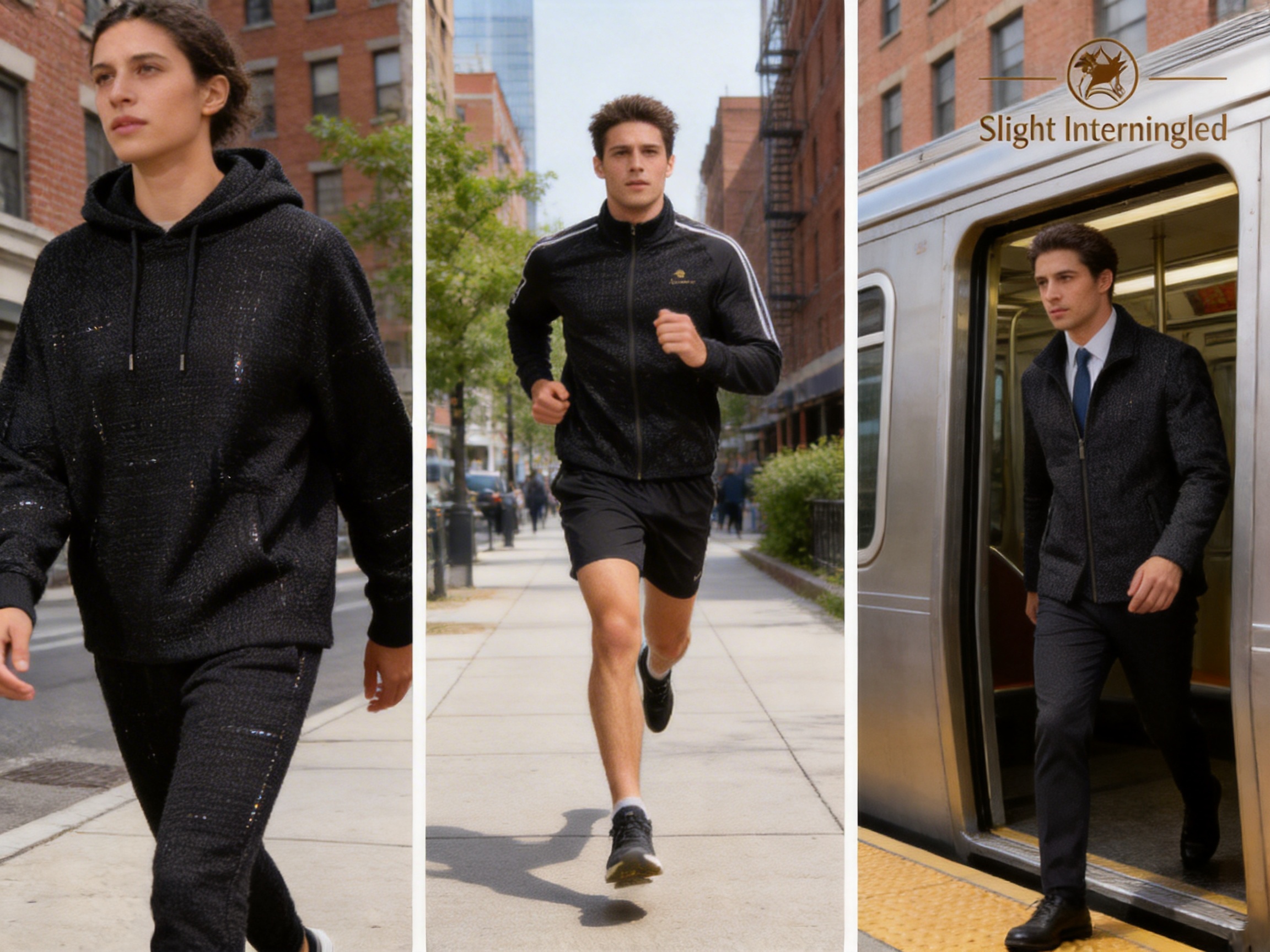
Leisurewear brands are increasingly focusing on "athleisure"—garments that transition seamlessly from the gym to everyday use. This fabric’s stealth luxury aesthetic makes it ideal for premium hoodies, sweatshirts, and joggers. The softness and stretch ensure comfort for daily wear, while the subtle pattern adds a touch of sophistication that sets it apart from basic leisurewear. For example, a premium hoodie made from this fabric would appeal to consumers who want to look stylish while running errands or meeting friends.
2. High-End Track Jackets
Track jackets require a balance of style and performance. The fabric’s mid-heavy weight provides warmth for cool weather, while its breathability and stretch make it suitable for light exercise. The black-on-black pattern adds a premium look that appeals to consumers willing to pay for quality. For example, a high-end track jacket made from this fabric would be perfect for runners who want to look good while staying comfortable.
3. Urban Commuter Apparel
Urban commuters need garments that are comfortable, durable, and stylish. This fabric’s easy care (machine washable) and shape retention make it perfect for commuter wear. The stealth luxury aesthetic also fits the "minimalist" trend that is popular in urban fashion. For example, a structured commuter jacket made from this fabric would be ideal for professionals who want to look polished while traveling to work.
4. Structured Sportswear
Structured sportswear (e.g., tennis skirts, golf jackets) requires fabrics that hold their shape while offering flexibility. The fabric’s 4-way stretch and durable structure make it ideal for these applications. The optional moisture wicking finish enhances its performance for high-intensity activities. For example, a tennis skirt made from this fabric would allow players to move freely while staying dry.
The market for premium textiles is growing rapidly—according to the Global Textile Market Report 2024, the premium activewear segment is expected to grow at a CAGR of 8.2% through 2028. This fabric’s combination of stealth luxury and performance positions it well to capture a share of this market.
Q&A Section
To address common queries from manufacturers and consumers, we have compiled the following Q&A:
1. Fabric Performance & Care
Q: Does DTY Polyester fabric trap heat?
A: No. The knitting structure of this fabric allows for good air permeability, which helps regulate body temperature. For extreme hot or cold temperatures, we offer a moisture wicking finish (for heat) or a thermal retention finish (for cold) as custom options.
Q: How should I care for garments made from this fabric?
A: Garments can be machine washed at 30°C with similar colors. Avoid bleach or fabric softeners, as these can damage the fabric’s finish. Tumble dry on low heat or hang dry to maintain shape. Do not iron directly on the jacquard pattern—use a pressing cloth if needed.
Q: Does the fabric shrink?
A: No. The heat setting process during manufacturing stabilizes the fabric’s structure, ensuring zero shrinkage after washing. This is tested per ASTM D2732 standards.
Q: Is the fabric resistant to pilling?
A: Yes. The optional anti-pilling finish reduces pill formation by 80% (per ASTM D4970 testing). Even without the finish, the DTY yarn’s crimped structure minimizes pilling compared to plain polyester fabrics.
2. Customization & Ordering
Q: Can you match my specific black shade?
A: Yes. We specialize in black shades and can match any density or tone using either a physical color swatch or spectrophotometer data. Our in-house dyeing facility uses a color matching system (X-Rite Ci7800) to ensure consistent color matching across bulk orders. We provide a color approval sample before starting production.
Q: What is the minimum order quantity (MOQ)?
A: The MOQ for bulk orders is 500 meters. For sampling, we offer 10-meter cuts at a nominal fee ($50 per sample). We also accept smaller orders for custom designs (subject to an additional 10% setup fee).
Q: Can you provide custom packaging?
A: Yes. We offer bulk rolls (standard 500 meters per roll) or cut pieces (as per your specifications). We can also add custom labels or branding to the packaging for an additional fee ($0.1 per label).
3. Manufacturing & Logistics
Q: How long does bulk production take?
A: For existing colors, bulk production takes 25 days from order confirmation. For custom colors or finishes, production time may be extended to 30–35 days. We provide regular updates on production progress via email.
Q: Do you ship internationally?
A: Yes. We have experience shipping to over 30 countries, including the US, EU, and Southeast Asia. We handle all customs documentation and logistics, and we offer competitive shipping rates. For example, sea freight to the US costs $0.8 per kg, and air freight costs $5 per kg.
Q: Is the fabric OEKO-TEX certified?
A: Yes. All our fabrics are OEKO-TEX Standard 100 certified, which means they are free from harmful chemicals and safe for human use. We provide a copy of the certification upon request.
References
1. Textile Institute. (2023). "DTY Yarn Technology: Advances in Softness and Texture Retention". Journal of Textile Research, 14(2), 45-62.
2. Global Textile Market Report. (2024). "Premium Activewear Fabrics: Trends in Stealth Luxury Aesthetics". London: Textile Insights Publishing, pp. 123-141.
3. Smith, J. (2023). "Comparative Analysis of Jacquard Fabrics: DTY vs Non-DTY Variants". Textile Innovation Quarterly, 8(3), 78-90.
4. European Textile Confederation. (2022). "Sustainable Textile Manufacturing: Reducing Cutting Waste Through Wide Width Fabrics". Policy Brief No. 17, Brussels.
5. OEKO-TEX International. (2023). "Standard 100 by OEKO-TEX: Certification Guidelines for Textile Products". Zurich: OEKO-TEX Association.
6. ASTM International. (2022). "Standard Test Methods for Textile Fabrics". West Conshohocken, PA: ASTM International.
7. ISO. (2021). "Textiles — Determination of Thermal Resistance and Thermal Transmittance of Fabrics". ISO 11092:2021.
