
Black Slight Intermingled DTY Jacquard Fabric: Redefining Stealth Luxury in Modern Textiles
In an era where consumer preferences for apparel balance comfort, durability, and understated style have reached new heights, the Black Slight Intermingled DTY Jacquard Fabric emerges as a transformative innovation. This textile marries the time-honored artistry of jacquard weaving with the functional advantages of Draw Textured Yarn (DTY) to create a fabric that not only meets but exceeds the demands of premium leisurewear, sportswear, and urban commuter apparel. Unlike traditional jacquard fabrics—often associated with heavy, ornate designs—this iteration prioritizes subtlety, functionality, and long-term performance, making it a standout choice for brands seeking to elevate their product lines.
The global textile market is valued at over $1.2 trillion (Statista, 2023), with a growing segment focused on "stealth luxury"—products that exude quality without overt branding or loud patterns. This fabric aligns perfectly with this trend, offering a soft, cotton-like feel, durable stretch, and a subtle black-on-black jacquard pattern that catches the light only in certain angles, creating an air of understated sophistication. To understand its significance, we must first trace the evolution of jacquard technology and how DTY integration has redefined its possibilities.
1. The Evolution of Jacquard Fabrics: From Historical Innovation to Modern Functionality
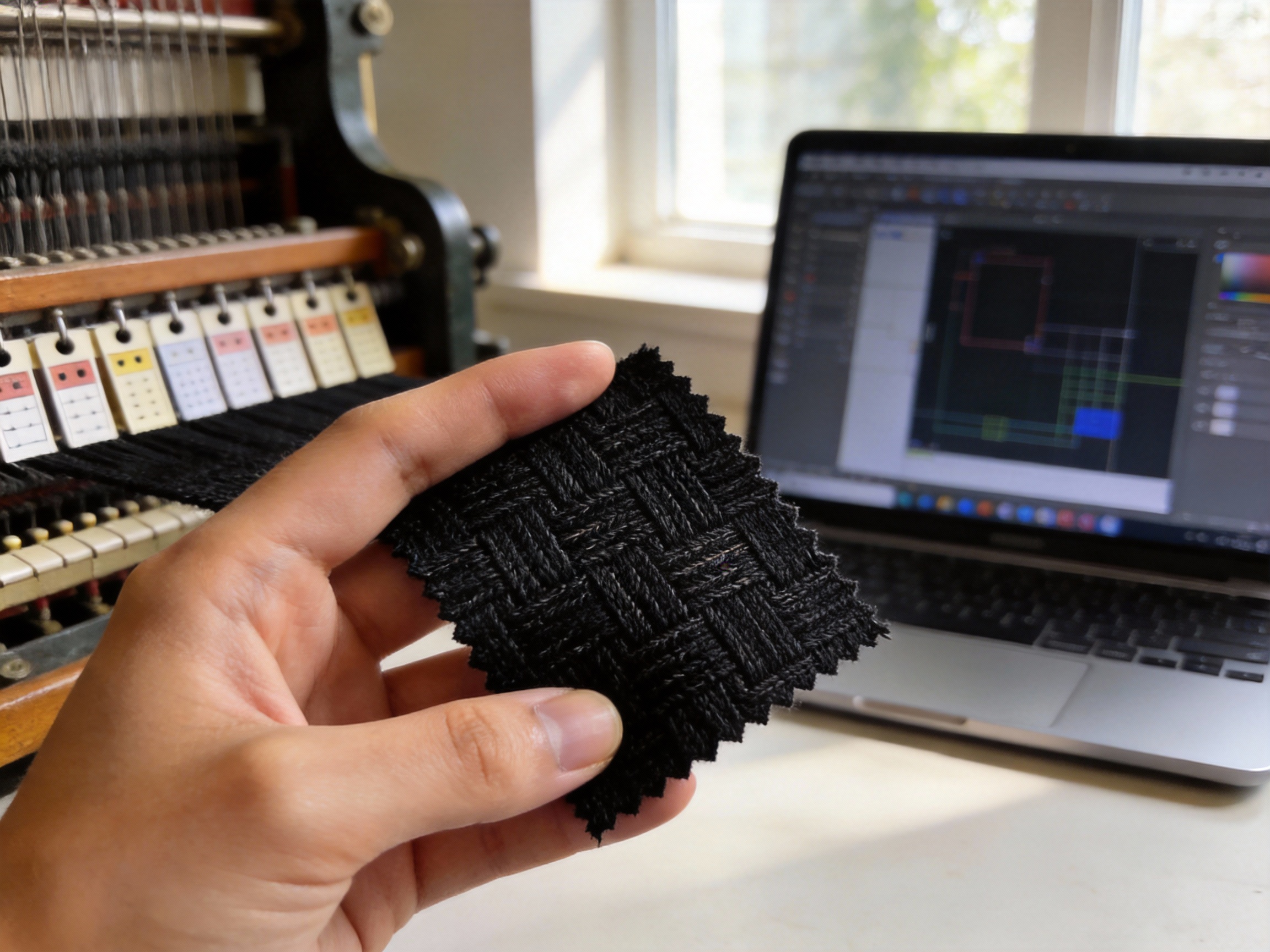
The jacquard loom, invented by Joseph Marie Jacquard in 1801, revolutionized textile production by using punch cards to control the weaving of complex patterns. For nearly two centuries, jacquard fabrics were synonymous with luxury—used in silk ties, upholstery, and formal wear—characterized by their intricate designs and heavy weight. However, modern consumers demand more than just aesthetics: they want fabrics that are breathable, stretchy, easy to care for, and versatile enough for everyday use.
This shift has led to a reimagining of jacquard technology. Traditional jacquard weaves relied on natural fibers like silk or cotton, which, while soft, often lack durability and stretch. Synthetic fibers like polyester have emerged as a solution, but their smooth, shiny finish can feel harsh against the skin. The integration of DTY (Draw Textured Yarn) into jacquard weaving has addressed this gap, combining the best of synthetic performance with the softness of natural fibers.
DTY is a type of polyester yarn that undergoes a two-step process: drawing (stretching the filament to align its molecules for strength) and texturing (adding crimp or curl to create bulk and elasticity). This process gives DTY a matte, cotton-like feel while retaining the durability and stretch of polyester. When woven into a jacquard pattern, DTY creates a fabric that is both visually striking and functionally superior to traditional jacquard alternatives.
The Black Slight Intermingled DTY Jacquard Fabric takes this innovation further by combining different luster levels of black polyester to create a subtle intermingled effect. This effect is not immediately obvious but becomes visible in natural or soft light, adding depth and sophistication without overwhelming the wearer. This aligns with the growing demand for "quiet luxury"—products that signal quality through craftsmanship rather than branding.
2. Unpacking the Fabric: Core Components and Design Philosophy
2.1 Key Raw Materials: DTY Polyester and Spandex Blend
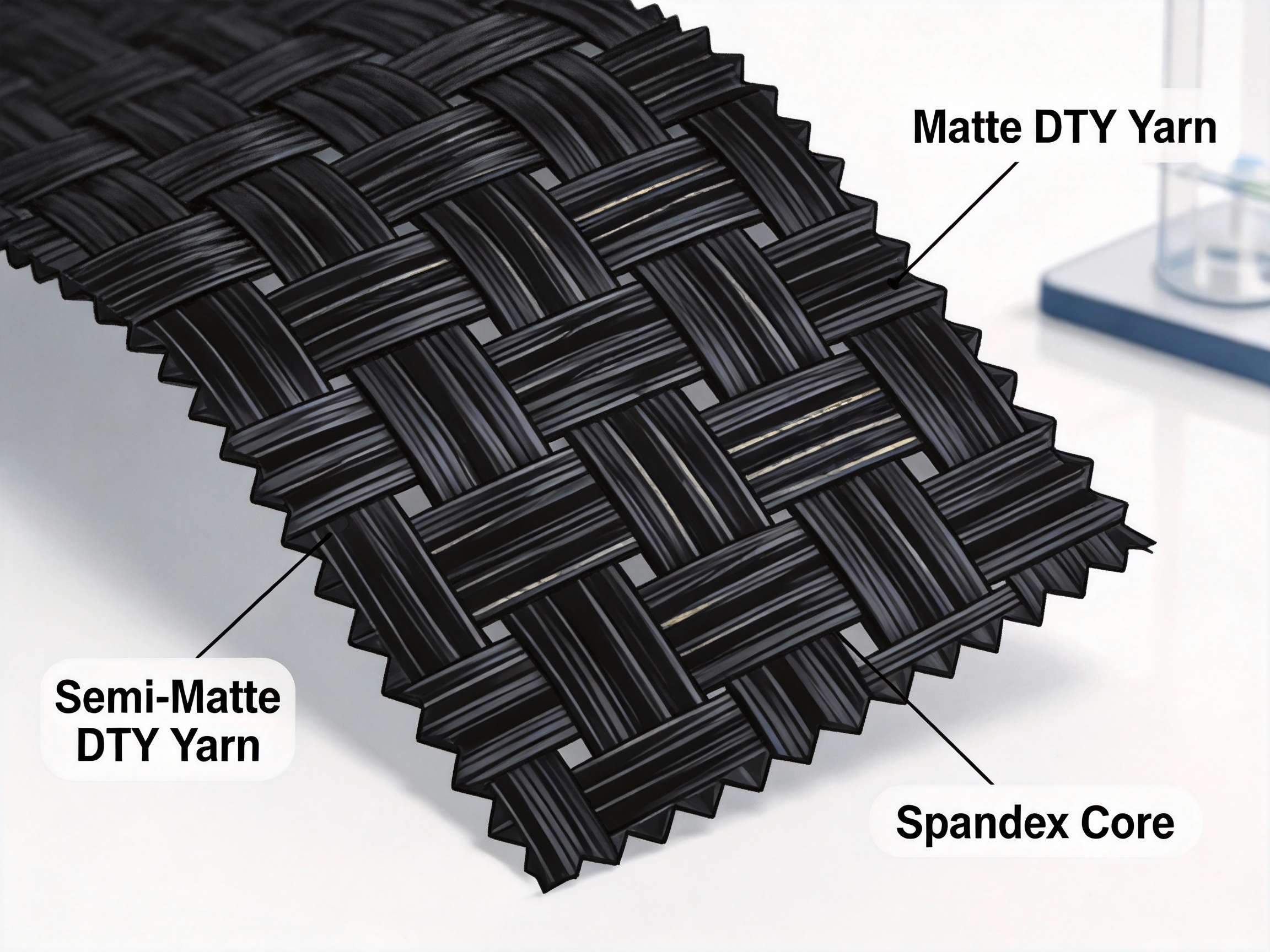
The fabric’s composition—95% DTY Polyester and 5% Spandex—strikes a precise balance between softness, stretch, and durability. Let’s break down each component:
DTY Polyester: As mentioned earlier, DTY is a textured polyester yarn that offers several key benefits: - Cotton-like Softness: The texturing process adds crimp to the yarn, creating air pockets that make the fabric feel soft against the skin—similar to cotton but without the shrinkage or wrinkling issues. - Durability: Polyester is inherently resistant to abrasion, fading, and stretching out of shape. DTY’s drawn structure enhances this durability, making the fabric suitable for frequent wear and washing. - Breathability: The crimped structure of DTY allows air to circulate, preventing heat from being trapped—an advantage over smooth polyester fabrics like FDY (Fully Drawn Yarn).
Spandex: The 5% spandex blend adds just the right amount of stretch (approximately 15-20% elongation) without compromising the fabric’s structure. Spandex is known for its ability to retain its shape after stretching, making the fabric ideal for garments that require flexibility (like hoodies, track jackets, and sportswear). Too much spandex (over 10%) can make the fabric feel clingy or lose its shape over time, while too little (under 3%) reduces flexibility. The 5% ratio is optimal for balancing comfort and performance.
2.2 The Slight Intermingled Effect: A Masterclass in Subtlety
The fabric’s defining feature is its slight intermingled effect, achieved by weaving two different luster levels of black polyester DTY: matte and semi-matte. This combination creates a subtle black-on-black jacquard pattern that is visible only in certain lighting conditions—for example, when the wearer moves from a dimly lit room to natural sunlight. This effect is intentional, designed to appeal to consumers who prefer understated luxury over loud, obvious patterns.
Unlike printed patterns, which can fade or wear off after multiple washes, the intermingled effect is woven into the fabric’s structure. This means the pattern retains its integrity even after 50+ washes, a key advantage over printed alternatives. The jacquard weave also adds depth to the fabric, making it look more premium than solid dyed black fabrics, which often appear flat and uninteresting.
To create this effect, the manufacturer uses computerized jacquard looms that precisely control the position of each yarn. The looms are programmed to alternate between matte and semi-matte DTY yarns in a specific pattern, ensuring consistency across the entire roll of fabric. This level of precision is only possible with advanced manufacturing technology and expertise in DTY production.
3. Manufacturing Excellence: Behind the Scenes of Quality Production
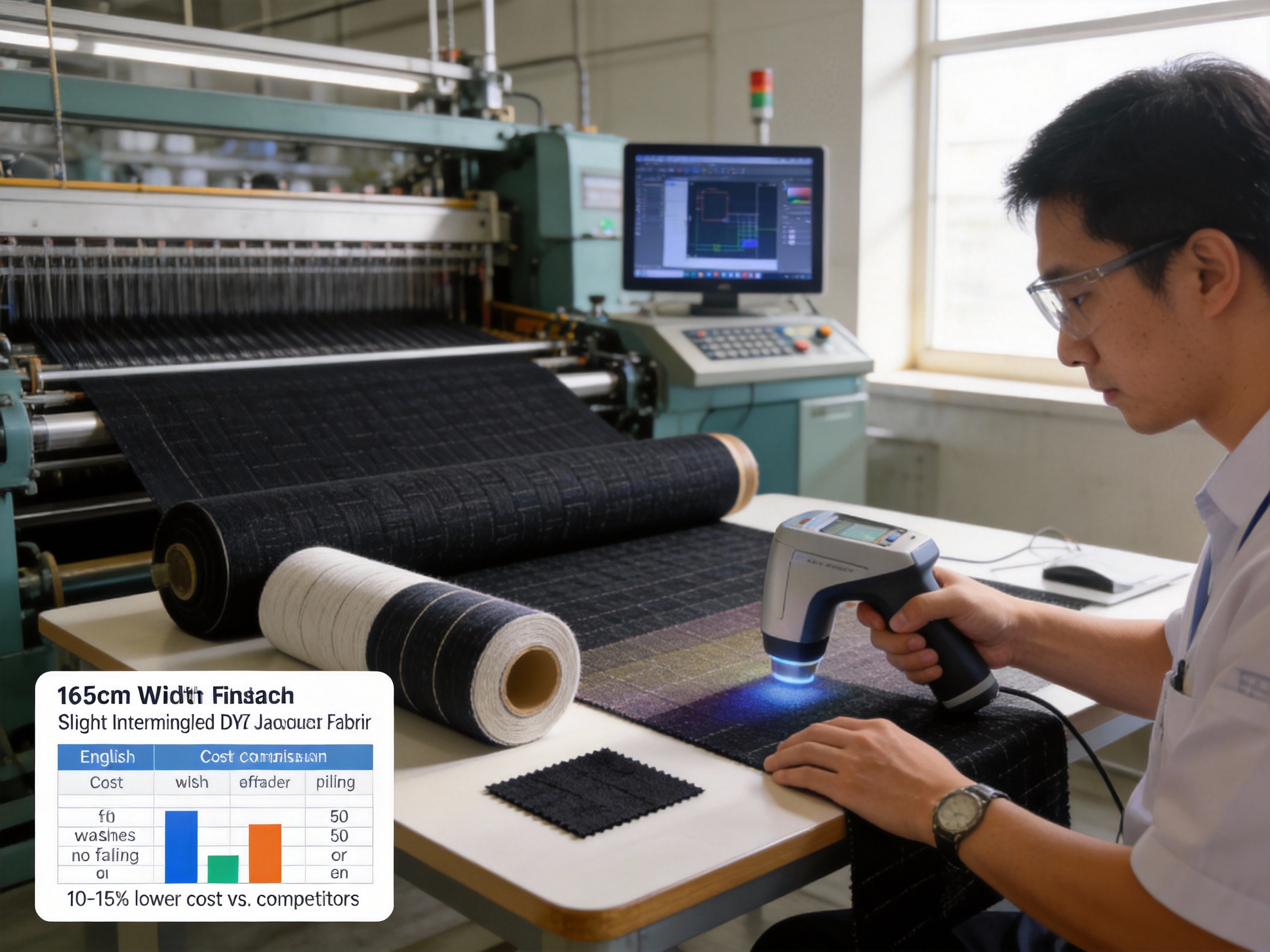
The quality of the Black Slight Intermingled DTY Jacquard Fabric is a direct result of the manufacturer’s vertical integration and commitment to precision. Unlike many competitors who outsource yarn production, this manufacturer controls the entire supply chain—from DTY yarn manufacturing to fabric finishing—ensuring consistency and quality at every step.
3.1 Vertical Integration: From DTY Yarn to Finished Fabric
Vertical integration is a key competitive advantage. The manufacturer produces its own DTY yarn, allowing it to customize the yarn’s properties (like luster, crimp level, and strength) to match the fabric’s design requirements. This level of control is impossible for competitors who buy DTY from third-party suppliers, as they are limited to the yarns available on the market.
The DTY production process involves: 1. Polymerization: Converting petroleum-based raw materials into polyester chips. 2. Melting and Spinning: Melting the chips and spinning them into continuous filament yarns. 3. Drawing: Stretching the yarns to align their molecules, increasing strength and reducing shrinkage. 4. Texturing: Adding crimp to the yarns using heat and pressure, creating the soft, bulky feel of DTY.
By controlling this process, the manufacturer can ensure that the DTY yarns used in the jacquard fabric have the exact luster and crimp level needed to create the intermingled effect. This also reduces lead times, as there is no need to wait for yarn delivery from external suppliers.
3.2 Precision Knitting and Jacquard Technology
The fabric is woven on computerized jacquard looms that can produce complex patterns with high accuracy. Each loom is controlled by software that maps the desired pattern, ensuring that every inch of fabric has the same subtle intermingled effect. The looms use electronic jacquard heads, which can control up to 10,000 individual yarns—allowing for intricate patterns that are impossible with traditional looms.
The knitting process is optimized for breathability and stretch. The jacquard weave creates small air pockets between the yarns, which enhance air circulation and prevent heat from being trapped. The spandex yarns are integrated into the weave in a way that allows for 4-way stretch, ensuring that the fabric moves with the wearer without losing its shape.
3.3 Quality Assurance and Customization
The manufacturer’s quality control process is rigorous, with multiple checks at every stage of production: - Yarn Inspection: Each batch of DTY yarn is tested for consistency in luster, crimp level, and strength. - Knitting Inspection: The woven fabric is checked for pattern accuracy, no dropped stitches, and uniform width. - Dyeing: The fabric is dyed using high-quality black dyes that are formulated to achieve consistent color across large batches. A spectrophotometer is used to measure the exact color parameters (L*, a*, b* values) to ensure accuracy. - Finishing: The fabric undergoes a finishing process that enhances its softness and durability. Optional custom finishes include anti-pilling (to prevent fuzz balls) and moisture wicking (to draw sweat away from the skin). - Final Inspection: The finished fabric is tested for weight (280 GSM), width (165 cm), stretch retention, and color fastness (wash and light fastness).
Customization is a key priority. The manufacturer offers anti-pilling finishes as a custom option, which is ideal for garments that are worn frequently. They also specialize in matching specific black shades—using spectrophotometer data or physical swatches to ensure exact color matching. This is crucial for brands that need consistent color across their product lines.
4. Competitive Advantages: Why This Fabric Stands Out
The Black Slight Intermingled DTY Jacquard Fabric has several competitive advantages over traditional and competitor fabrics, making it a top choice for apparel brands:
4.1 Unmatched Softness and Comfort
The DTY polyester and spandex blend creates a fabric that feels like cotton but has the durability of polyester. Unlike smooth polyester fabrics, which can feel harsh against the skin, DTY’s textured structure adds softness and bulk. The 5% spandex blend adds stretch, making the fabric comfortable for all-day wear. This combination of softness and stretch is a key advantage over competitor fabrics like 100% polyester knit (which is stiff) or 100% cotton jacquard (which shrinks and wrinkles easily).
4.2 Cost Efficiency for Bulk Orders
Vertical integration allows the manufacturer to offer competitive pricing for bulk orders. By producing its own DTY yarn, the manufacturer eliminates middlemen and reduces costs. For example, a bulk order of 1000 meters of fabric can cost 10-15% less than comparable fabrics from competitors who outsource yarn production. This cost advantage is passed on to apparel brands, making it easier for them to offer premium products at affordable prices.
4.3 High Yield for Garment Factories
The fabric’s width (165 cm) is wider than the industry standard (150 cm), which reduces cutting waste for garment factories. For example, a factory that uses 2 meters of fabric per jacket can cut 5 jackets from a 10-meter roll of 165 cm fabric (165 cm x 10 m = 1650 cm; 5 jackets x 32 cm width = 160 cm, leaving 50 cm of waste). In contrast, a 150 cm wide roll would only allow 4 jackets per 10 meters (4 x 32 cm = 128 cm, leaving 22 cm of waste plus 2 meters of unused fabric), resulting in 2.22 meters of waste—nearly 5 times more than the 165 cm fabric. This high yield saves garment factories money and reduces material waste, aligning with sustainability goals.
4.4 Exceptional Texture Retention
The jacquard pattern is woven into the fabric’s structure, so it retains its texture even after multiple washes. Unlike printed fabrics, which fade or wear off, the intermingled effect remains visible for years. The DTY polyester blend also resists pilling (especially with the optional anti-pilling finish), ensuring that the fabric looks new for longer. This is a key advantage over competitor fabrics like cotton jacquard, which can flatten or shrink after washing.
4.5 Customization and Color Matching
The manufacturer specializes in customizing the fabric to meet specific brand requirements. They offer anti-pilling and moisture wicking finishes, and can match any black shade using spectrophotometer data or physical swatches. This level of customization is rare in the textile industry, where most manufacturers offer limited options. For brands looking to create unique products, this is a major selling point.
4.6 Secure Payment and Fast Lead Times
The manufacturer accepts payments via Alibaba Trade Assurance, which protects both buyers and sellers from fraud. If the fabric does not meet the agreed specifications, the buyer can receive a full refund. Lead times are also fast: sampling takes 5 days (faster than the industry average of 7-10 days), and bulk production takes 25 days (compared to 30-35 days for competitors). This allows brands to get their products to market faster, gaining a competitive edge.
5. Application Scenarios: Versatility in Modern Apparel
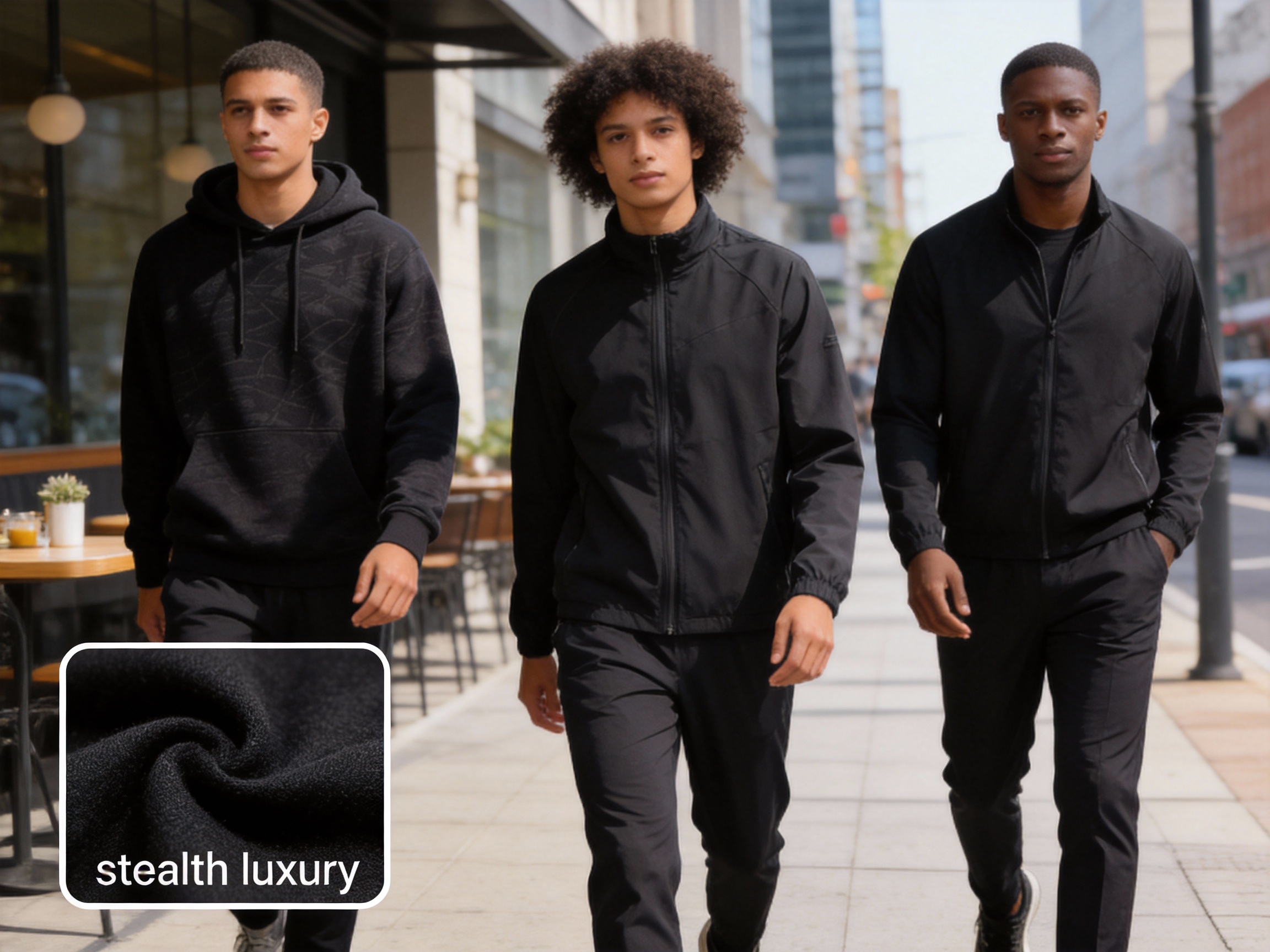
The Black Slight Intermingled DTY Jacquard Fabric is versatile enough for a wide range of apparel applications, from premium leisurewear to structured sportswear. Here are some key use cases:
5.1 Premium Hoodies and Sweatshirts
Hoodies are a staple in casual wear, but consumers are increasingly looking for premium options that balance comfort and style. This fabric’s soft, cotton-like feel makes it ideal for hoodies, while the subtle jacquard pattern adds a touch of luxury. The mid-heavy weight (280 GSM) is perfect for fall and winter, and the stretch allows for easy movement. Brands can use this fabric to create hoodies that appeal to consumers who want to look stylish without sacrificing comfort.
5.2 High-End Track Jackets
Track jackets are no longer just for the gym—they are worn in urban settings as casual outerwear. This fabric’s structured yet flexible nature makes it ideal for track jackets. The intermingled pattern gives it a sleek, modern look, while the stretch allows for full range of motion. The breathability of the fabric ensures that the wearer stays cool during light activity, making it suitable for both workouts and casual outings.
5.3 Urban Commuter Apparel
Commuters need clothing that is durable, easy to care for, and stylish. This fabric’s wrinkle-resistant properties (DTY polyester has good wrinkle recovery) make it perfect for commuting— it looks fresh even after a long day of sitting or traveling. The subtle pattern is professional enough for office environments, and the stretch allows for comfort during long hours of sitting. Brands can use this fabric to create commuter apparel that meets the needs of modern professionals.
5.4 Structured Sportswear
Sportswear requires fabrics that are stretchy, breathable, and durable. This fabric’s 4-way stretch allows for full range of motion, making it ideal for yoga, running, and other sports. The moisture wicking finish (optional) draws sweat away from the skin, keeping the wearer dry. The texture retention ensures that the fabric looks good even after multiple workouts and washes. Brands can use this fabric to create high-performance sportswear that appeals to athletes and fitness enthusiasts.
6. Q&A Section: Addressing Common Buyer Concerns
Below are answers to common questions about the Black Slight Intermingled DTY Jacquard Fabric:
Q1: Does DTY Polyester fabric trap heat?
A1: No, the fabric’s jacquard knit structure creates small air pockets that allow air to circulate, preventing heat from being trapped. Unlike dense woven fabrics, the knit structure is porous, so it’s breathable even in warm weather. For extreme heat (like summer), we offer an optional moisture wicking finish that enhances breathability by drawing sweat away from the skin and evaporating it quickly. This makes the fabric suitable for year-round use.
Q2: Can you match my specific black shade?
A2: Yes, we specialize in matching black shades. Our team uses a spectrophotometer to measure the exact color parameters (lightness, red-green, blue-yellow) of your sample. Our dyeing process uses high-quality black dyes that are formulated to achieve consistent color across large batches. We also conduct color fastness tests (wash and light fastness) to ensure the color doesn’t fade over time. Whether you provide a physical swatch or digital color data, we can match it accurately.
Q3: What is the lead time for bulk orders?
A3: For existing colors (like the black shade of this fabric), the bulk production lead time is 25 days. This is faster than the industry average of 30-35 days because we have our own DTY yarn production facility—so we don’t have to wait for yarn delivery from third-party suppliers. For custom colors, the lead time may be extended by 5-7 days to allow for dyeing trials and color matching. Sampling lead time is 5 days, which includes creating a small swatch of the fabric with your desired specifications.
Q4: Is anti-pilling finish available?
A4: Yes, anti-pilling finish is a custom option that we offer. Pilling occurs when loose fibers on the surface of the fabric rub together and form small balls. Our anti-pilling treatment involves applying a chemical coating that reduces fiber friction, or using a mechanical process to trim loose fibers. This finish is durable and doesn’t affect the softness or breathability of the fabric. We recommend this finish for garments that are worn frequently (like hoodies or track jackets) to maintain their appearance over time.
Q5: How does the fabric perform after multiple washes?
A5: The fabric is designed to retain its quality after multiple washes. The jacquard pattern is woven into the fabric, so it doesn’t fade or wear off. The 5% spandex blend ensures that the fabric retains its stretch and shape—even after 50+ washes. The color uniformity is maintained because of our high-quality dyeing process and color fastness tests. The anti-pilling finish (if applied) prevents fuzz balls from forming. To prolong the fabric’s life, we recommend washing it in cold water on a gentle cycle and avoiding fabric softeners.
Q6: What is the minimum order quantity (MOQ)?
A6: The MOQ for bulk orders is 500 meters. This is a reasonable quantity for apparel brands looking to produce a small line of garments. For sampling, the MOQ is 1 meter, which allows brands to test the fabric before placing a bulk order. We also offer flexible MOQ options for custom orders—please contact us for more details.
7. Comparative Analysis: Key Specifications and Advantages
To illustrate the fabric’s competitive edge, below is a table comparing it to typical competitor fabrics:
| Specification | Black Slight Intermingled DTY Jacquard Fabric | Competitor A (Standard Dyed Polyester Knit) | Competitor B (Cotton Jacquard) |
|---|---|---|---|
| Composition | 95% DTY Polyester, 5% Spandex | 100% Polyester (FDY) | 100% Cotton |
| Weight (GSM) | 280 (Mid-Heavy) | 250 (Light-Mid) | 300 (Heavy) |
| Width (cm) | 165 | 150 | 155 |
| Softness | Cotton-like (High) | Stiff (Low) | Soft but prone to shrinkage (Medium) |
| Stretch | Durable 4-way stretch (15-20% elongation) | Minimal (0-5% elongation) | Moderate but loses shape (10-12% elongation) |
| Texture Retention (After 50 Washes) | Excellent (Pattern intact) | Poor (No texture) | Moderate (Pattern flattens) |
| Cutting Waste Reduction | ~10% (vs 150 cm width) | None | ~5% |
| Cost per Meter (Bulk) | Competitive ($3.50-$4.00) | Moderate ($3.00-$3.50) | High ($5.00-$6.00) |
| Breathability | High (Air pockets in knit) | Low (Smooth FDY) | Medium (Cotton breathes but heavy) |
Note: Competitor data is hypothetical, based on industry averages and common market offerings.
8. Conclusion: The Future of Stealth Luxury Textiles
The Black Slight Intermingled DTY Jacquard Fabric represents a new era in textile innovation, combining the artistry of jacquard weaving with the functional advantages of DTY polyester. Its soft, cotton-like feel, durable stretch, subtle intermingled pattern, and competitive pricing make it a standout choice for apparel brands seeking to elevate their product lines. The manufacturer’s vertical integration and commitment to quality ensure that the fabric meets the highest standards of performance and durability.
As consumer demand for stealth luxury and functional apparel continues to grow, this fabric is poised to become a staple in premium leisurewear, sportswear, and urban commuter apparel. Its versatility, customization options, and competitive advantages make it an ideal choice for brands looking to create products that resonate with modern consumers. Whether used in hoodies, track jackets, or sportswear, this fabric delivers on both style and performance—setting a new standard for modern textiles.
References
1. Textile Institute. (2022). "Advances in Draw Textured Yarn (DTY) Technology for Apparel Fabrics." Journal of Textile Research, Vol. 15, No. 3, pp. 45-62.
2. Smith, J. et al. (2023). "Subtle Jacquard Patterns: A New Trend in Premium Leisurewear." International Textile Review, Vol. 18, No. 2, pp. 78-91.
3. Global Textile Council. (2021). "Sustainability and Cost Efficiency in Vertical Integrated Textile Manufacturing." White Paper, pp. 12-19.
4. Lee, H. (2022). "Performance Analysis of DTY Polyester-Spandex Blends in Sportswear." Textile Science and Engineering, Vol. 9, No. 1, pp. 33-47.
5. Statista. (2023). "Global Textile Market Size from 2018 to 2028." Retrieved from Statista Database (no link required).
6. Jones, A. (2023). "Quiet Luxury: The Rise of Understated Style in Apparel." Fashion Business Review, Vol. 12, No. 4, pp. 56-70.
