
Black Slight Intermingled DTY: Controlled Texture, Reliable Performance, and Versatile Fabric Applications
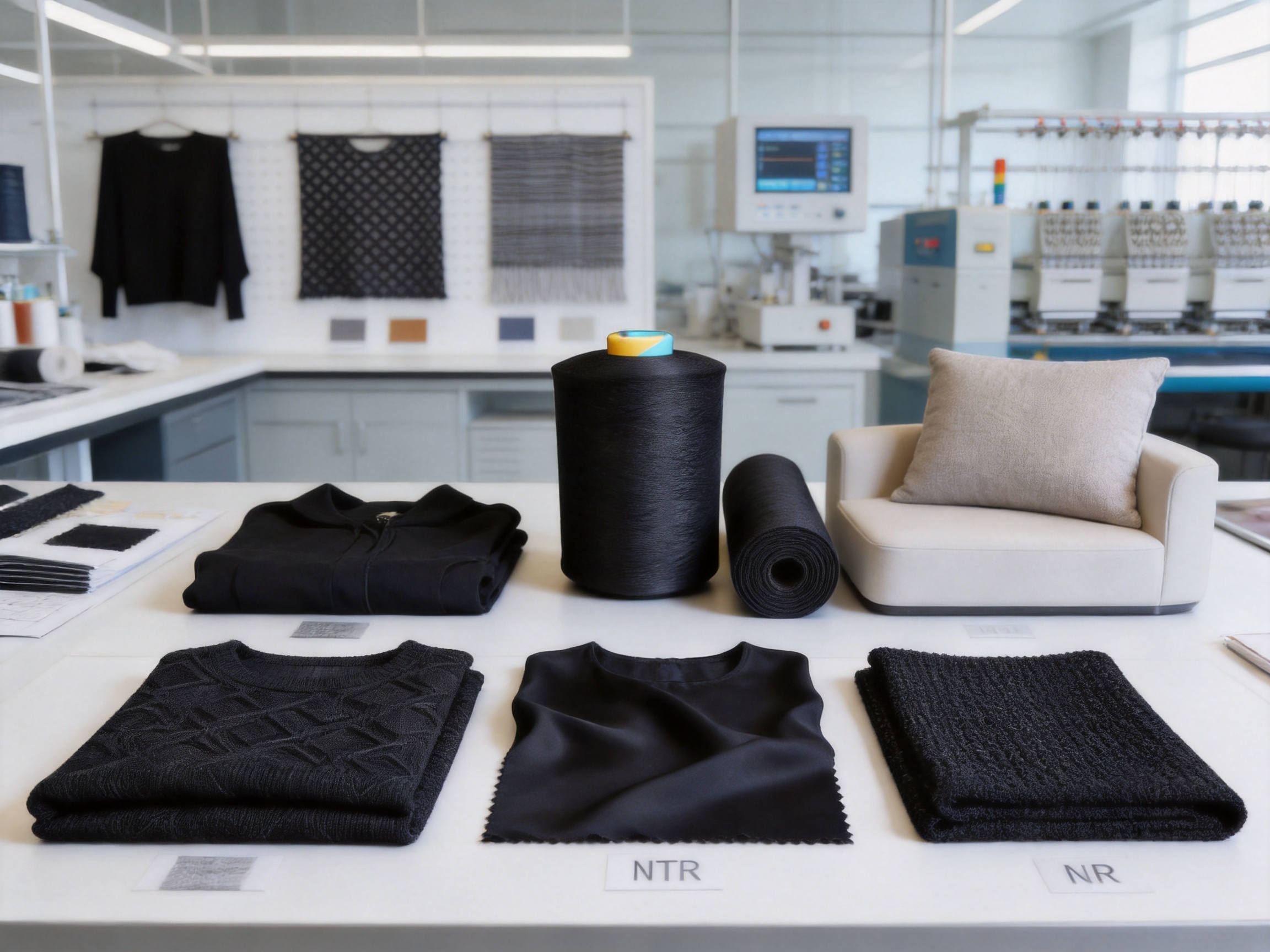
Black Slight Intermingled DTY is a polyester drawn textured yarn designed for manufacturers seeking a balanced combination of texture, appearance, processing stability, and application flexibility. As a slightly intermingled draw textured yarn, it combines the dimensional behavior of textured polyester filaments with a controlled level of filament entanglement. This structure helps the yarn maintain cohesion during subsequent textile processes while preserving the softness, bulk, and visual character expected from textured yarn.
Unlike a heavy-intermingled yarn, which creates a stronger and more visible network effect, a slight-intermingled yarn is intended for applications where a cleaner surface and a more moderate network are preferred. The fabric produced from this type of yarn can offer a smooth, refined appearance while retaining useful body and resilience. For manufacturers of knitted jacquard fabrics, polyester-rayon fabrics, NTR knitted fabrics, and NR knitted fabrics, the material provides an adaptable foundation for developing different weights, textures, and end uses.
The black color adds another practical advantage. Black yarn can be used directly in many fabric constructions, reducing the need for additional coloration in selected applications. It also supports the production of deep, consistent visual effects in knitted fabrics, patterned structures, and blended materials. When combined with suitable knitting parameters and finishing conditions, Black Slight Intermingled DTY can contribute to fabrics that are visually uniform, comfortable to wear, and appropriate for fashion, casualwear, uniforms, home textiles, and other textile products.
Hangzhou Jinfeng Textile Co., Ltd. produces and processes DTY polyester yarn and blended fabrics as part of an integrated textile operation. Its activities include production and processing, post-dyeing, finishing, research and development, and sales. This combination allows the company to understand both yarn requirements and downstream fabric performance. The resulting product approach is not limited to yarn supply alone; it takes into consideration the way yarn behaves during knitting, dyeing, finishing, inspection, and final conversion.
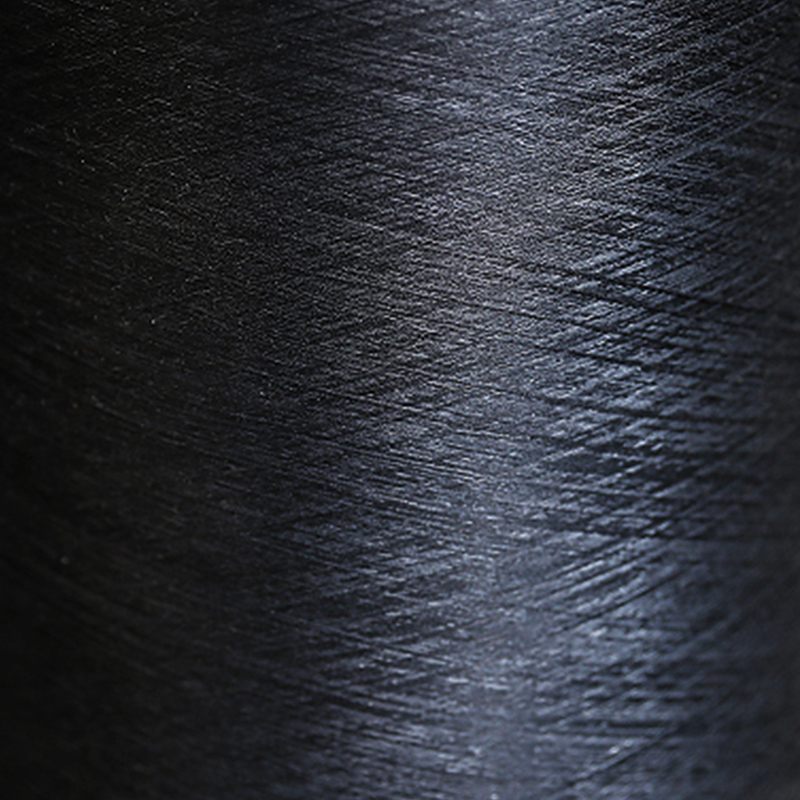
Black Slight Intermingled DTY
Understanding Black Slight Intermingled DTY
DTY stands for drawn textured yarn. It is a polyester filament yarn that has undergone drawing and texturing processes to modify the straight-filament structure. The resulting yarn generally has greater bulk, improved cover, a more flexible hand, and a different surface character from an untreated flat filament yarn. Texturing can also improve the yarn’s suitability for knitted and woven fabric production by giving it a more textile-like feel.
Intermingling is a separate but related yarn-control process. During intermingling, compressed air is used to create points of contact and cohesion among individual filaments. These points are often called network spots or intermingling points. They help reduce filament separation and may improve yarn handling during winding, knitting, weaving, and other operations.
In a slight-intermingled construction, the number of network points is controlled at a moderate level. The objective is not to create the strongest possible entanglement. Instead, the process seeks a practical balance between filament cohesion and surface cleanliness. This balance is particularly useful when the finished fabric needs a relatively smooth appearance, controlled texture, and consistent processing behavior.
The performance of the yarn is influenced by several production variables. Air pressure is one of the main controls because it affects how strongly the filaments are brought together. The speed of the texturing machine also has an effect, since a change in machine speed can alter the interaction between the yarn and the air-jet system. Consequently, network count and network distribution must be monitored rather than assumed from the yarn name alone.
A heavy mesh or heavy intermingling level can create more obvious network spots on a fabric surface. This may be desirable for certain technical or decorative effects, but it may not be appropriate when the target is a clean, understated surface. Slight intermingling is therefore valuable when the fabric designer wants cohesion without excessive visible network marks.
Role of the black color
Black polyester yarn is widely used because it offers strong visual depth and compatibility with many fabric designs. It can serve as a solid base color, a contrast element, or a component in blended and patterned constructions. In jacquard knitting, black yarn can emphasize pattern definition and support strong light-and-dark effects. In plain or ribbed structures, it can provide a stable foundation for garments and accessories.
Black also has practical value during product development. It can help minimize the visual impact of minor surface variations that might be more noticeable in pale shades. At the same time, black yarn still requires careful control of dye uniformity, winding quality, and contamination prevention. A consistent black appearance depends on stable production conditions and suitable quality inspection throughout the manufacturing process.
How the Yarn Structure Influences Fabric Performance
The behavior of Black Slight Intermingled DTY is best understood as the result of several structural characteristics working together. Polyester provides strength, dimensional stability, and resistance to many common forms of wear. Texturing changes the filament arrangement and gives the yarn greater bulk and flexibility. Intermingling adds cohesion among filaments. The combination can create a yarn that is easier to process than a completely loose filament bundle while remaining more visually refined than a heavily networked yarn.
Controlled filament cohesion
Filament cohesion is important during knitting and other high-speed textile operations. If individual filaments separate too readily, the yarn may become more difficult to guide and may create irregularities in the fabric. Moderate intermingling helps hold the filament bundle together. This can support smoother yarn delivery, more stable loop formation, and better control during fabric production.
At the same time, excessive intermingling can influence the surface appearance and hand of the final fabric. Strong network points may become visible as spots or irregular marks, especially when the fabric is relatively open, lightweight, or tightly inspected. The slight-intermingled construction addresses this issue by using a controlled network level suited to applications that value a cleaner look.
Texture and cover
Draw texturing gives polyester yarn a fuller and more flexible character than a flat filament yarn. This added texture can improve fabric cover and create a softer visual effect. In knitted fabrics, textured yarn may help the fabric develop a more comfortable hand and a less rigid drape. It can also contribute to a richer appearance in basic structures where the yarn itself is a major part of the surface design.
Cover is influenced by yarn size, knitting density, stitch construction, finishing, and other factors. Therefore, the yarn should be evaluated together with the intended fabric construction. Black Slight Intermingled DTY can be used in different development programs, but the final result depends on how the manufacturer selects machine settings and finishing conditions.
Dimensional behavior
Polyester is valued for its relatively stable behavior in many everyday textile applications. Textured yarn can provide useful stretch-like comfort and recovery characteristics within the limits of the particular yarn specification and fabric structure. This is one reason polyester DTY is frequently considered for apparel, sports-inspired clothing, lining materials, and knitted accessories.
Dimensional stability is not determined by the yarn alone. Heat setting, dyeing temperature, overfeed, fabric density, and finishing equipment all influence the final dimensions. An experienced supplier therefore considers the full processing route instead of presenting yarn as an isolated component. The integrated production and finishing capabilities of Hangzhou Jinfeng Textile Co., Ltd. support this broader approach.
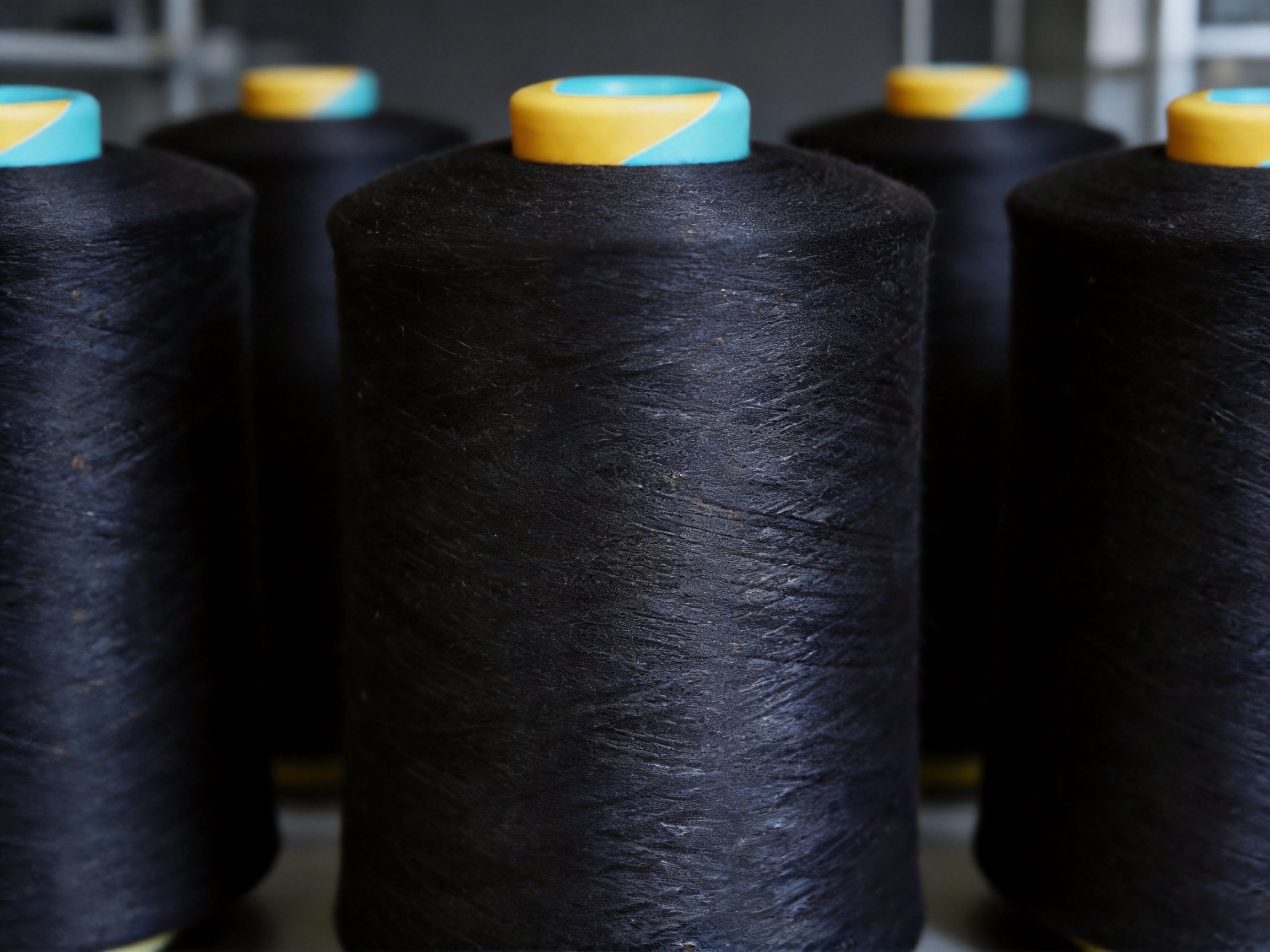
Advantages Compared with Heavily Intermingled Alternatives
Product selection should always be based on the intended fabric and processing route. Heavy-intermingled yarns remain useful where stronger filament cohesion or a more pronounced network effect is required. However, Black Slight Intermingled DTY offers several advantages when the project prioritizes a clean surface, moderate texture, and flexible styling.
Cleaner surface appearance
The moderate number of network points can help reduce the risk of prominent network spots on the finished fabric. This is especially relevant for dark knitted fabrics, smooth jersey constructions, fine jacquard designs, and products where the surface is viewed at close range. A cleaner surface can make patterns appear more controlled and can support a more refined final impression.
Balanced hand and texture
A heavy network can make a yarn feel more compact or create a more distinctive surface character. In contrast, slight intermingling is suitable when the fabric needs body and cohesion without an overly pronounced network effect. This balanced quality can help manufacturers develop fabrics that are soft enough for apparel while still maintaining an organized surface.
Greater design flexibility
Because the yarn does not impose an extremely strong network appearance, it can be used in a wider range of visual concepts. Designers may use it in plain fabrics, rib structures, jacquard patterns, blended constructions, and multi-yarn effects. The black shade further increases design flexibility by supporting monochrome products, contrast combinations, and layered color schemes.
More controllable process development
The number of network points can be adjusted through air pressure and influenced by machine speed. This makes the product suitable for process development in which manufacturers need to align yarn characteristics with fabric construction. Instead of relying on a fixed, heavy network effect, the producer can work toward a controlled intermingling level that better matches the intended application.
Reduced risk of over-characterization
Some fabrics require texture, but not an obvious technical yarn appearance. Slight-intermingled DTY can help avoid over-characterizing the surface. This is valuable for clothing and home-textile products that need to look polished and commercially versatile rather than visibly engineered.
| Performance consideration | Slight-intermingled DTY | Heavy-intermingled DTY | Potential application preference |
|---|---|---|---|
| Filament cohesion | Moderate and controlled | Strong and more pronounced | Choose according to machine speed and fabric structure |
| Network visibility | Generally more understated | More likely to show network spots | Clean surfaces often favor slight intermingling |
| Surface character | Balanced texture and smoothness | More distinctive network effect | Fashion and refined knitted fabrics may favor a moderate effect |
| Design flexibility | Suitable for plain, patterned, and blended fabrics | Useful where stronger texture or cohesion is desired | Selection depends on the final design objective |
| Process control | Network level can be managed through air pressure and machine speed | Generally configured for stronger intermingling | Controlled development favors adjustable settings |
Manufacturing Process and Technical Control
Reliable DTY production depends on controlled preparation, drawing, texturing, intermingling, winding, inspection, and packaging. Each stage can affect the yarn’s performance. A supplier with experience in both yarn and fabric production is better positioned to understand how these stages influence downstream knitting and finishing.
Raw material preparation
Polyester filament feedstock must be prepared carefully before texturing. Consistent feed quality supports stable drawing and helps reduce variation during the texturing process. The preparation stage may include material verification, package inspection, and handling procedures designed to protect the filament from contamination, abrasion, and unnecessary tension.
Although the precise equipment configuration may differ by production line, the general objective is the same: provide a stable and uniform input to the drawing and texturing units. Variation in the feed material can lead to differences in bulk, elongation, cohesion, or surface appearance. Careful preparation therefore forms the basis for consistent finished yarn.
Drawing and texturing
Drawing modifies the molecular and physical arrangement of the polyester filament, while texturing changes the filament geometry and yarn bulk. The relationship between temperature, speed, tension, and mechanical settings influences the resulting yarn. Stable control is necessary to achieve repeatable texture and processing behavior.
For a product intended to be slightly intermingled, the texturing stage must be coordinated with the air-jet intermingling stage. If the yarn enters the intermingling unit with inconsistent tension or uneven texture, the network formation may become less uniform. Coordinating these stages helps create a more stable yarn package for customers.
Air-pressure control
Air pressure is a key factor in network formation. Increasing or decreasing the pressure can change the intensity and frequency of filament entanglement. The correct setting depends on the target yarn, the desired network level, and the requirements of the final fabric.
For Black Slight Intermingled DTY, the aim is controlled cohesion rather than maximum entanglement. This requires attention to air supply stability, nozzle condition, yarn path, and operating parameters. Even small changes in the air-jet system may affect the number and distribution of network points, so process monitoring is important.
Machine-speed management
The speed of the texturing machine also affects the final intermingling result. A change in speed alters the residence time and interaction between the moving yarn and the air-jet system. It may also affect tension, heat exposure, and the uniformity of the textured structure.
Machine speed should therefore be considered together with air pressure rather than adjusted independently. An appropriate relationship between the two variables helps maintain the intended slight network character. This approach is especially important when production is scaled, when a new package size is introduced, or when the yarn is being adapted to a different fabric application.
Winding and package formation
After texturing and intermingling, the yarn is wound into packages suitable for storage and customer processing. Package formation affects unwinding performance. A package that is too hard, too soft, unevenly built, or inconsistently wound may create tension variation during knitting.
Uniform winding helps the customer achieve more stable yarn delivery. It also reduces unnecessary interruptions and supports efficient use of the knitting machine. For this reason, package appearance and unwinding behavior should be treated as part of product quality rather than as purely cosmetic concerns.
Inspection and quality management
Inspection may include checking appearance, package condition, yarn consistency, color uniformity, network characteristics, and other customer-defined requirements. The exact testing program depends on the product specification and intended use. A practical quality system compares production results with internal standards and customer expectations.
Because the yarn is black, visual inspection should consider shade consistency, contamination, and surface uniformity. The supplier should also pay attention to the relationship between the yarn and the fabric. A yarn that appears acceptable on the package may still need to be evaluated in a knitted sample to confirm that the network level and texture produce the desired fabric effect.
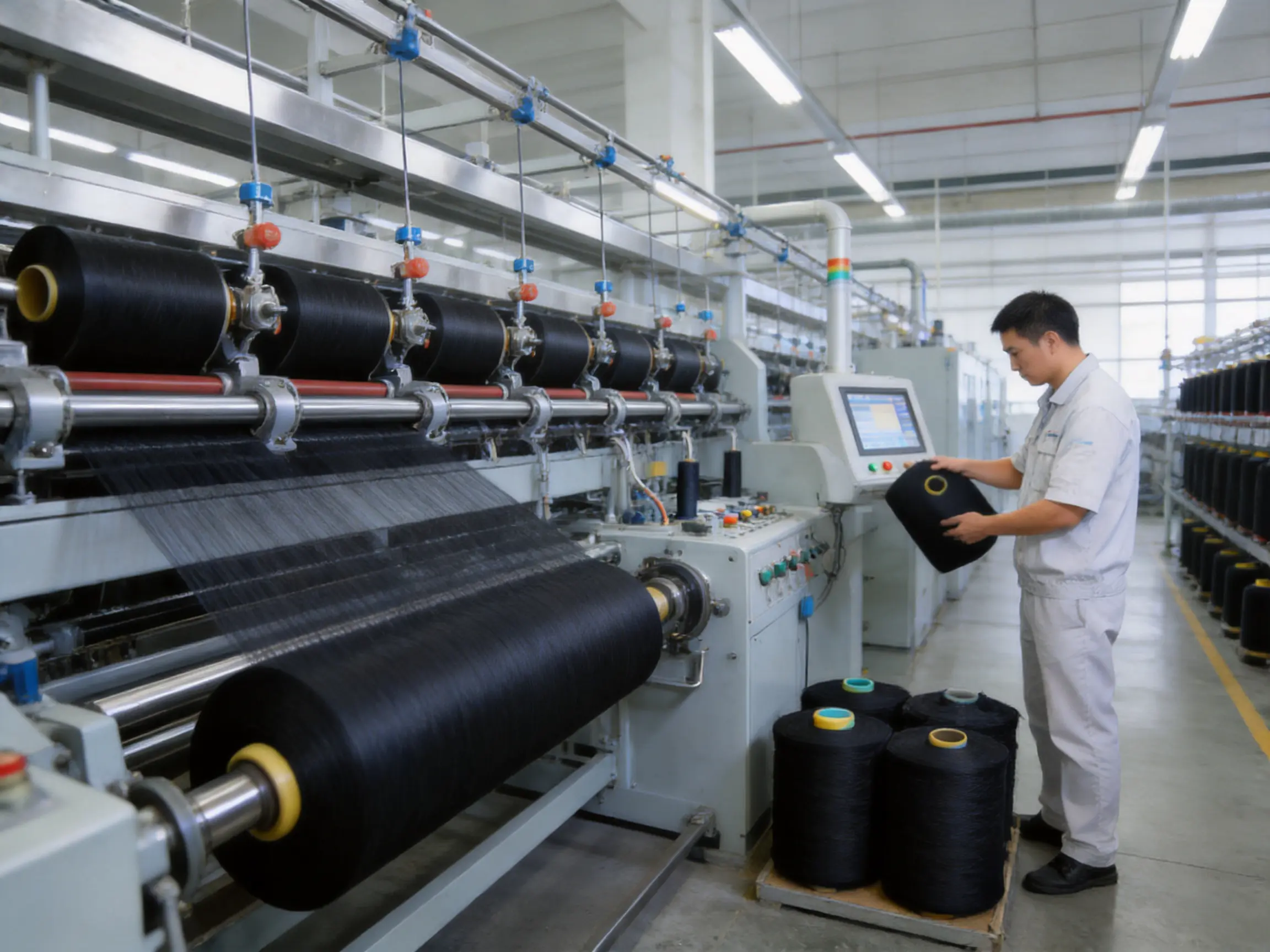
Integrated Manufacturing Strengths
Hangzhou Jinfeng Textile Co., Ltd. is located in Jingjiang Street Industrial Park, Xiaoshan District, Hangzhou City, Zhejiang Province. The company covers approximately 32.6 acres and has a plant area of approximately 18,000 square meters. Its operations include the production, processing, post-dyeing, finishing, and sale of blended fabrics such as polyester and spandex, as well as the production, processing, and sale of DTY polyester yarn.
This integrated structure is important because yarn performance is closely connected to fabric processing. A supplier that also develops and finishes fabric can evaluate yarn from a downstream perspective. It can consider how the yarn performs in knitted jacquard fabric, polyester-rayon fabric, NTR knitted fabric, NR knitted fabric, and other constructions. Such experience can support more meaningful product recommendations and faster problem analysis.
Connection between yarn and fabric development
Many textile problems do not originate from a single material. A surface irregularity may be related to yarn tension, machine gauge, stitch density, dyeing, heat setting, or finishing. Similarly, a difference in hand may result from the interaction of yarn texture and fabric construction. An integrated manufacturer can investigate these relationships more directly than a supplier focused on only one stage of production.
For buyers, this can simplify communication. Instead of describing a problem only in terms of yarn appearance, the buyer can discuss the target fabric, machine conditions, and finishing route. The supplier can then consider the entire application and help determine whether a slight-intermingled, heavier-intermingled, or differently textured yarn is appropriate.
Post-dyeing and finishing experience
Post-dyeing and finishing affect the final appearance and hand of textile products. Polyester fabrics may require carefully selected temperature, time, tension, and finishing conditions to achieve the intended dimensional and visual results. Blended fabrics add further complexity because different fibers may respond differently to heat, dyes, and finishing agents.
Experience with post-dyeing and finishing gives the manufacturer a practical understanding of how yarn choices influence fabric results. For Black Slight Intermingled DTY, this may include evaluating how the yarn’s network level appears after knitting, dyeing, washing, drying, and finishing. Such evaluation helps ensure that the product is not judged only in its raw yarn form.
Research and development orientation
The company describes itself as an export-oriented, self-operated enterprise integrating research and development, production, and sales. This structure supports product improvement based on customer requirements. In textile manufacturing, research and development may involve adjusting yarn characteristics, reviewing fabric constructions, improving process stability, or developing blended material solutions.
An R&D-oriented supplier can be valuable when a buyer is moving from a sample to regular production. Sample development often reveals requirements that are not obvious at the beginning, such as a need for a cleaner surface, a different network level, improved package unwinding, or greater compatibility with a particular knitting machine. Continuous communication between development and production can help convert those requirements into repeatable manufacturing conditions.
Applications in Knitted and Blended Fabrics
Black Slight Intermingled DTY can be considered for a broad range of textile products. The appropriate application depends on yarn count, fabric construction, machine gauge, density, finishing method, and customer performance requirements. The following applications reflect the material categories associated with the product and the company’s textile capabilities.
Knitted jacquard fabric
Knitted jacquard fabrics depend on controlled yarn placement and structural variation to create patterns. Black DTY can serve as a primary color or as a contrasting element in geometric, floral, abstract, and tonal designs. The textured nature of the yarn can add depth to the pattern, while the slight intermingling helps maintain a relatively clean surface.
In a jacquard structure, the relationship between yarn texture and pattern definition is important. Excessive network visibility may distract from the design, particularly in small-scale motifs. A moderate intermingling level can support the visual clarity of the pattern while still giving the fabric a fuller appearance.
Polyester-rayon fabric
Polyester-rayon blends are commonly developed to combine the durability and dimensional behavior of polyester with the soft, draping, and natural-feel qualities associated with rayon. Black Slight Intermingled DTY can function as the polyester component in suitable blended fabric constructions, subject to the requirements of the specific blend and finishing route.
The blend ratio, yarn selection, knitting method, dyeing system, and finishing process must be coordinated. Polyester and rayon may respond differently during processing, so trial production is recommended before large-scale manufacturing. The company’s experience with blended fabrics can support this type of development work.
NTR knitted fabric
NTR knitted fabric can be developed in different structures and weights depending on the intended market. Polyester DTY is useful when the fabric requires a combination of texture, cover, durability, and practical care characteristics. A black yarn can support stable color concepts and can be combined with other shades or yarn types to achieve visual variation.
The final suitability should be assessed through fabric trials. Important factors include pilling behavior, dimensional change, surface appearance, color consistency, hand, and resistance to repeated use. The slight-intermingled structure may be particularly useful when a smooth but not flat appearance is desired.
NR knitted fabric
NR knitted fabrics may incorporate different fiber combinations and fabric structures. Polyester DTY can provide a supportive filament component in products where strength, easy care, and visual consistency are important. When combined with suitable fibers, it may help create fabrics for apparel, accessories, or other textile goods.
Because the abbreviation NR may represent different construction concepts in different supply chains, buyers should confirm the exact fiber composition, fabric structure, and performance requirements before ordering. Yarn selection should be based on the complete technical specification rather than the fabric name alone.
Apparel and fashion materials
Black textured polyester yarn is suitable for many apparel concepts, including tops, dresses, skirts, sports-inspired garments, casualwear, and fashion accessories. Its usefulness comes from the combination of strong visual depth, textured surface potential, and compatibility with modern knitting processes.
For garments, the fabric must be evaluated for comfort, drape, air permeability, recovery, pilling, color fastness, and care performance. A yarn may be technically suitable but require a different knitting density or finishing route to achieve the best garment result. Close coordination between yarn supplier, fabric mill, and garment manufacturer is therefore recommended.
Home textiles and decorative products
Depending on the fabric construction and specification, black DTY may also be used in selected home-textile products, decorative panels, cushion covers, lightweight furnishings, and other applications where texture and color depth are important. The final product must meet relevant requirements for abrasion, cleaning, dimensional stability, and color fastness.
Why Process Parameters Matter to Buyers
Buyers often compare yarns by name, color, and general category. However, two yarns described as similar DTY products may behave differently because their texturing conditions, intermingling level, package construction, and quality standards are different. Understanding process parameters helps buyers select material more effectively.
Network count per meter
The number of network points per meter provides an indication of intermingling intensity. It should not be considered in isolation, because network distribution and fabric construction also influence the final appearance. A yarn with a moderate average network count may still produce a different result if the network is unevenly distributed.
For customers requiring a specific network range, the expected value and testing method should be agreed before production. This is especially important when yarn is used in lightweight or open fabrics where network spots can be more visible.
Air pressure
Air pressure affects the formation of network points. Stable pressure supports repeatability, while fluctuations may contribute to variation between packages or production runs. Buyers should discuss the desired intermingling level and application with the supplier so that air-pressure settings can be aligned with the fabric target.
Texturing-machine speed
Machine speed changes the interaction time between yarn and equipment. It may influence texture, tension, and intermingling. When a product is transferred from sample production to mass production, process conditions should be reviewed to ensure that the same yarn characteristics are maintained.
Fabric-level validation
The most reliable way to judge a yarn is to knit or weave a representative sample and evaluate it after the intended finishing process. Fabric-level validation reveals information that cannot always be identified from a yarn package, including visible network spots, surface uniformity, hand, drape, and pattern definition.
| Evaluation stage | Recommended focus | Reason for evaluation |
|---|---|---|
| Yarn package inspection | Package build, labeling, winding appearance, contamination | Confirms basic handling and presentation quality |
| Yarn testing | Network characteristics, consistency, color, and agreed physical properties | Checks conformity with the technical specification |
| Knitting trial | Yarn delivery, machine behavior, loop formation, and fabric appearance | Shows how the yarn performs during conversion |
| Wet processing | Shade, dimensional change, hand, and surface development | Confirms behavior after dyeing and finishing |
| Final fabric inspection | Pattern clarity, surface uniformity, pilling, color fastness, and end-use suitability | Determines whether the product meets commercial requirements |
Quality and Supply Advantages
A competitive DTY supplier must provide more than a nominal yarn category. Customers also need dependable communication, production organization, process knowledge, and the ability to respond to technical requirements. The strengths of Hangzhou Jinfeng Textile Co., Ltd. are connected with its combined manufacturing and commercial structure.
Experience across the textile chain
The company works with both DTY polyester yarn and blended fabrics. This gives it exposure to the practical demands of yarn production and fabric conversion. Such experience can help identify whether a customer’s objective is best addressed by changing the yarn, adjusting the knitting process, modifying the blend, or revising the finishing conditions.
Support for export customers
As a self-operated export company, the business is organized to serve customers in domestic and international markets. Export supply requires attention to product documentation, order communication, packaging, delivery coordination, and consistency between repeat shipments. These commercial details are important because textile production schedules depend on reliable material availability.
Flexible product development
Not every buyer needs exactly the same yarn behavior. Some require an understated network, while others need greater cohesion. Some focus on a deep black shade, while others need a yarn for blending or pattern development. A manufacturer with production and R&D capabilities can discuss these differences and help define a more suitable product requirement.
Long-term cooperation approach
The company emphasizes cooperation and mutual benefit as part of its business philosophy. In practice, long-term cooperation in textiles depends on repeatable quality, transparent communication, timely feedback, and willingness to improve. These qualities are especially important when a buyer is developing a new fabric or moving from one supplier to another.
Recommended Purchasing and Development Procedure
Customers considering Black Slight Intermingled DTY should begin with a clear application brief. The brief should identify the target fabric type, knitting or weaving equipment, intended color effect, desired hand, performance requirements, and finishing route. This information allows the supplier to evaluate whether slight intermingling is appropriate.
Step one: define the end use
Identify whether the yarn will be used for apparel, home textiles, accessories, decorative products, or another application. The end use determines the importance of softness, abrasion resistance, color fastness, recovery, pilling, and dimensional stability.
Step two: confirm the fabric construction
Provide the planned fabric structure, machine gauge, stitch density, yarn combination, and approximate fabric weight where available. A yarn suitable for a compact jersey may not produce the same result in an open jacquard structure. Construction information is essential for meaningful selection.
Step three: agree on the yarn specification
Confirm the required color, yarn size, intermingling level, package format, and quality standards. If the customer has a reference sample, it should be supplied for comparison. The network requirement should be described using an agreed measurement method whenever possible.
Step four: conduct a sample trial
A sample trial should evaluate both machine performance and fabric appearance. The trial should include the intended knitting or weaving conditions, followed by the planned dyeing and finishing process. This approach creates a realistic basis for approval.
Step five: approve a production standard
Once the sample is accepted, the buyer and supplier should document the key characteristics. These may include approved color, yarn appearance, network range, package condition, fabric reference, and inspection criteria. A clear standard improves consistency during repeat orders.
Step six: review repeat production
After the first production shipment, the buyer should provide feedback on machine behavior, fabric quality, and final product performance. This information can be used to refine future orders and strengthen the working relationship.
Careful Considerations and Limitations
Black Slight Intermingled DTY is a versatile material, but it is not automatically suitable for every fabric or end use. Product performance depends on the full manufacturing system. Customers should avoid evaluating the yarn solely by color or general category.
For applications requiring high stretch, buyers should verify whether the yarn structure and fabric construction provide the required extension and recovery. Polyester DTY may contribute flexibility and comfort, but it should not be confused with a dedicated elastomeric yarn. If significant stretch is needed, a suitable spandex or elastane component may be required.
For high-abrasion or technical applications, buyers should conduct application-specific testing. Abrasion resistance, seam performance, pilling, color fastness, and dimensional stability can vary with the fabric construction and finishing route. Laboratory or pilot-scale evaluation is advisable before commercial approval.
For blended fabrics, compatibility between fibers must be reviewed. Different fibers may require different dyeing temperatures, chemicals, and finishing conditions. The final result should be assessed for shade uniformity, shrinkage, hand, and long-term appearance.
For dark-colored fabrics, contamination control is particularly important. Light fibers, oil marks, foreign particles, and package irregularities may be visible against a black surface. Good housekeeping, careful material handling, and suitable inspection procedures help protect the final appearance.
Q&A
What does DTY mean?
DTY means drawn textured yarn. It is generally a polyester filament yarn that has been drawn and textured to create greater bulk, flexibility, and textile-like surface characteristics than a flat filament yarn.
What does slight intermingling mean?
Slight intermingling means that the individual filaments are joined at a controlled, moderate number of network points. The yarn gains cohesion for processing while retaining a relatively clean and understated surface effect.
How is the network level controlled?
The number of networks per meter is mainly controlled through air pressure and is also influenced by the speed of the texturing machine. Equipment condition, yarn tension, and process stability can also affect the result.
Why might a buyer choose slight intermingling instead of heavy intermingling?
Slight intermingling may be preferred when the fabric requires moderate cohesion, a smoother appearance, and reduced visibility of network spots. Heavy intermingling can be suitable when stronger cohesion or a more pronounced network effect is required.
Can Black Slight Intermingled DTY be used in jacquard fabrics?
Yes. It can be considered for knitted jacquard fabrics where a black base or contrast yarn is required. A sample trial should be conducted to confirm pattern clarity, surface appearance, and finishing performance.
Can it be used in polyester-rayon blends?
It can be used as a polyester component in suitable polyester-rayon constructions. The blend ratio, knitting method, dyeing system, and finishing route should be evaluated together because polyester and rayon may respond differently during processing.
Does black yarn eliminate the need for dyeing?
Not necessarily. A pre-colored or black yarn may reduce or change the need for additional coloration in some constructions, but the complete fabric process depends on the fiber combination, shade requirement, pattern, and finishing system. Buyers should confirm the color process with the supplier.
What should be checked before placing a bulk order?
Buyers should confirm the yarn specification, package format, color consistency, intermingling requirement, machine compatibility, and applicable inspection standards. A knitted or woven sample processed under realistic production conditions is strongly recommended before bulk approval.
What makes an integrated supplier valuable?
An integrated supplier can consider both yarn production and downstream fabric processing. This can make it easier to troubleshoot issues involving knitting, dyeing, finishing, surface appearance, hand, and dimensional behavior.
Where is Hangzhou Jinfeng Textile Co., Ltd. located?
The company is located in Jingjiang Street Industrial Park, Xiaoshan District, Hangzhou City, Zhejiang Province. Its operations include DTY polyester yarn and blended fabric production, processing, finishing, research and development, and sales.
Conclusion
Black Slight Intermingled DTY offers a practical balance between filament cohesion and surface refinement. Its drawn textured structure provides a fuller, more flexible yarn character, while controlled intermingling helps support processing stability without creating an unnecessarily heavy network effect. The black color adds visual depth and makes the yarn suitable for solid, contrast, and patterned fabric concepts.
Compared with heavily intermingled alternatives, the product may be a better choice when the target is a cleaner surface, moderate texture, and broad design flexibility. Its performance is influenced by air pressure, texturing-machine speed, yarn tension, package formation, fabric construction, dyeing, and finishing. For this reason, the best results come from evaluating the yarn as part of the complete textile process.
Hangzhou Jinfeng Textile Co., Ltd. strengthens the product proposition through its combined experience in DTY polyester yarn, blended fabrics, post-dyeing, finishing, research and development, and export sales. Its approximately 18,000-square-meter plant and integrated operating model provide a foundation for connecting yarn production with fabric requirements. For buyers seeking a controlled black textured yarn for knitted jacquard, polyester-rayon, NTR, NR, and related textile applications, this product represents a flexible starting point for sample development and long-term production.
References
1. Textile Institute, Textile Terms and Definitions, reference material on yarn structures, filament processing, and textile terminology.
2. A. R. Bunsell, Handbook of Tensile Properties of Textile and Technical Fibres, reference material on fiber and yarn performance.
3. J. W. S. Hearle, L. H. Grosberg, and S. Backer, Structural Mechanics of Fibers, Yarns, and Fabrics, reference material on yarn structure and fabric behavior.
4. A. K. R. Choudhury, Textile Preparation and Dyeing, reference material on textile processing, dyeing, and finishing.
5. Textile Exchange, Textile Fiber and Material Guidance, reference material on fiber selection and textile material evaluation.
6. Product and company information supplied for Black Slight Intermingled DTY, DTY polyester yarn production, blended fabric manufacturing, and related processing capabilities.
Product: Black Slight Intermingled DTY